
Number Sixteen beach – reprocessed
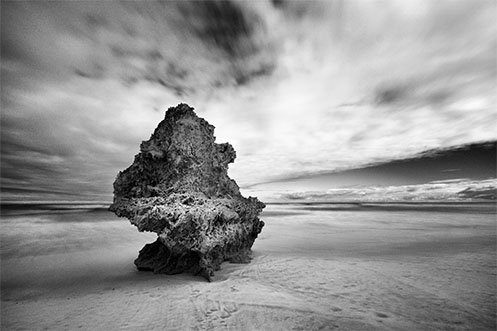
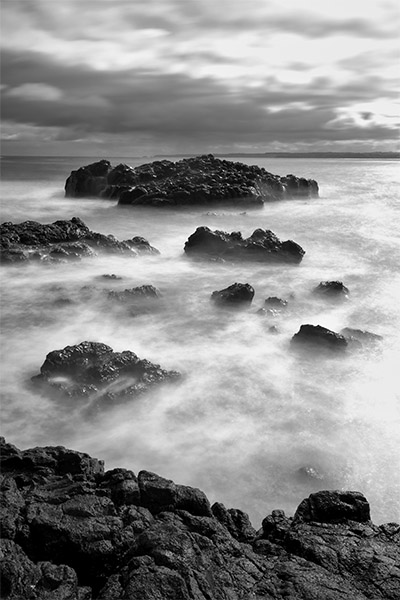
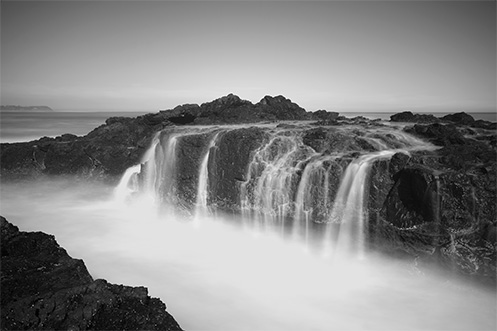
A couple of images from the previous excursion to Number Sixteen beach, reprocessed in black and white, ……and with a little more drama added.
A long exposure from Rye back beach, Victoria, Australia.
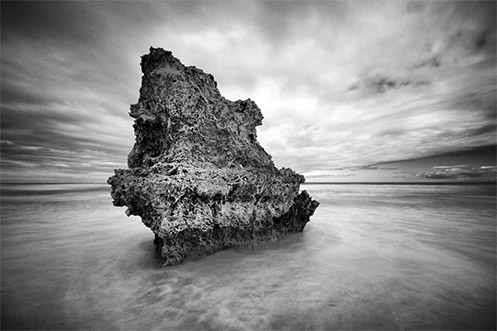
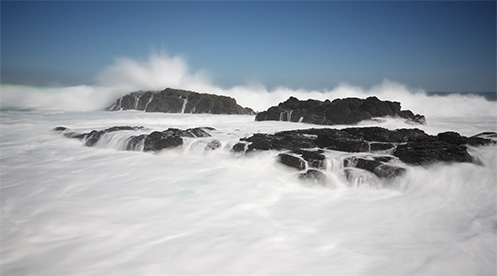
Rye Back beach.

Swimming at the Sixteen – Rye Beach
After a recent photographic excursion to Koonya beach two weeks ago, I swore not to return my feet to the icy waters of the ocean until the warmer weather arrived.
Alas, the lure of the salty seas proved to be too much for me.
This week’s excursion was a low tide expedition to Number Sixteen beach at Rye on the Mornington Peninsula.
Unfortunately I arrived just a little bit too late in the tidal cycle to safely photograph my intended target. Rather than risk my life on the rocky shelves I decided to play around on the beach photographing easier targets, …..and only got wet up to the knees. 😉
A long exposure image from Rye beach.
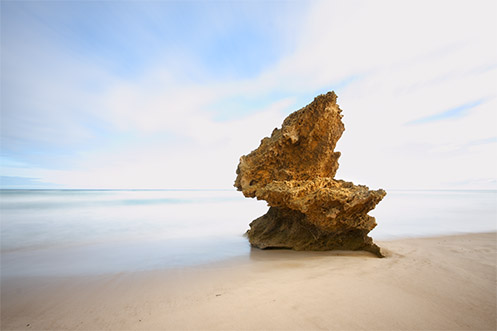
This rock is one of the main features of the Number Sixteen beach. It dramatically changes it’s perceived shape depending on the direction from which you photograph it.
Water rushes back from the beach to join the pounding surf.

Water swirls around the foreground rocks as it enters the beach.
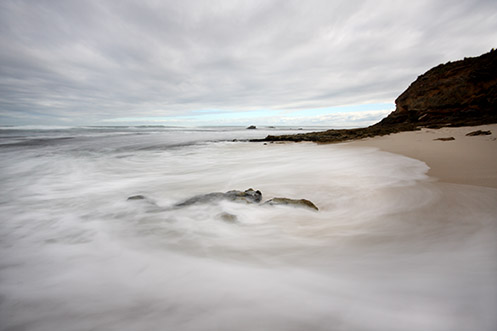
The landmark rock from a different perspective.

The Chill of Winter – Koonya Beach
Winter has suddenly struck with a vengeance in Melbourne and it’s surrounding areas.
The reduced temperature of the Bass Strait water combined with chilling winter winds now makes wide-angle shooting amongst the crashing surf fairly unbearable.
On my most recent trip to Koonya beach, the chill of the winter water running across my lower legs caused my teeth to ache, ….well almost. 😉
Wild winter conditions at Koonya beach, Blairgowrie.
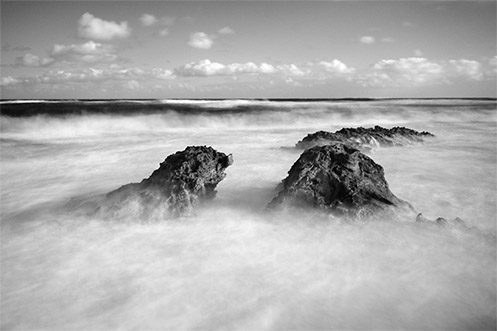
Until the weather warms up a little I’ll be using the mid-range zoom in an effort to keep my feet drier and warmer.
No more long exposures standing in the surf, …..bbrrrrrrr !!

The Mentone Groyne
The Mentone groyne is located on Mentone beach just south of the Mentone pub. In the past this groyne has been incorrectly referred to as the “Old Mentone jetty” by myself and others. There’s off road parking close to the groyne but unfortunately the local council here tries to screw you over with a three dollar per hour parking fee.
All of the following images were taken using an ND400 filter to extend the exposure time and smooth out the waves on the water.
Below – Running West – Mentone Groyne
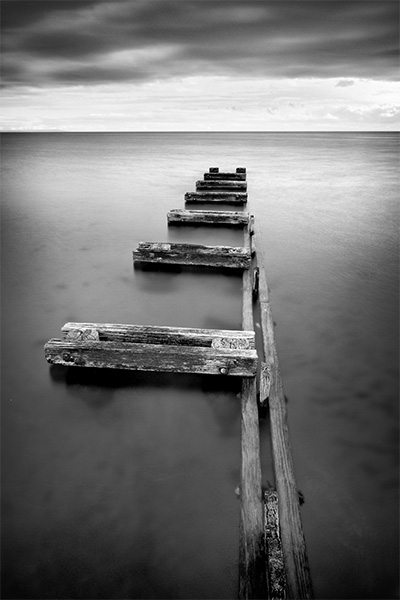
On the afternoon I visited the groyne it was almost high tide so these photos are only showing the very top bits of the structure above the water. Next time I visit I’ll be making sure I arrive during a low tide when the structure appears more like a series of small arches. I think that would be worth getting wet feet for. 🙂
Below – Charging into the Night.
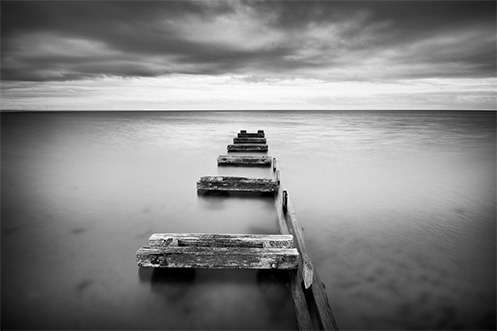
Below – an overview of the groyne.

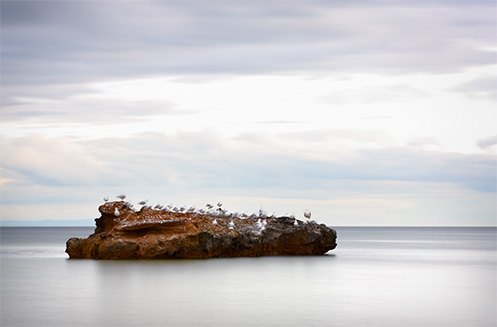
On the walk back to the carpark, some kind of territorial dispute erupted amongst these seagulls on a small rocky island just offshore. The image below doesn’t properly convey the ensuing ruckus but it was quite impressive to watch a little bit of nature’s drama playing out in front of me.
Below – Lord of the Gulls – ruckus on the rock.
Magic of the Phillip Island coastline.
Following on from previous posts I thought I’d share with you just a few more images from the Phillip Island coastline. I feel like I’ve just scratched the surface down there, …….there’s just so much beauty to explore and discover.
Pictured below – The Roost – old jetty remnants that serve as a safe roost for the local birds at Cat Bay.

Pictured below – Evidence of Life – a soft misty view of some wonderful wave action off Cowrie beach.

Pictured below – The Long Swim Home – another view from Cowrie beach looking towards the Nobbies in the background.

Pictured below – Pyramid Rock, taken in strong windy and wet conditions from a vantage point ahead of the lookout area.

In Lieu of Rapture
I’m dedicating this image to the recent passing of Rapture Day, May 2011.
Never has such a silly idea generated so much noise in the media and on social networks.
Pictured below – In Lieu of Rapture.

The image was captured at Cat Bay on Phillip Island.
A Trip to the Pointy End – Phillip Island
Over the weekend I did a quick reconnaissance trip down to the pointy end of Phillip Island.
The images below were taken on a stretch of unsealed road named “The Boulevard” which runs along the south coast of Summerlands and ends at the Nobbies. The Boulevard is a grand name indeed for what amounts to a narrow dirt track, however the coastal views can be quite impressive from here.
Pictured below – The view from The Boulevard looking west towards the Nobbies.
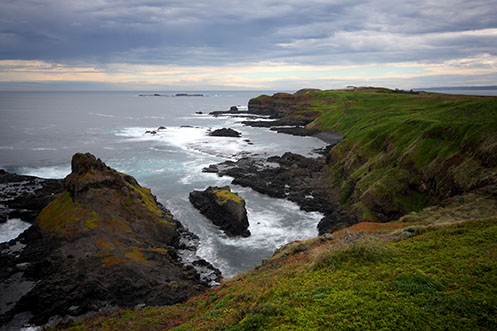
Unfortunately for those of us who like to immerse ourselves in these kinds of coastal environments there is no beach access permitted. We’re reminded of this fact by strategically placed signs warning of penalties for such breaches.
Pictured below – The view from The Boulevard looking east.
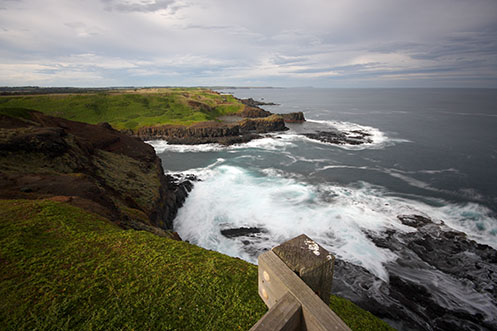
Pictured below – a zoomed in view of the coastline. It looks like a fine place for a photographer to play.
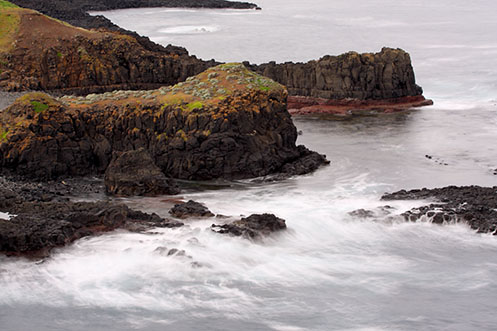
When finished with the south coast I made the short trip over to the north coast to visit Cowrie beach. I’ve been here once before but I had some unresolved images in my head that I wanted to try to capture here. Most of the northern coast is photographer friendly, allowing one to get as close to the water as one dares.
Pictured below – Bull in a China Shop, one of the less sedate Phillip Island waves attacking from left of frame.

Pictured below – A long exposure image using an ND400 filter, The Course of the Penguin, one of the many corridors used by the penguins of Phillip Island.

After finishing at Cowrie beach I left the island and crossed the bridge over to San Remo on the mainland. As I was crossing the bridge I noticed some amusing looking stairs below, surrounded entirely by the water of a high tide. It appeared to be a stairway going from nowhere to nowhere.
Pictured below – From Nowhere to Nowhere, San Remo.

The day concluded with a delicious meal of fish n’ chips from the Fisherman’s Cooperative, …..what bliss!
The bollard, the boat, the buoy and the beginning of a rainbow.
Saturday’s excursion was down towards the pointy end of the Mornington Peninsula.
After a hearty lunch of fish ‘n chips on Dromana beach, it was off to Sorrento for a cappuccino and also check out the surf conditions on the ocean side.
On arrival at the back-beach the surf was violent and unruly, fueled by a ferocious onshore wind.
I’ve tried to capture long exposure images under these conditions a couple of times before and come away from the experience with disappointing results. A howling wind always manages to soften my long exposure images regardless of tripod technique.
With this in mind I resigned myself to exploring the calmer more docile side of Sorrento, the bay side. The view from the beach here was quite nice with small boats bobbing and wobbling around in the water. I took a few shots of the little boats but couldn’t find anything particularly satisfying so I moved my attention to the huge bollards near the pier.
Pictured below – Bollard.
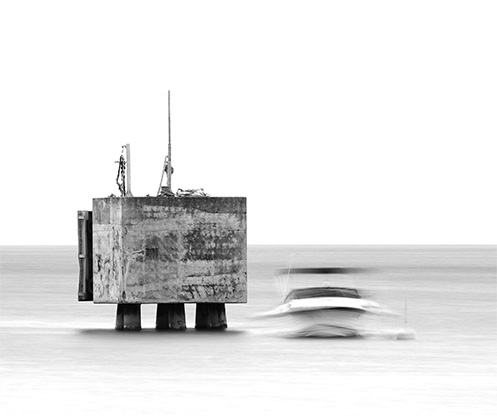
Above – In this image the huge concrete bollard remains motionless whilst surrounded by the blurred movement of waves on the water. It’s nearby neighbors, the boat and the buoy wobble and rock in compliance with the waves. I used a high key effect to eliminate some distracting elements from the background. Both ND400 and ND8 neutral density filters were attached to the lens to achieve the desired long exposure under fairly bright conditions.
Pictured below – The Sorrento Bollards.
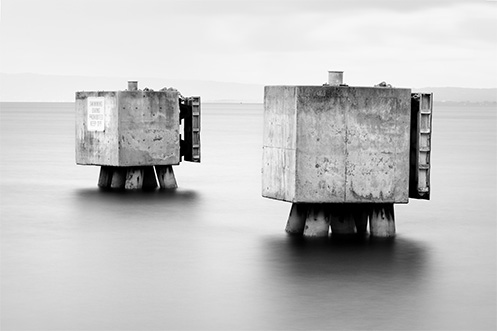
Above – The massive bollards are used to assist with holding the Queenscliff-Sorrento ferry in place at the pier during the exchange of passengers and cars.
After shooting the bollards, mother nature tried to grow me a rainbow. The left and right ends of the rainbow were developing nicely and gradually growing skywards then suddenly fizzled into nothingness.
Pictured below – the left end of the incomplete rainbow.

Pictured below – the right end of the incomplete rainbow.

HMVS Cerberus shipwreck at Half Moon Bay
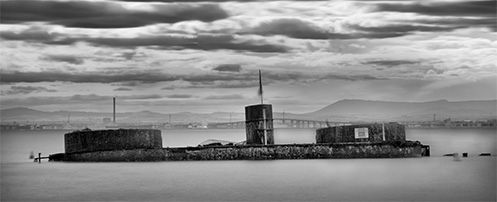
After a delicious lunch at the Ricketts Point teahouse, Chris from Ambientcapture and I drove to Half Moon Bay where the wreck of the HMVS Cerberus rests semi-submerged some distance offshore.
The HMVS Cerberus was launched in 1868 and is the only remaining breastwork monitor class warship left in the world. You can find more details about the ship’s rich history at it’s Wikipedia page here, or it’s dedicated website here.
My idea from a photographic perspective was to capture the Cerberus using long exposure techniques to blur the motion of the water and clouds, and yet keep the wreck in sharp focus.
I had to wrestle with this one in post processing due to the extreme brightness of the background but I think I finally found a unique vision of the wreck.
Pictured below – HMVS Cerberus is available as a print in various sizes and formats here.
Pictured below – a long exposure view from the Half Moon Bay pier looking north along the coastline. The little blurry bit at the lower center of the image is a buoy bobbing around in the waves.

Pictured below – a more distant long exposure view of the HMVS Cerberus.

Pictured below – the structure behind the Cerberus wreck.
I have no idea what it is, but it’s very popular with the birds.

Plateau – Sorrento back beach
Below – Plateau – A long exposure image from the Sorrento back beach.
An intriguing place to visit at low tide.

The Vagabond Tide – ND400 long exposure
Following is a series of images taken at the Sorrento back beach, Victoria, Australia, using an ND400 filter during bright afternoon light conditions.
Pictured below – Dorsal.
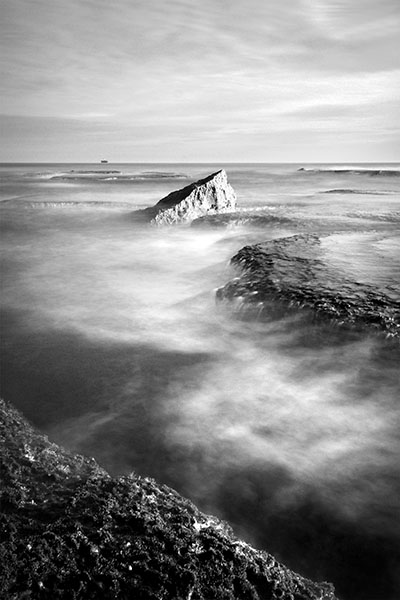
Below – The Vagabond Tide.

Below – The Rinse Cycle.


An Afternoon at Cowrie Beach, Phillip Island.
Cowrie Beach is located just a few hundred meters north-east of the popular tourist destination “The Nobbies” on Phillip Island, Australia. The beach sits just inside the entrance to Westernport Bay and is subjected to rough surf originating from Bass Strait.
The thinly vegetated sandy portions of the beach are home to Fairy penguins and some other more endangered species so there are signs present advising which areas to avoid.
The main attraction here from my perspective is at the water’s edge. The beach is blessed by the presence of dark basalt rock formations continuously pounded by waves.
Below – The Nobbies – an image from Cowrie beach with The Nobbies in the background.

Below – Down the Winding Path – a long exposure looking out to sea from Cowrie Beach.

Below – Awaiting the Devil – a frightening part of the beach where unexpected waves suddenly inundate the dark basalt platforms. There’s a warning sign on the beach reminding fishermen and other visitors how easy it is to be swept off these rocks.
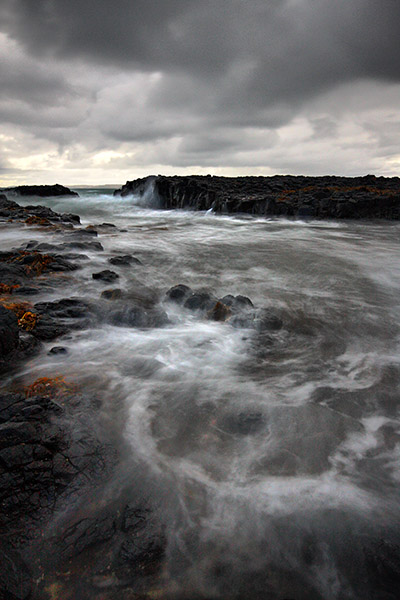
Below – The Ordeal – How the Phillip Island penguins manage to survive the violent Bass Strait surf combined with rocky beaches escapes me.

Below – Through the Vapour
Exploring the light at Right Point, Phillip Island
Saturday’s excursion to Phillip Island turned out to be very rewarding from a photographer’s perspective.
In the late afternoon I stopped at a place called Right Point, which seems to be a very popular destination for surfers. As I peered over the edge of the cliff towards the beach I instantly fell in love with this spot.
Below me were the remains of an old jetty being pounded by the violent surf.
With the sun starting to drop towards the horizon what more could a photographer ask for?
I grabbed my tripod and camera bag and dashed down to the beach like an excited child. The images were already forming in my mind before I had even reached the sand, ……..oh what a feeling !! 🙂
Below – Drawn to the Ocean
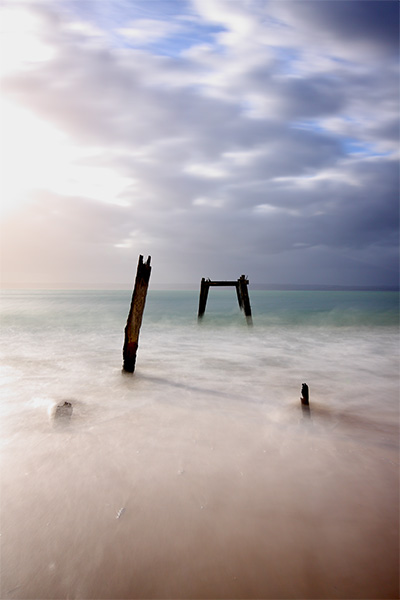
Below – The Penguin Pool
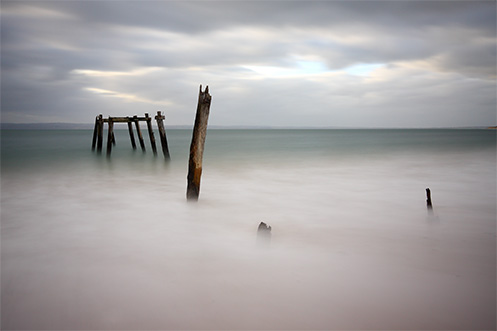
As the sun dropped even closer to the horizon a good situation became even better when suddenly Crepuscular rays broke through a gap in the clouds.
Crepuscular rays, also known as “God rays” or “God beams” are explained here.
Below – Running to the Light
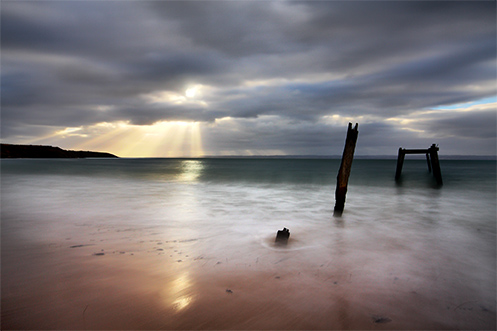
Below – Sky Burst
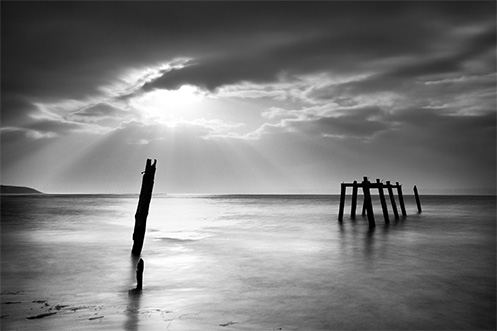
Below – Agaze

An Afternoon at Sorrento
A selection of images from the photographically rich area along Sorrento back beach.
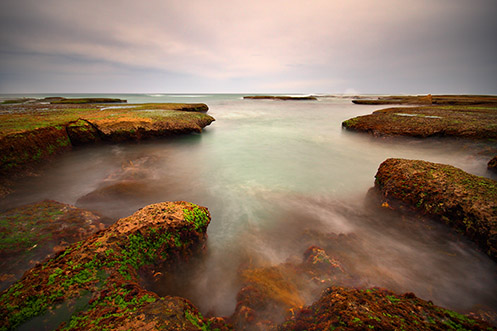
Below – “Her Outstretched Arms”
The sun has dropped close to the horizon giving a warm hue to the sky and rocky plateaus. The vigorous surf is tamed by the camera’s long exposure time.
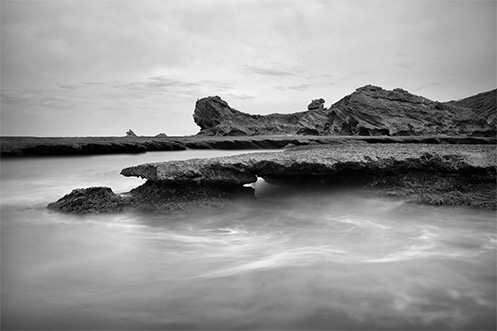
Below – “Sphinx”
In the foreground the violent surf swirls under and around a rocky platform whilst in the background the iconic Sorrento Sphinx rock formation stares out to sea.
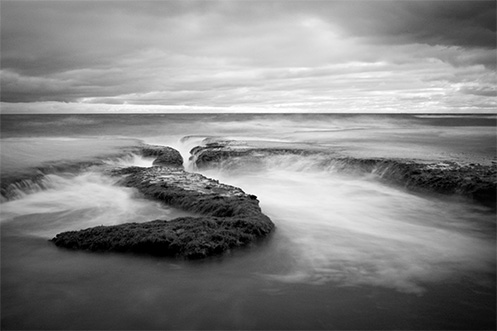
Below – “The Call of White Water”
Low tide at St Paul’s beach Sorrento as the surf crashes over the rocky plateaus filling one of the many natural pools.
Below – Water continually cascades off the edge of the platforms as waves push across them.

Below – A memorial on the cliff tops at Jubilee Point, Sorrento.
A sobering reminder of how dangerous this area can be.

The Flinders Pier Excursion.
Images from a recent trip to Flinders with friends Christine Wilson and Caroline Gorka.
The objective for the afternoon was to capture some images of the old wooden pier before it’s replaced by the concrete monster that’s currently being constructed right next to it.
As usual I became distracted.
Below – “IiN” some ghostly remains from further along the beach.

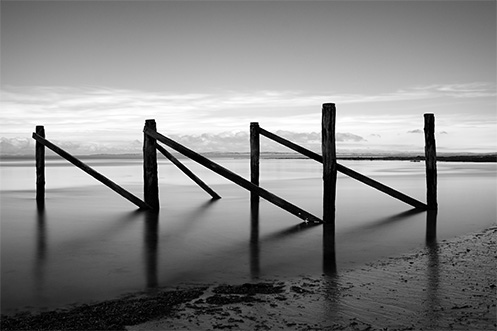
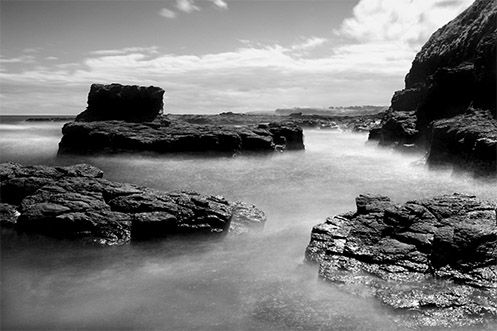
Below – “Flinders Point” just around the corner from the calm harbor area there’s a lot more ocean wave activity.
There were waves crashing all over the place here but the long exposure makes it look deceptively calm.
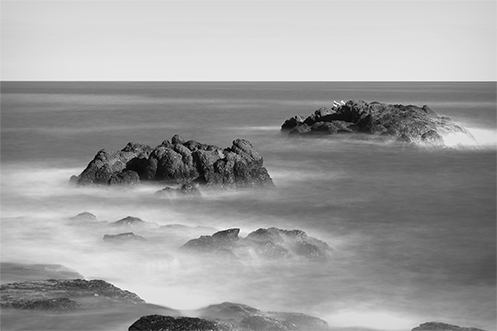
Below – “Flinders Back-Beach” near the blow hole area. Stop giggling, that’s what it’s called !!

ND400 Long Exposures at Safety Beach (Bracketing and tonemapping long exposures)
Following is a series of bracketed and tone-mapped long exposure images from Safety Beach, Victoria, Australia.
All were shot in the late afternoon using ND400 and ND8 filters combined to achieve the desired long exposure times.
Below – “Safety Beach Jetty”

Here’s how I do my bracketed images – Many of my waterscapes are long exposure tonemapped images generated from 3 exposures at 0,-2 and +2 EV. In order to achieve these 3 exposures I set my camera to aperture priority mode, enable auto bracketing and set the ISO as low as it will go. I then tinker with the aperture value, iso value and either add or remove ND filters in order to force the camera to achieve a shutter speed of 8 seconds for the first exposure (0 EV). Now when the shutter button is activated the camera gives me 3 exposures at 8 seconds, 2 seconds and 30 seconds (which corresponds to approximately 0,-2 and +2 EV)
When these 3 exposures are blended together (tonemapped) in an HDR program the resulting image contains the misty silky effects from the 8 and 30 second exposures and also contains some details from the slower 2 second exposure. When shooting REALLY fast moving water I usually aim for a faster initial exposure time of say 4 seconds. The camera then gives me 3 bracketed exposures at 4 seconds, 1 second and 16 seconds (0,-2 and +2 EV)
The aim is to catch some detail in the fastest exposure but also benefit from the misty effect of the longer exposures.
UPDATE – Oct 2012 – If you’re looking for an introductory guide on how to use the ND400 have a look at my other blog post here.
Below – “Seep” a stormwater drain at Safety Beach.
Yes, a drain can look beautiful. 🙂
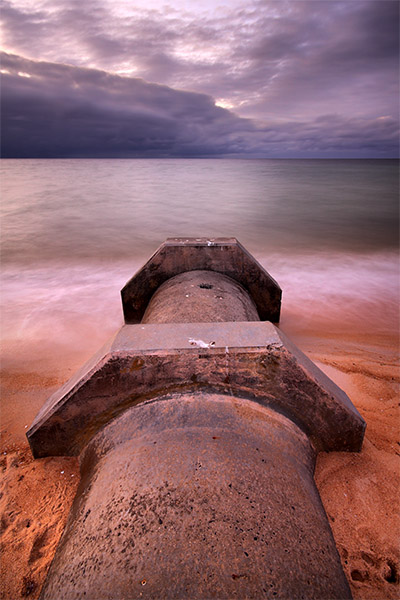
Below – “Jettison” another stormwater drain at Safety Beach.

A Photo Exploration of Grantville beach.
I visited Grantville the day after Victoria had been hammered by unusually high rainfall.
Apparently the extreme rainfall was a side effect of cyclone Yasi’s passage across Queensland and into central Australia.
With the worst of the rain over, the day provided some beautiful photographic conditions with the sun filtered through an interesting arrangement of constantly changing storm clouds.
I love the beach down this way. Each time I visit here I discover something new.
Before I discovered photography I would never have guessed that I would find storm water drains interesting. 🙂
Below – “Purge” a storm water drain running into Westernport Bay.

For those who are interested in the technical details, the drain images are constructed using HDR tone mapping techniques. The long exposures were achieved using a combination of ND400 and ND8 filters on the end of the lens to smooth the waves on the water.
Below – “Running from the Idols” – another drain dumping water into Westernport Bay.
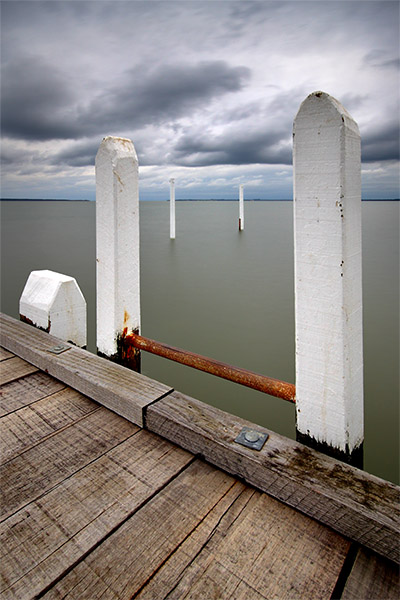
Below – A long exposure self portrait, standing at the end of the Grantville jetty.

Below – “Grantville Jetty” – a view from the jetty looking out towards the boat ramp marker posts.
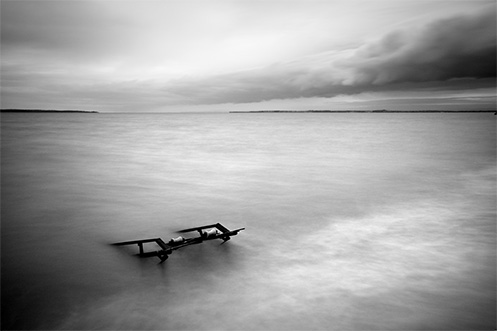
Below – “After the Rains” – a long exposure image from Grantville beach as rain clouds exit. An old boat trailer sits semi-submerged in the foreground.
Art of the Orb – the beauty of nature.
One doesn’t usually associate the word “spider” with art. In my case I seem to be blessed by the presence of a very artsy Orb-weaver spider.
Each evening during summer the spider constructs an elaborate web between the house and a large tree in the backyard.
In an effort to capture the frantic web building activity I took my LX3 out into the backyard to see what I could catch.
The Orb-weaver was lit from some distance away by one of the house security lights.
I set the LX3 to an aperture of f/2.0 @ISO800 due to the dim conditions and caught the following beautiful movements as the spider hurriedly moved around.
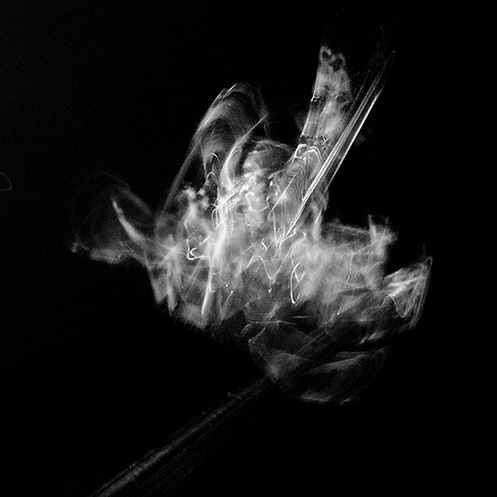
For those who might be curious and want to try this I shot these images in aperture priority mode. The camera selected a corresponding shutter speed of 1.3 seconds to suit my particular lighting conditions. The camera was also in “Dynamic B&W” mode.


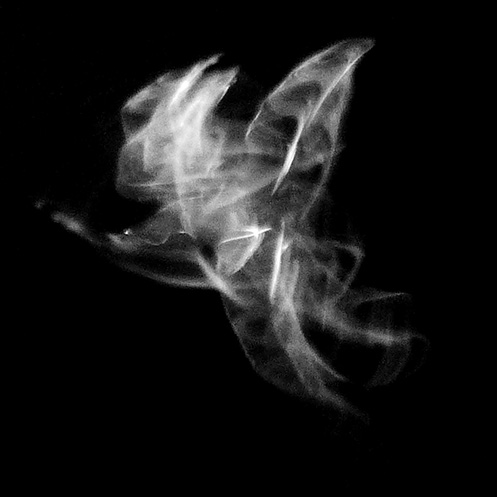
In the final two images there is a bit less movement by the spider and you can start to see the shape of the spider.


The Grantville Goal Posts
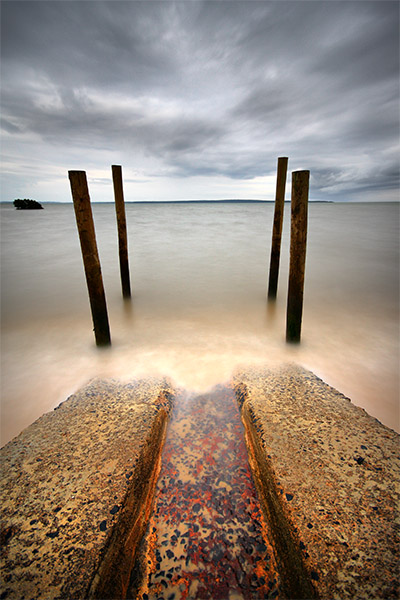
Captured below, a long exposure image of the incoming tide starting to submerge the concrete boat ramp at Grantville on Westernport Bay.
Due to the long shallow nature of the ramp the “goal posts” are used as a guide by boat owners to help prevent boat trailers from being driven over the sides or end of the ramp and into the mud/water.
Below – “Moving the Goal Posts”

Below – The boat ramp fully submerged with the Grantville jetty to the left and the sun shimmering on the foreground water.

Exploring Cape Schanck
Cape Schanck is located at the southern tip of Victoria’s Mornington Peninsula.
The beaches here offer a feast of opportunities for photographers. At the tip of the cape sits Pulpit Rock, a huge monolith standing proud amongst tidal rocky platforms.
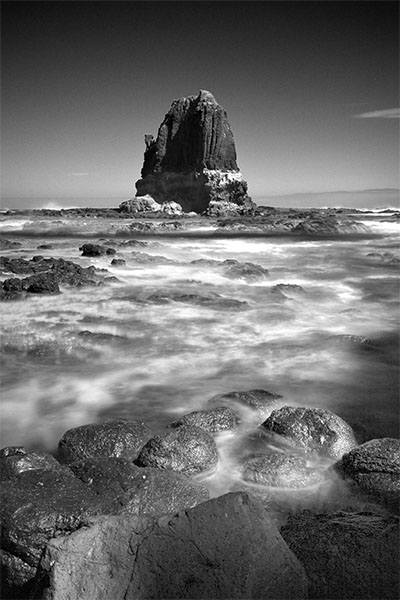
At low tide the rocky platforms are exposed allowing fairly easy access to a large number of rock pools. These pools are home to a variety of sea creatures including small fish, crustaceans and octopuses. Depending on the time of year the pools can contain various forms of brightly coloured seaweed, providing wonderful hiding places for the rock pool residents. This is a great place to dunk your waterproof compact camera if you’re lucky enough to own one. Unfortunately I don’t own one (yet).
Below – Pebbles at the Pulpit

The beach leading out to Pulpit Rock is covered by rounded rocks that roll around and pound into each other with each wave creating an interesting sound that’s quite difficult to describe.
Below – Cape Schanck Lighthouse overlooking the west side of the cape.

Below – Cape Schanck East. The eastern side of the cape provides a rocky beach where there are lots of opportunities for the photographer who enjoys capturing waves crashing over and around rocks. I took quite a few long exposures here.

Below – The Schanck. The white surf and dark rocks contrast each other nicely and provide excellent material for making great black and white images.
Fluid in Motion – Flinders
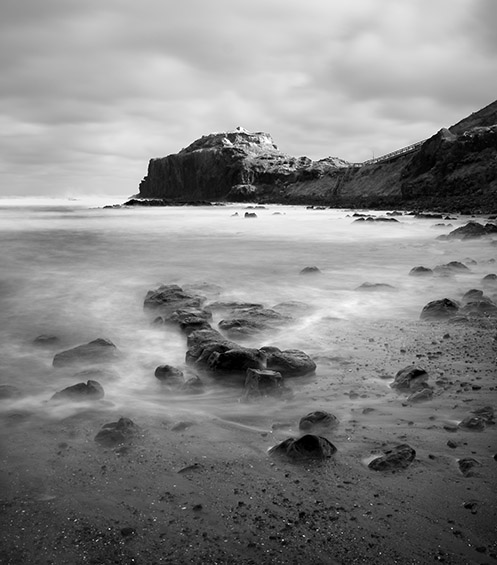
One of my favorite spots for photogenic wave action along the Mornington Peninsula is Flinders.
West of the township the rugged coastline features extensive cliffs with access to the rocky beaches in only a few places.
The deliciously dark rocks here provide a wonderful contrast to the bright white surf as waves from Bass Strait relentlessly pound the beach.
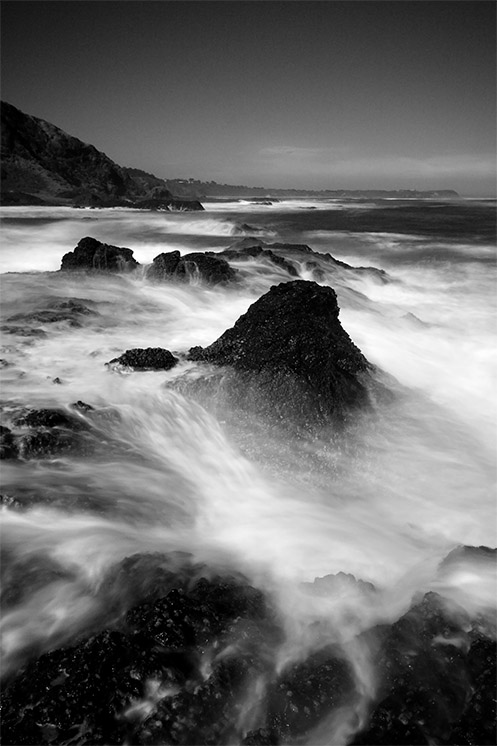
On this occasion I visited the beach during the early afternoon so conditions were extremely bright and contrasty.
I used an ND400 filter, sometimes in combination with an additional ND8 filter, to darken the scene and enable the use of slow shutter speeds to blur the moving water.

It’s always fun and games being close to the edge in places like this. Despite keeping one eye on the camera and the other eye on incoming waves I was caught by surprise on a couple of occasions during the afternoon and drenched by rogue waves exploding on the rocks.
This is really quite an extraordinary spot from a photographer’s perspective. Not so special for the grand seascape but more for the myriad of recesses where the surf dynamically interacts with the rocks.

Construction at Powlett River
The construction of the controversial desalination plant near the mouth of the Powlett River has yielded a temporary point of interest for photographers.
A large platform has been placed offshore to assist with the construction of the required underwater pipeline.
Although not the most beautiful structure in the world, it acts as a nice point of interest for an otherwise potentially boring background.
I’m in no way a supporter of this project but I decided to take advantage of the platform while it’s there and took a series of images from the spot where the Powlett River meets the ocean.
The idea behind the images was to use the lines created by running water and rock edges to draw the viewer into the scene towards the platform in the background. The images were taken in bright mid afternoon light using strong ND filtering to enable the exposures to be long enough to blur the water.
Below – Platform One

Below – Platform Two

Below – Platform Three
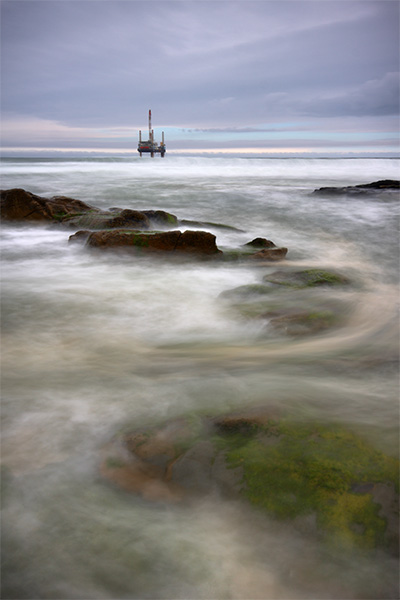
Below – Mouth of the Powlett – Looking north-west across the mouth to the sand dunes, the waves crashing onto the rocks in the foreground just appear as mist due to the long exposure time.
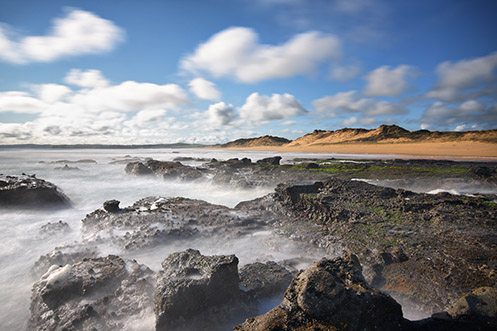
Below – a couple of experimental panoramic shots of the river and dunes.
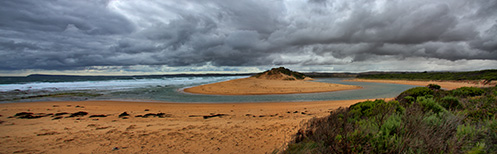

Exploring Ricketts Point, Beaumaris, Port Phillip Bay
Ricketts Point is a marine sanctuary located south east of Melbourne in Port Phillip Bay. When viewed from the land it’s an unremarkable looking series of sandstone rock platforms. Apparently under the waterline the platforms support a great diversity of flora and fauna.

When viewed from a land-based photographer’s perspective the area looks pretty ordinary during bright daylight hours.
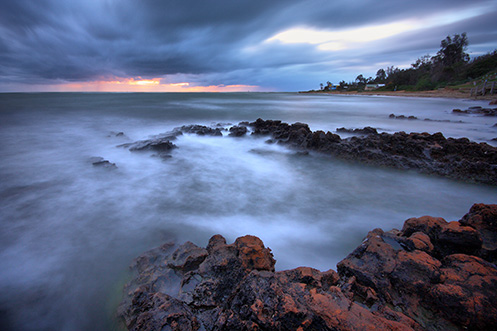
Towards the evening the area becomes more attractive as it provides an unobstructed view of the setting sun and also provides some foreground interest in the form of waves swirling around rocks at the edge of the platforms.
This provides a good opportunity to catch some nice long exposure images.

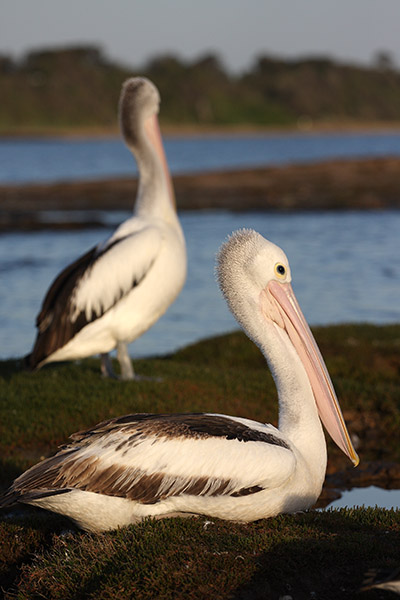
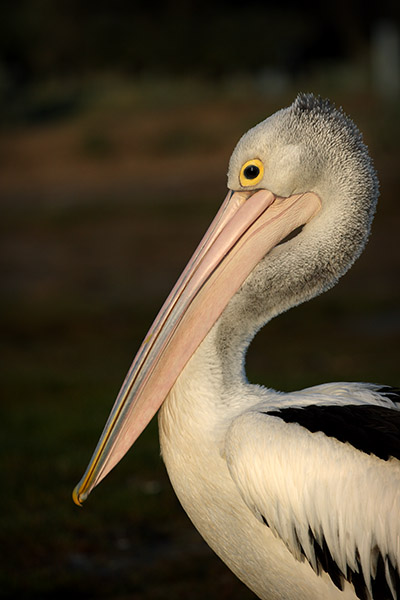
Prior to the sun setting, the rocky platforms serve as a meeting place for several species of birds. Amongst them are a very tolerant group of pelicans. They don’t seem to mind people getting relatively close to them here which provides a nice opportunity for bird watchers and photographers.



At the end of Seaford pier.
This excursion to Seaford pier was a second visit. My goal was to capture an image that I’d had in my mind for some time but wasn’t able to quite capture on the first visit.
The subject of the image was a wonderful old wooden bench seat located at the end of the Seaford pier.
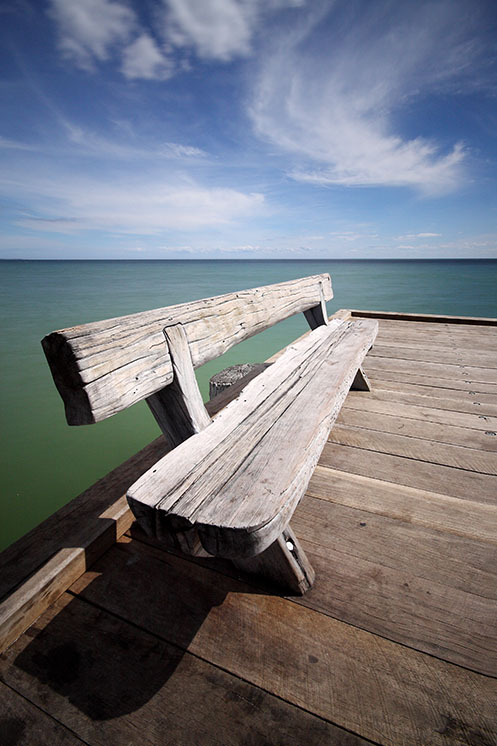
Pictured above – “The Silent Partner” is available as a print here.
I chose to use a long exposure here to smooth out the waves on the water and soften the clouds in the sky. This has the desirable effect of making the image less busy and draws the viewers attention to the wonderful grain and smooth worn texture of the wood.
Conveniently the lines of the bench also draw the viewers eyes into the image and towards a swirling cloud in the background providing a second point of interest.
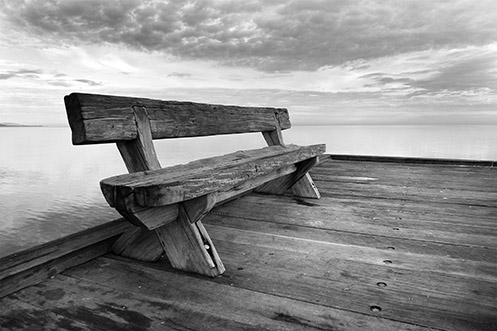
Pictured below – “Observer” is available as a print here.
This is the image I took on the first visit. I like this image but it wasn’t the vision I initially had in mind. A local resident paid me the ultimate compliment by purchasing a framed print of this one.
Exploring the Mordialloc pier.
A series of long exposure images exploring the Modialloc pier and it’s surroundings.
Below – Pier Group Pressure available as a print here.

Below – The Mordi Run available as a print here.

Below – “Troll” available as a print here.

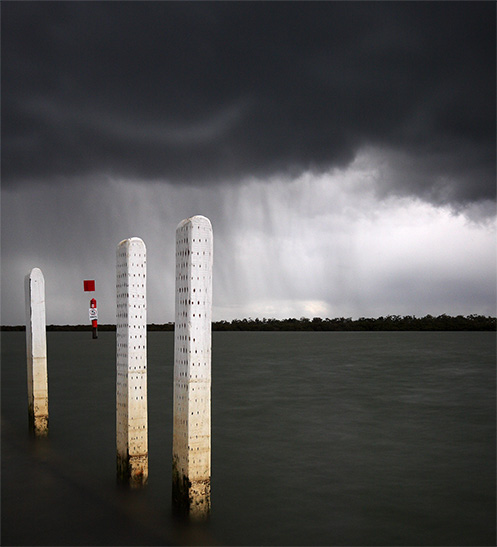
Below – “Markers Three” available as a print here.

Slowly submerging in Tooradin
The coastal village of Tooradin is located on the shores of Westernport Bay, Victoria, Australia.
Since I live fairly close to Tooradin I often pick up a hot pie and a cappuccino from the wonderful bakery here and drive down to the jetty area for a relaxing break.
Tooradin has two jetties right next to each other. One jetty is of a floating pontoon design which rides on the surface of the water, rising and falling as the tides change. The other jetty is the usual kind consisting of a raised platform fixed to sturdy wooden pillars.
An interesting thing about the fixed platform jetty is that the platform gradually disappears below the surface of the water as the tide rises. This provides the photographer with some interesting possibilities.
Below – the rising tide starts to envelope the platform.

Standing on this jetty makes one feel like a captain going down with his ship.
Below – “Channel” which is available to purchase as a print here.
The platform is just a few centimeters below the surface.

After taking a few long exposures at the jetty mother nature decided to give me a nudge. The thick black storm clouds opened up and sent down a barrage of hail to chase me back to the car.
Below – Run from the Hail
The Jetties of Portsea and Sorrento
Portsea and Sorrento are coastal villages located at the tip of the Mornington Peninsula, south east of Melbourne. They both share a wild and woolly ocean beach to the south and the much calmer waters of Port Phillip Bay to the north. As a photography enthusiast I enjoy the contrast between the ocean and bay sides of the peninsula.
In winter and early spring you can stand on the ocean beach and not see another soul, a prospect I find very attractive. The only problem is that the wild and woolly conditions that keep the crowds away also make photography difficult. A photographer here has to contend with the difficulties of high winds and sea spray, not impossible I know but very annoying when combined with the low temperatures of winter.
For this reason I’ve found myself gravitating towards the calmer bayside beaches on my last couple of trips down that way.
Below – “34 Steps” which is available to purchase as a print here.

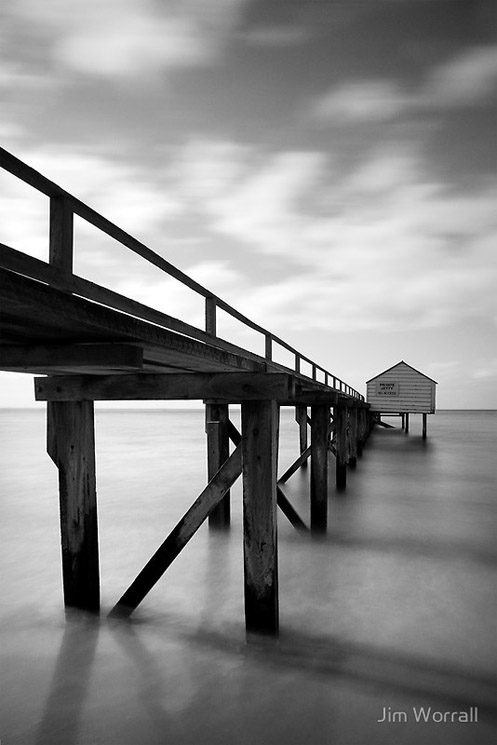
I’ve recently been trying to consciously simplify my images by attempting to exclude as many distracting elements as possible. Whilst shooting on the bayside beaches this has been fairly easy to achieve by using long exposures to reduce the detail in the water and sky. Another benefit of the long exposures is that birds and boats can move through the frame without even appearing in the finished exposure. I used a combination of an ND400 and an ND8 filter giving me about 12 stops of darkness to make the exposures up to 30 seconds long for these images.
Below – “The Danger of Diving”, Portsea beach, which is available to purchase as a print here.

Portsea and Sorrento bayside beaches feature a wonderful collection of public and private jetties.
Below – “Outbound”, Sorrento beach, which is available to purchase as a print here.
Despite being technically over exposed I like the drama this high key image presents.
I like the way the sea and the sky are almost one. A personal favorite.

Below – “Nature versus Nurture”, Portsea beach, which is available to purchase as a print here.

Below – “Boomerang”, Portsea beach, which is available to purchase as a print here.

Below – “Civilization meets the Sea”, Portsea beach, is available to purchase as a print here.

Below – “The Trappings of Wealth”, Sorrento beach, is available to purchase as a print here.
Visiting the Silky Lady – Hopetoun Falls
The Hopetoun Falls is a popular tourist attraction located in the Otway Ranges in Victoria, Australia.
Pictured below – A View to the Falls – Just a short distance from the car park, visitors are treated to a tempting glimpse of the falls from above through a gap in the lush forest greenery.

A short picturesque walk down a path through the forest gives access to the base of the falls. Upon arrival at the base it’s very easy to imagine that you’d somehow been transported into a fairytale. It’s a dream location for photographers and indeed it’s difficult to take a bad shot here.
Below – The Silky Lady

Below – Peeking at the Silky Lady

Below – In the Land of Fairytales

Down amongst the Mangroves, Westernport Bay.
You certainly have to admire the hardiness of the Mangrove tree.
It thrives in poor quality soil in tidal areas, and twice a day has it’s roots submerged in salty sea water. Under storm conditions the Mangrove is battered by both wind and waves yet it still manages to hold firmly.
The Mangrove tree is also an interesting subject from a photographer’s perspective. At high tide with the roots submerged it’s fairly easy to photographically isolate the subject from it’s surroundings by using a long exposure time to smooth any waves around it’s base and blur any clouds in the sky.
Below – TimeKeeper
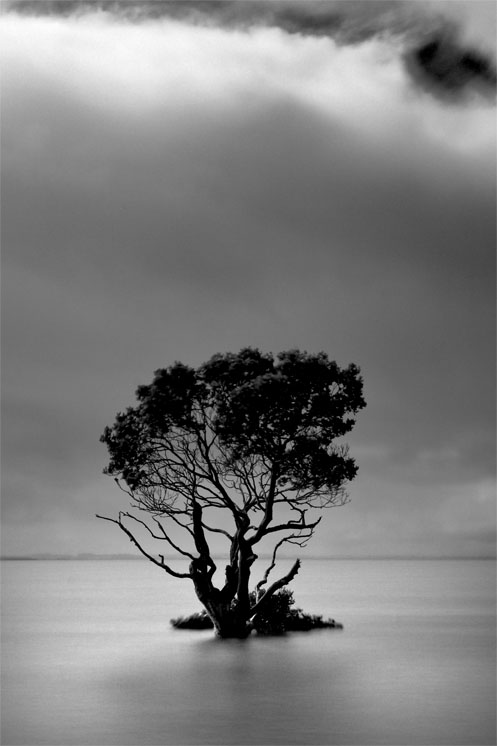
Below – The Risen

Below – Approaching the Forest

At low tide the Mangrove tree has it’s roots exposed creating potentially a new subject of interest for the photographer. The long roots are often intertwined with each other giving the impression of writhing serpents (perhaps that’s just my imagination running wild).
Below – The Serpent Tree
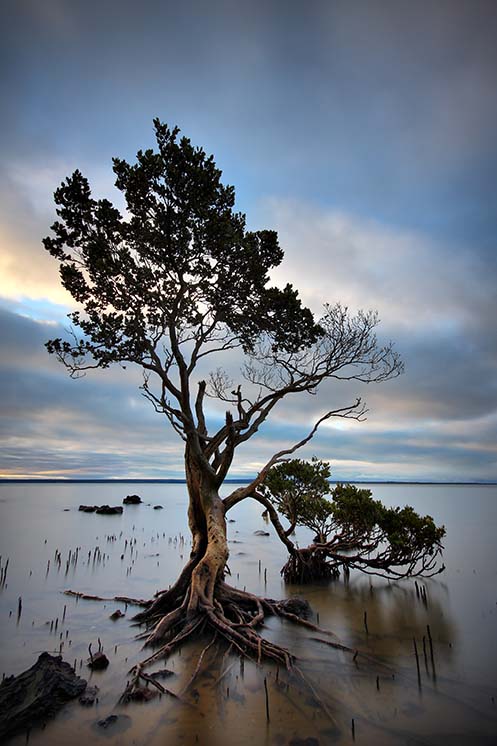
Below – Wild n’ Woolly a long exposure with the roots exposed and the leaves thrashing around in the wind.
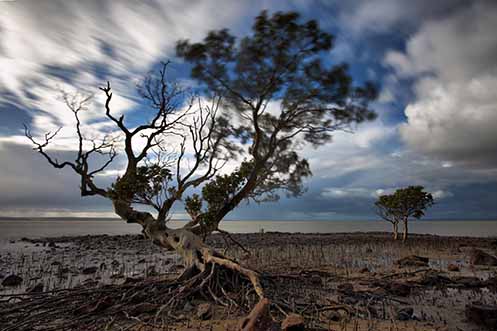
Below – On Borrowed Time the same tree as above but at high tide.

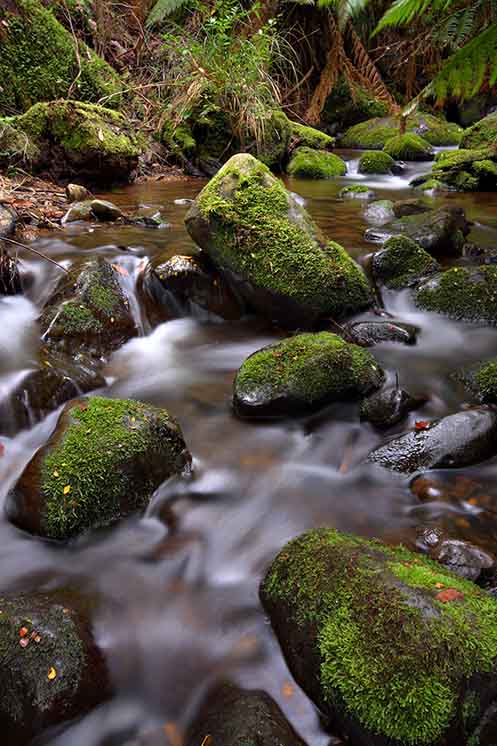
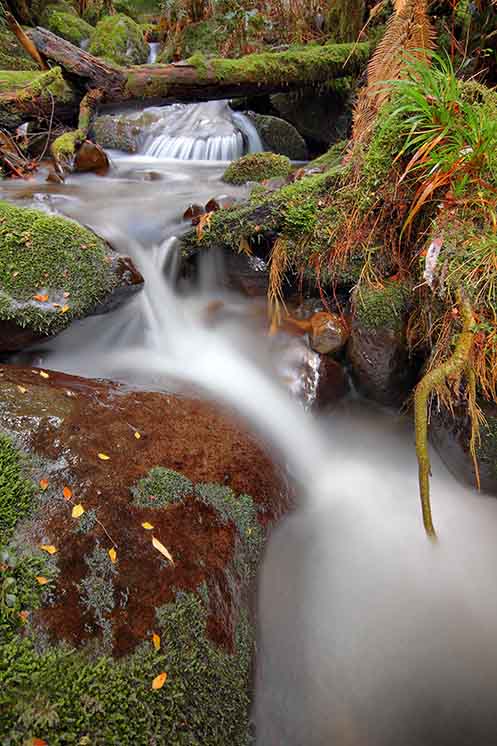
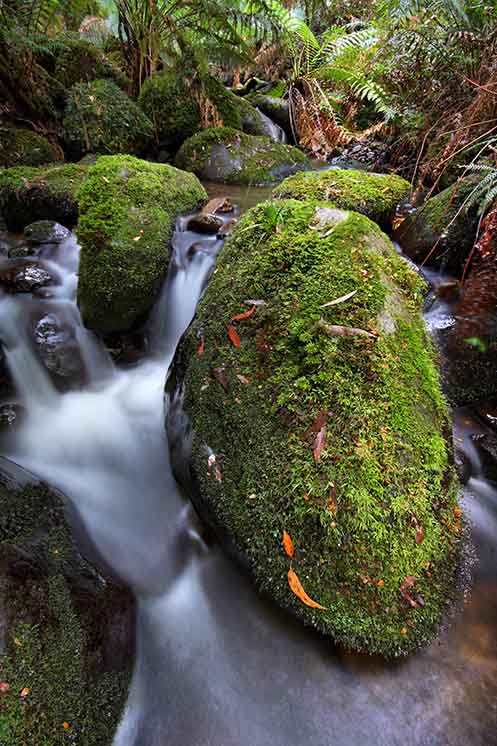
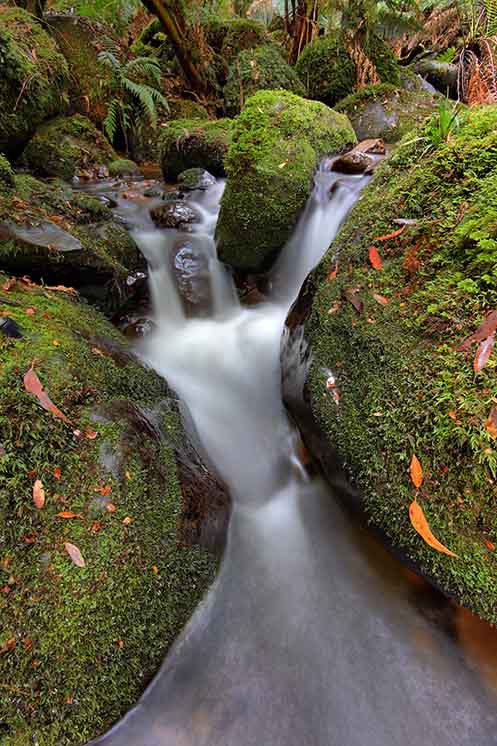
Exploring Cement Creek
It seems to me that Cement Creek was dealt an injustice when it was first named.
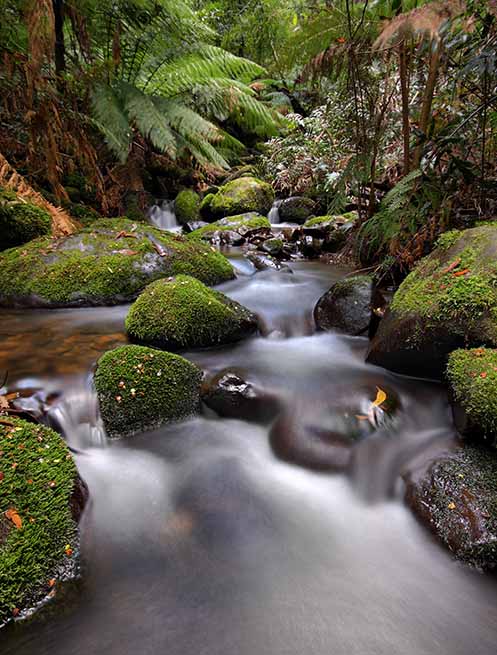
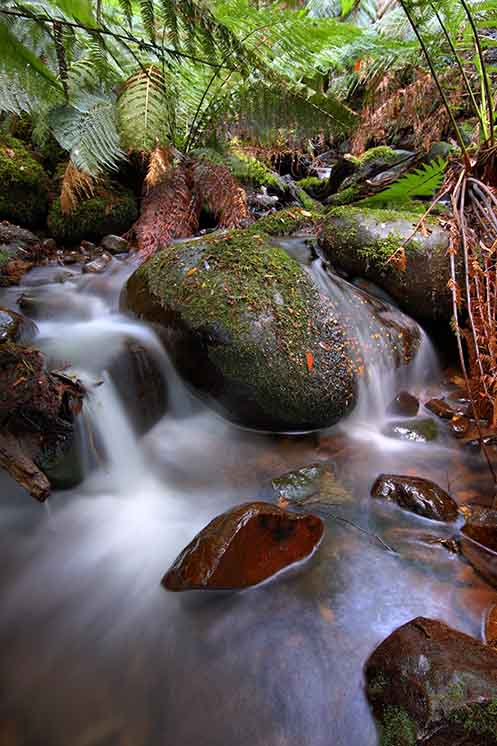
Despite it’s odd name, it really is quite an attractive location and a fine example of lush Victorian forest.
Cement Creek in located at the foot of Mount Donna Buang, near the intersection of Donna Buang Rd and Acheron Way.
On this excursion we gained access to the creek by walking along raised platforms which got us most of the way, then we jumped the handrail into the forest to get to the flowing water. At this location you need to be prepared to get muddy and wet, so it’s advisable to keep a change of clothes in the boot of your car.
The main hazard here is the slippery moss covered rocks. A minor hazard is the hungry leeches.

 Photography by Jim Worrall