
Early Morning at Number 16 Beach – Dragon’s Head Rock
An early morning photo from the Dragon’s Head Rock at Number 16 Beach, Rye, on the Mornington Peninsula.
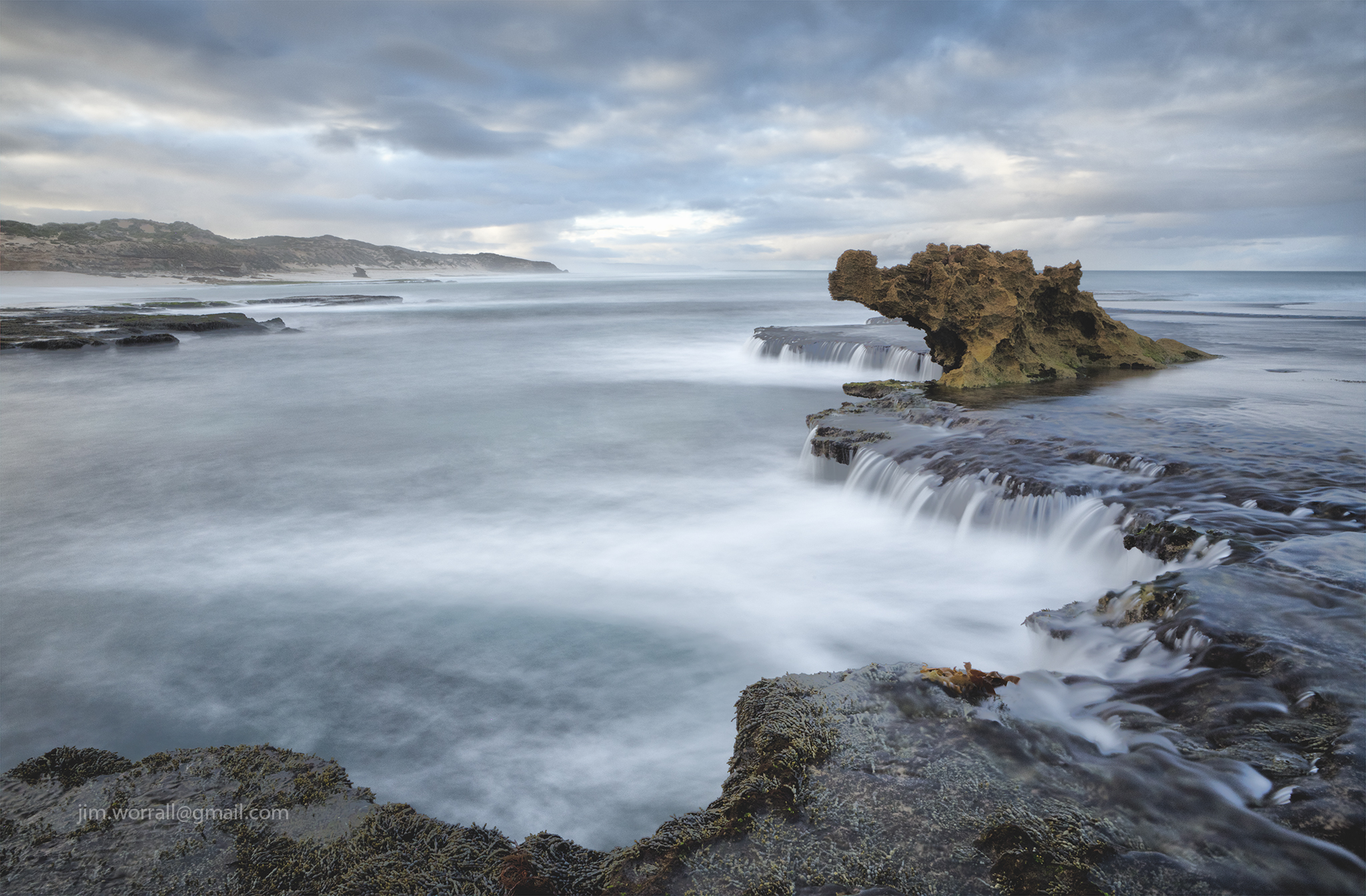
Dawn at the Dragon’s Head – Rye
A long exposure image taken at the Dragon’s Head rock formation at Number Sixteen beach, Rye, Mornington Peninsula.
Tech stuff – 20 secs, f/16, ISO100.

Rye Back Beach – long exposures
Following are some images from my recent long exposure Facebook group excursion to Rye back beach. It was a great turn out considering a pre-dawn meetup in the middle of winter isn’t everyone’s cup of tea. 🙂

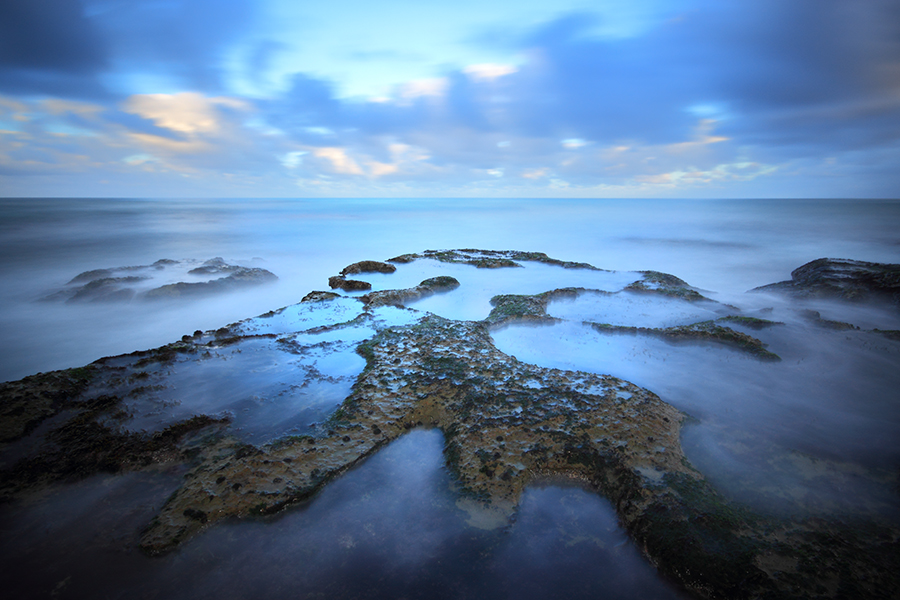
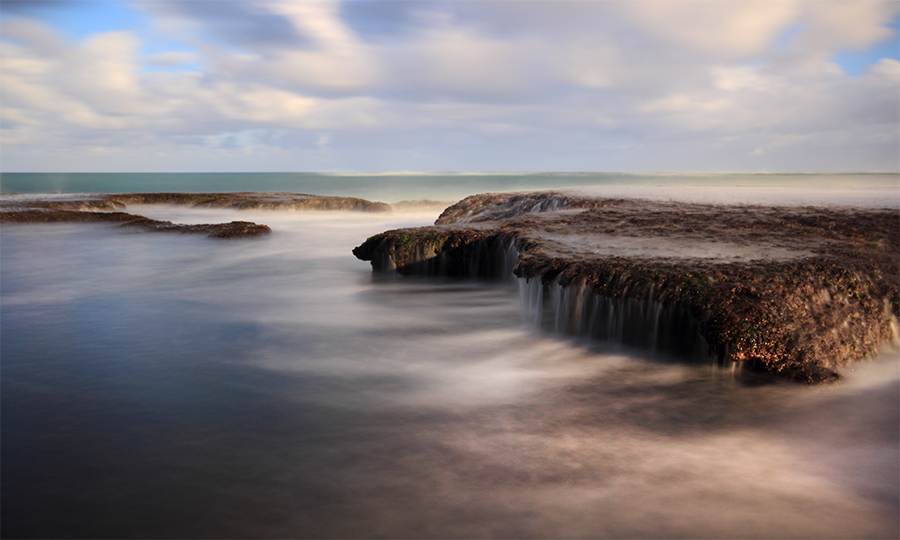
Following are a couple of images from under the London Bridge rock formation, Portsea, using my phone camera. My mate steadys himself ready to take some shots of the turbulent sea.


Rye back beach – The Dragon’s Head and the Pod
A few images of the rock formations at the Number Sixteen beach at Rye.
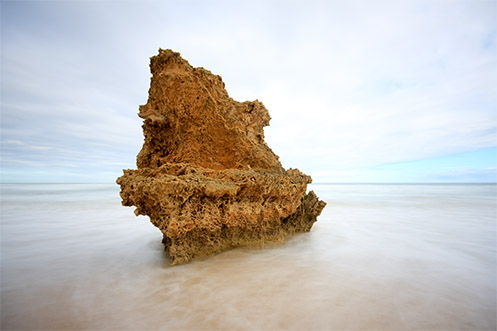
Pictured below – The Dragon’s Head rock, initially named by a local with a fertile imagination.
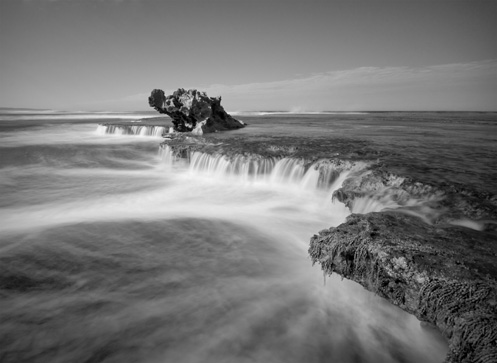
Below – The Pod, ….well I had to call it something since all of the good names like Dragon’s Head had already been snapped up.
Below – Water flows off the rocky plateaus returning to the ocean.
Click to enlarge.

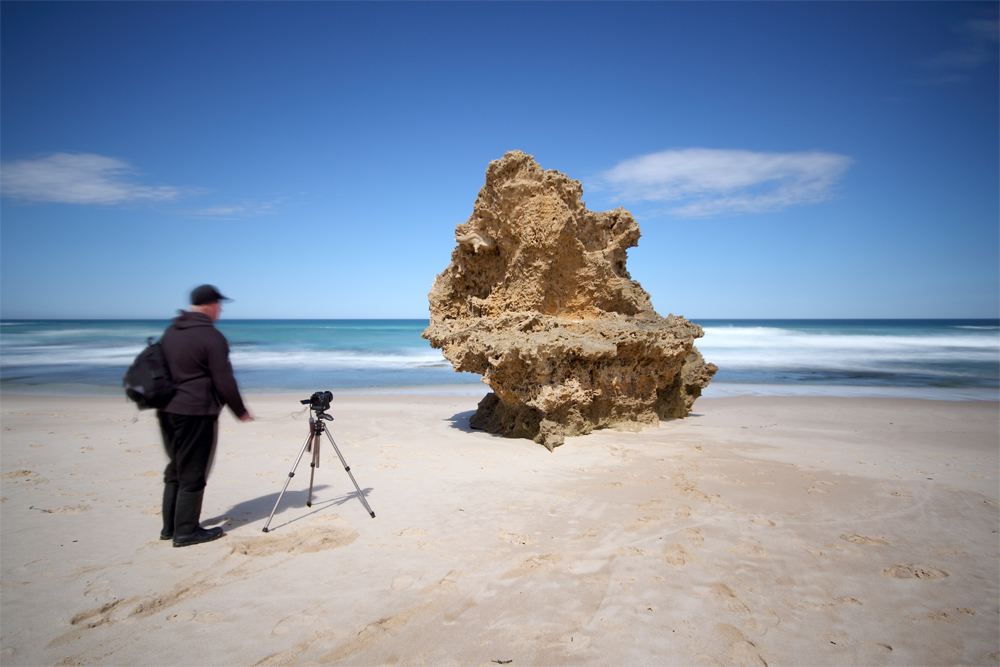
Below – A couple of images of my friend lining up his gear for the money shots.

Catching the Instagram Train
The photography community seems to be polarized over the use of phone cameras and associated filter programs such as Instagram.
I must admit to being slow to travel down the “phone and filter” path and have only recently decided to give it a go to see what all the noise is about.
Since giving it a trial run I must admit that the use of Instagram and other similar programs has reintroduced a fresh and fun aspect to my photography.
Pictured below – Rye Pier.
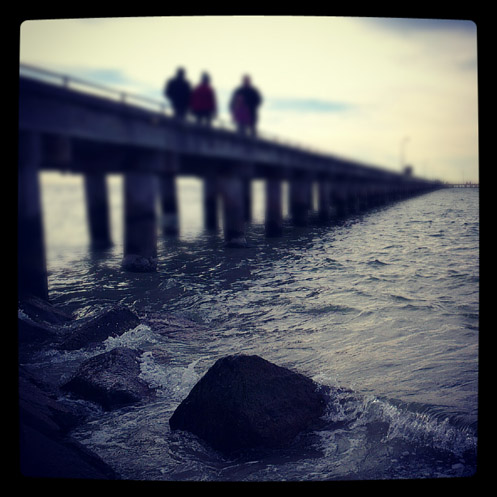
I find it refreshingly simple to just pull out my phone, click, process and even publish the image so quickly.
I also enjoy being forced to rethink my compositions into a square format after being conditioned by years of using a 3×2 SLR format.
Pictured below – A foggy morning at Tooradin foreshore.
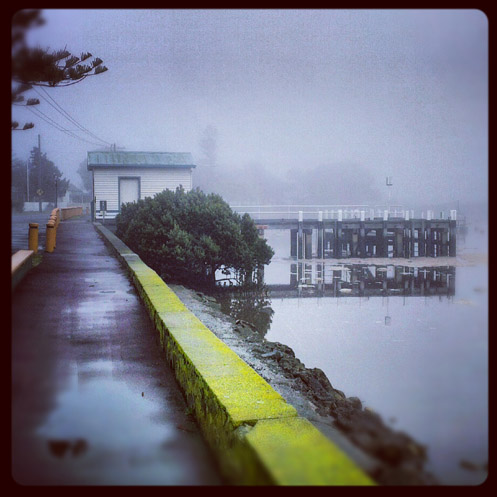
Admittedly I’ve had to resist the urge to “pixel peep” at the noise and visual anomalies created by some of the clunky filters.
This will never replace my SLR photography but I reckon it will complement it nicely. Phone photography has definitely introduced a fresh fun aspect to my photo life.
Pictured below – Mt Martha beach.
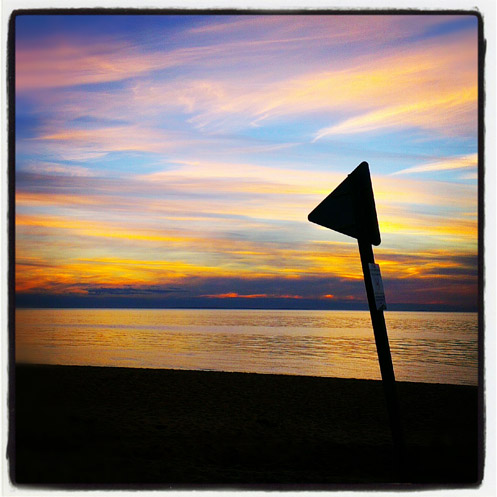
The Dragon’s Head at Number Sixteen
The Dragon’s Head rock at the Number Sixteen beach, Rye, has been a photographic target that I’ve been looking forward to shooting for quite some time. The last time I visited here I’d arrived a bit too late in the tidal cycle to safely explore the rocky plateau that surrounds the Dragon’s Head.
Today’s visit was executed with military precision. I arrived on the beach precisely at low tide, waded out to the Dragon’s Head through ankle deep water and excitedly set up my tripod. The ocean waves were crashing and rolling across the rocky plateau then cascading beautifully over the edge very close to the Dragon’s Head.
Being a big fan of long exposure images you can imagine my disappointment as I fumbled around in my camera bag trying to find my ND filters to fit the wide angle lens. They were no where to be found. I had left the filters behind at home, … they were attached to another lens. It was one of those forehead slapping moments.

In the absence of any suitably sized ND filters I decided to make the unique shape of the rock fill the frame in the image above rather than featuring the flow of water.
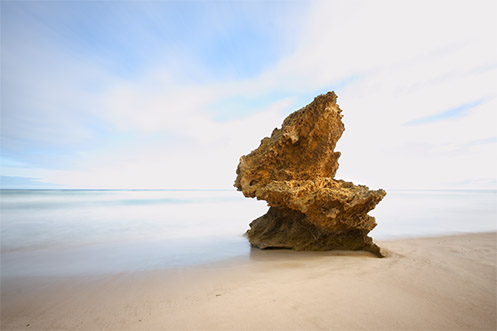
The next image below was taken from quite a distance back from the Dragon’s head using a 70-200mm lens. Fortunately I had a suitably sized ND filter for this particular lens so it was possible to soften the look of the flowing water. Unfortunately using the long lens meant that I wasn’t able to get the composition that I was looking for.
Lesson learned – double check the gear before leaving home, never assume!

Cyclical Rendezvous – water motion at Rye beach
Pictured below, a long exposure image capturing the remnants of spent waves returning to the relentless ocean at Rye beach, Victoria, Australia.

Number Sixteen beach – reprocessed
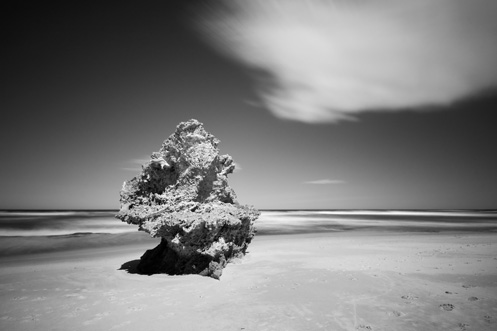
A couple of images from the previous excursion to Number Sixteen beach, reprocessed in black and white, ……and with a little more drama added.
A long exposure from Rye back beach, Victoria, Australia.

Rye Back beach.

Swimming at the Sixteen – Rye Beach
After a recent photographic excursion to Koonya beach two weeks ago, I swore not to return my feet to the icy waters of the ocean until the warmer weather arrived.
Alas, the lure of the salty seas proved to be too much for me.
This week’s excursion was a low tide expedition to Number Sixteen beach at Rye on the Mornington Peninsula.
Unfortunately I arrived just a little bit too late in the tidal cycle to safely photograph my intended target. Rather than risk my life on the rocky shelves I decided to play around on the beach photographing easier targets, …..and only got wet up to the knees. 😉
A long exposure image from Rye beach.
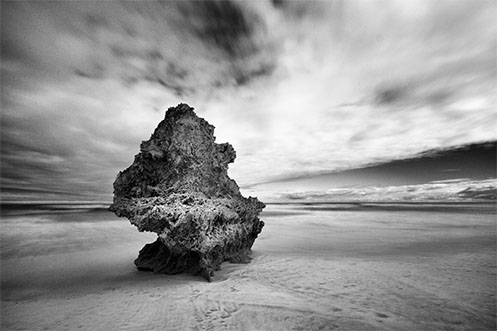
This rock is one of the main features of the Number Sixteen beach. It dramatically changes it’s perceived shape depending on the direction from which you photograph it.
Water rushes back from the beach to join the pounding surf.
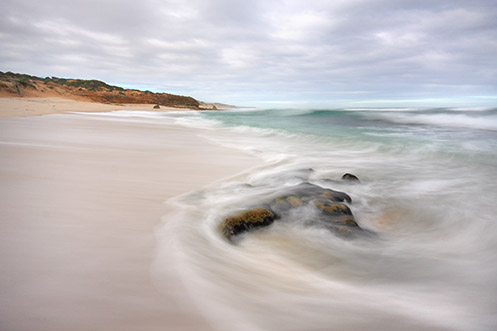
Water swirls around the foreground rocks as it enters the beach.
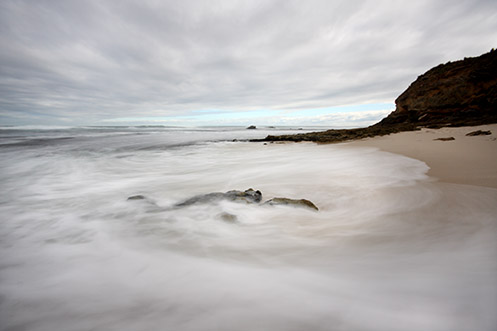
The landmark rock from a different perspective.
West of Mind
A monochrome HDR image taken at Blairgowrie beach, Australia.
The sun struggles through gathering storm clouds.

This image is available to purchase as a print here.
Eclipsed
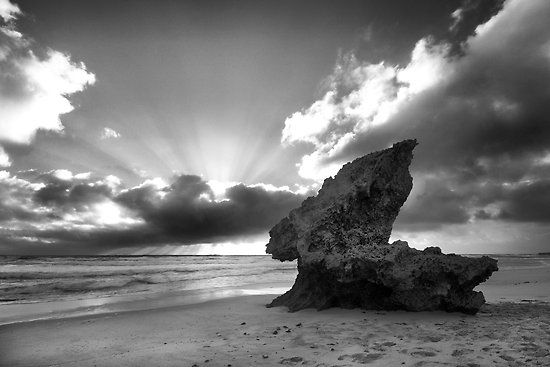
Eclipsed – a black and white seascape taken as the sun was setting at Rye ocean beach, Australia.
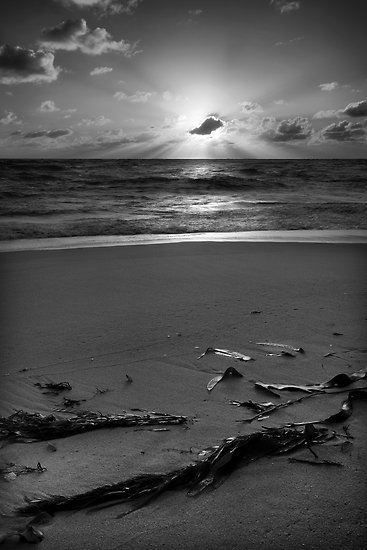
This image is available to purchase here.
Koonya Sunset
Sunset at Koonya beach, Blairgowrie, Australia.
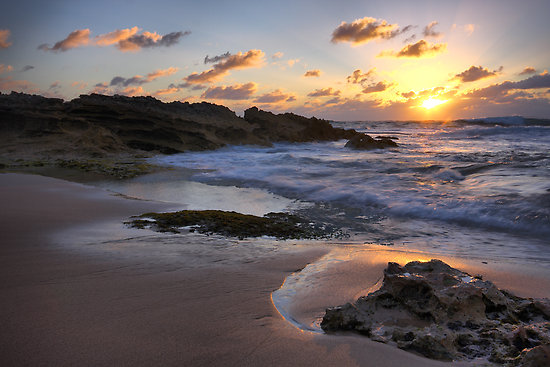
This image is available to purchase as a print here.
Wishful Thinking
A monochrome sunset photo taken at Rye ocean beach, Australia.
This image is available to purchase a s a print here.
Freedom

No restraints, ….and with his mates, ….freedom.
Pelicans at Rye beach.
This image is available for purchase as a print here


