
On the Beach at Narooma
I was fortunate to stay in the town of Narooma in New South Wales for a couple of days on a recent trip up the coast.
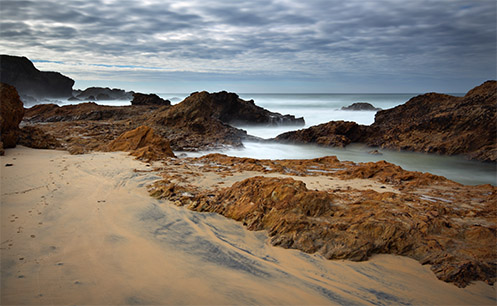
Narooma is home to some interesting natural rock formations along the ocean beach. When combined with some great surf the photo opportunities are plentiful.



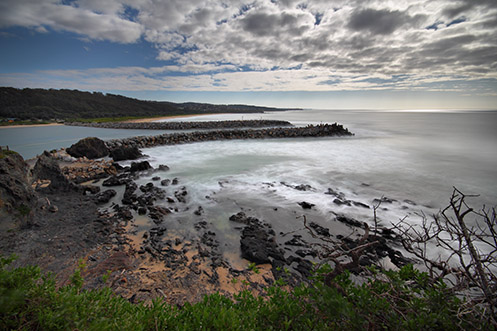
And finally, a man made rockscape in Narooma, the Wagonga Inlet.
Ocean Rockscapes at Mossy Point
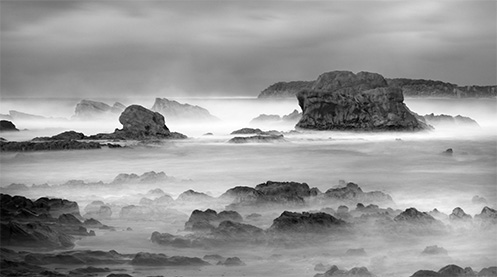
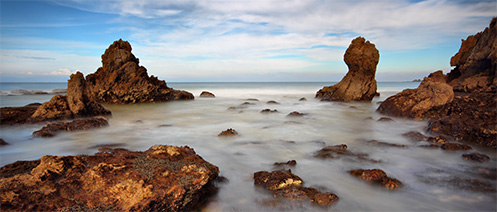
Following are a couple of long exposure images from Mossy Point near Broulee in New South Wales.
The images were taken in bright daylight using heavy ND filtering to slow the camera’s shutter speed.

The View from Bushrangers Bay
The splendid view from Bushrangers Bay looking west just a few minutes before a drenching downpour.
Cape Schanck’s Pulpit Rock is on the horizon near the center of the image.

Click on the image to enlarge.
Cape Schanck – Splendour in the Surf
A long exposure image of the surf pounding away at Pulpit Rock, Cape Schanck, Mornington Peninsula.
This place is always a wonderful reminder to me of the power of the ocean. Visiting the rock shelves here is truly exhilarating.

Tea Tree Creek – Death of the 40D
It was one of those days that I’ll remember for a long time.
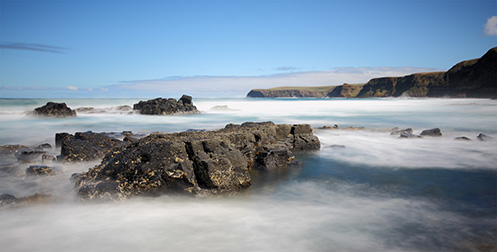
Whilst shooting on a rocky plateau at Tea Tree Creek beach at Flinders I carelessly let my guard down.
An unusually high rogue wave struck the face of the plateau and poured down upon me.

My workhorse camera, the Canon 40D, had experienced some salt water splash in the past but nothing like this.
Today was the day he ingested way too much salt water. He coughed and spluttered, ….and died.
Luckily my wide angle lens seems to have survived the ordeal with only some minor salt water spots inside the focal range window. The glass inside seems to be clear,…PHEW!

These images were thankfully retrieved from the camera’s memory card despite it’s convulsions.
Down the Tea Tree Creek Track – Flinders
The entrance to the track begins where Tea Tree Creek meets the Boneo Road.
The mowed walking path follows a gentle slope downhill alongside the creek gully and down towards the beach.
Upon arrival at the beach, visitors are welcomed by the presence of a rusty metal wheel nestled amongst the undergrowth.

East from here, the beach invites exploration for those willing to navigate across the black weather-worn rocks covering much of the beach.
The area also offers an impressive selection of rocky plateaus which are sometimes exposed and sometimes dramatically washed by the relentless surf.

When exploring along this stretch of beach it’s a good idea to avoid an embarrassing or even life threatening situation by knowing what the tide is doing. Keep an eye out for the occasional rogue wave determined to sweep you off the rocks.

There’s an amazing amount to see, explore, experience and photograph here.
I’ll definitely be returning soon. 😉
Playing in the Wind – Flinders, the Blowhole Track
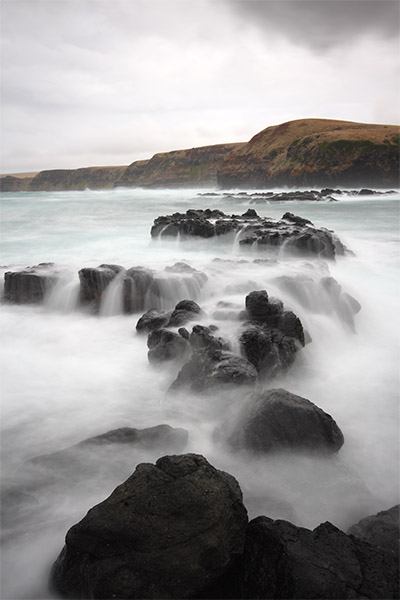
A selection of images from the beach at the end of the Blowhole Track at Flinders on the lovely Mornington Peninsula.
On the day I was there the wind was so horrendously strong I had to push down hard on the tripod to stop it from vibrating and blurring all of the long exposure shots.
Pictured below – Flinders Beach, the Blowhole Track.

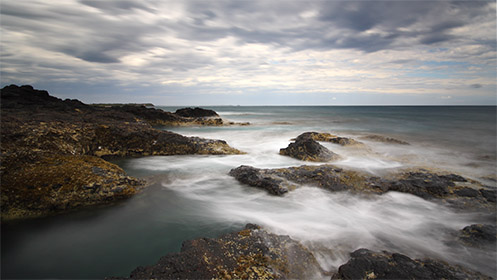
A very picturesque coastline battered by the relentless surf.

Sorrento Back Beach
Shortly before xmas I took the opportunity to snap some images just before the summer “silly season” struck Sorrento.
I’m certain that one day the Sorrento/Portsea area of the Mornington Peninsula will become so heavy with tourists that it’ll snap off and fall into the sea.
Until that day I’ll continue to enjoy it as much as I can.
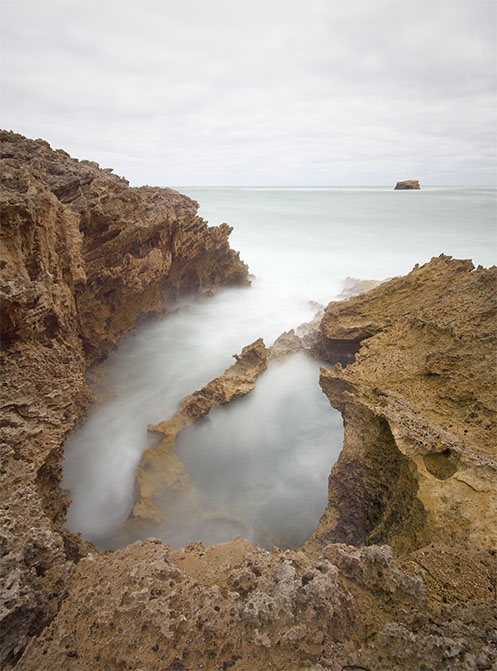
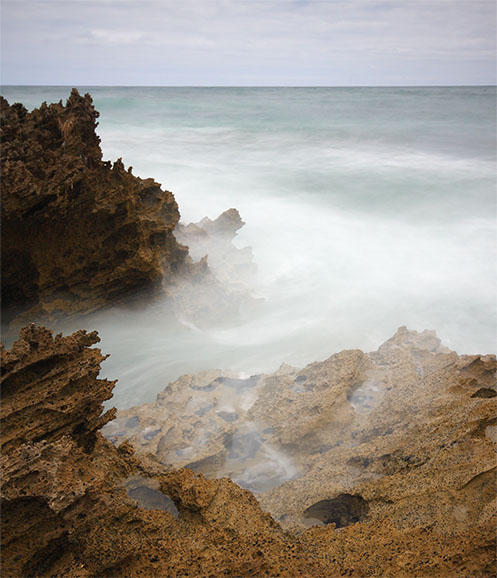
Pictured below – A couple of long exposure images from south-east of the main beach.
Pictured below – Bay of Islands – Sorrento
Located a short walk from the car park at the end of Diamond Bay Road.
The Dragon’s Head at Number Sixteen
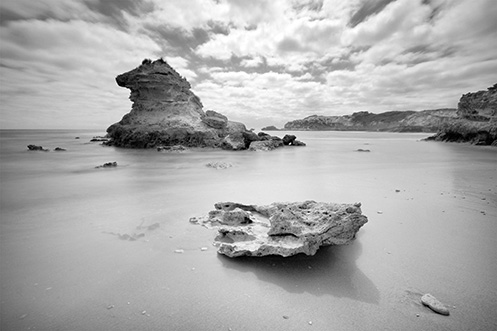
The Dragon’s Head rock at the Number Sixteen beach, Rye, has been a photographic target that I’ve been looking forward to shooting for quite some time. The last time I visited here I’d arrived a bit too late in the tidal cycle to safely explore the rocky plateau that surrounds the Dragon’s Head.
Today’s visit was executed with military precision. I arrived on the beach precisely at low tide, waded out to the Dragon’s Head through ankle deep water and excitedly set up my tripod. The ocean waves were crashing and rolling across the rocky plateau then cascading beautifully over the edge very close to the Dragon’s Head.
Being a big fan of long exposure images you can imagine my disappointment as I fumbled around in my camera bag trying to find my ND filters to fit the wide angle lens. They were no where to be found. I had left the filters behind at home, … they were attached to another lens. It was one of those forehead slapping moments.

In the absence of any suitably sized ND filters I decided to make the unique shape of the rock fill the frame in the image above rather than featuring the flow of water.
The next image below was taken from quite a distance back from the Dragon’s head using a 70-200mm lens. Fortunately I had a suitably sized ND filter for this particular lens so it was possible to soften the look of the flowing water. Unfortunately using the long lens meant that I wasn’t able to get the composition that I was looking for.
Lesson learned – double check the gear before leaving home, never assume!

Tenby Point Revisited
There’s something quite magical about Tenby Point. It’s one of those areas I feel compelled to visit from time to time.
A great surprise this visit was to find the road is now surfaced with asphalt. I’m going to miss all the corrugations and pot holes that once adorned the old dirt track leading to the beach.


Cyclical Rendezvous – water motion at Rye beach
Pictured below, a long exposure image capturing the remnants of spent waves returning to the relentless ocean at Rye beach, Victoria, Australia.

Number Sixteen beach – reprocessed
A couple of images from the previous excursion to Number Sixteen beach, reprocessed in black and white, ……and with a little more drama added.
A long exposure from Rye back beach, Victoria, Australia.
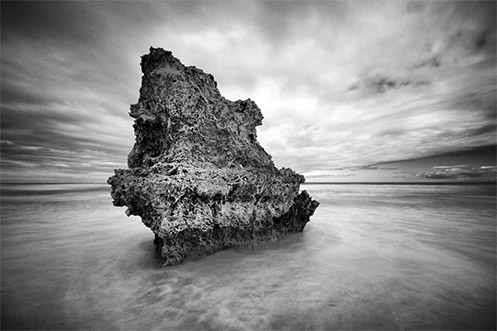
Rye Back beach.

Swimming at the Sixteen – Rye Beach
After a recent photographic excursion to Koonya beach two weeks ago, I swore not to return my feet to the icy waters of the ocean until the warmer weather arrived.
Alas, the lure of the salty seas proved to be too much for me.
This week’s excursion was a low tide expedition to Number Sixteen beach at Rye on the Mornington Peninsula.
Unfortunately I arrived just a little bit too late in the tidal cycle to safely photograph my intended target. Rather than risk my life on the rocky shelves I decided to play around on the beach photographing easier targets, …..and only got wet up to the knees. 😉
A long exposure image from Rye beach.
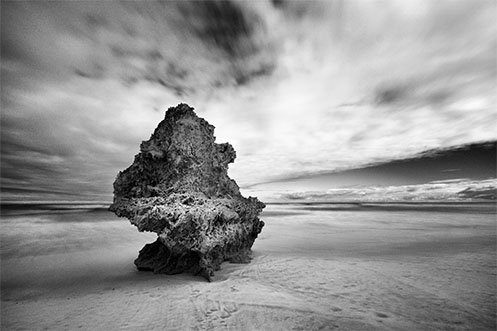
This rock is one of the main features of the Number Sixteen beach. It dramatically changes it’s perceived shape depending on the direction from which you photograph it.
Water rushes back from the beach to join the pounding surf.

Water swirls around the foreground rocks as it enters the beach.
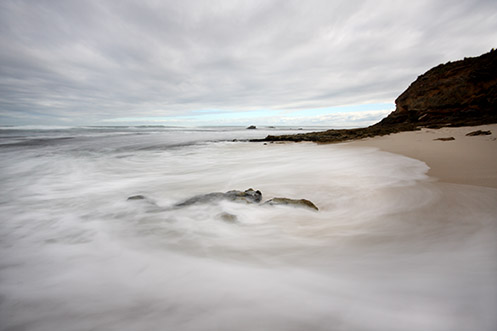
The landmark rock from a different perspective.

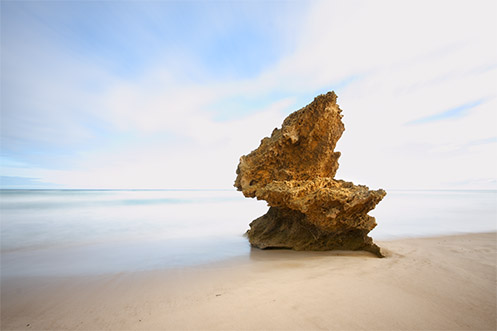
Magic of the Phillip Island coastline.
Following on from previous posts I thought I’d share with you just a few more images from the Phillip Island coastline. I feel like I’ve just scratched the surface down there, …….there’s just so much beauty to explore and discover.
Pictured below – The Roost – old jetty remnants that serve as a safe roost for the local birds at Cat Bay.

Pictured below – Evidence of Life – a soft misty view of some wonderful wave action off Cowrie beach.

Pictured below – The Long Swim Home – another view from Cowrie beach looking towards the Nobbies in the background.

Pictured below – Pyramid Rock, taken in strong windy and wet conditions from a vantage point ahead of the lookout area.

A Trip to the Pointy End – Phillip Island
Over the weekend I did a quick reconnaissance trip down to the pointy end of Phillip Island.
The images below were taken on a stretch of unsealed road named “The Boulevard” which runs along the south coast of Summerlands and ends at the Nobbies. The Boulevard is a grand name indeed for what amounts to a narrow dirt track, however the coastal views can be quite impressive from here.
Pictured below – The view from The Boulevard looking west towards the Nobbies.
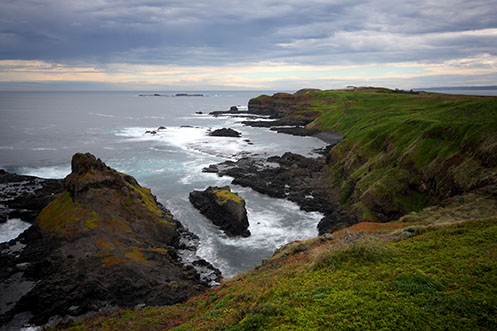
Unfortunately for those of us who like to immerse ourselves in these kinds of coastal environments there is no beach access permitted. We’re reminded of this fact by strategically placed signs warning of penalties for such breaches.
Pictured below – The view from The Boulevard looking east.
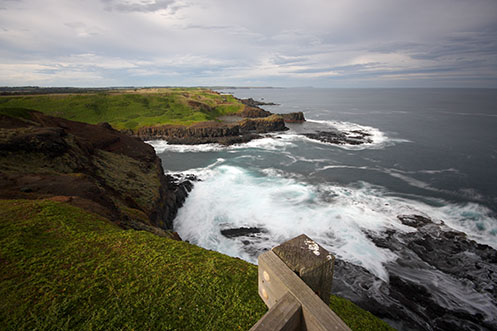
Pictured below – a zoomed in view of the coastline. It looks like a fine place for a photographer to play.
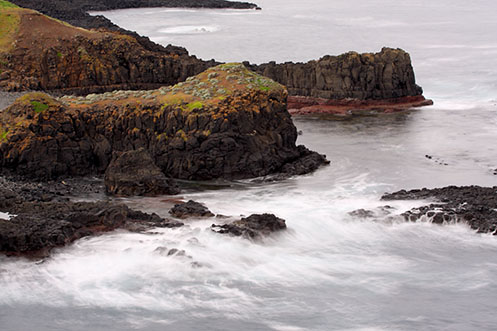
When finished with the south coast I made the short trip over to the north coast to visit Cowrie beach. I’ve been here once before but I had some unresolved images in my head that I wanted to try to capture here. Most of the northern coast is photographer friendly, allowing one to get as close to the water as one dares.
Pictured below – Bull in a China Shop, one of the less sedate Phillip Island waves attacking from left of frame.

Pictured below – A long exposure image using an ND400 filter, The Course of the Penguin, one of the many corridors used by the penguins of Phillip Island.

After finishing at Cowrie beach I left the island and crossed the bridge over to San Remo on the mainland. As I was crossing the bridge I noticed some amusing looking stairs below, surrounded entirely by the water of a high tide. It appeared to be a stairway going from nowhere to nowhere.
Pictured below – From Nowhere to Nowhere, San Remo.

The day concluded with a delicious meal of fish n’ chips from the Fisherman’s Cooperative, …..what bliss!
Plateau – Sorrento back beach
Below – Plateau – A long exposure image from the Sorrento back beach.
An intriguing place to visit at low tide.

The Sleeping Sphinx – Sorrento
An image from the Sphinx rock formation after an enjoyable day of playing in the surf.

The Vagabond Tide – ND400 long exposure
Following is a series of images taken at the Sorrento back beach, Victoria, Australia, using an ND400 filter during bright afternoon light conditions.
Pictured below – Dorsal.
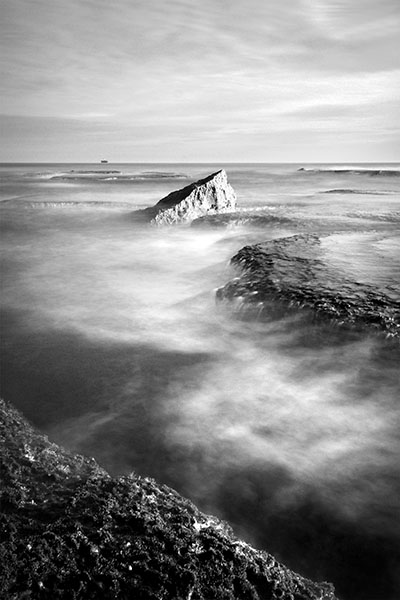
Below – The Vagabond Tide.

Below – The Rinse Cycle.


An Afternoon at Cowrie Beach, Phillip Island.
Cowrie Beach is located just a few hundred meters north-east of the popular tourist destination “The Nobbies” on Phillip Island, Australia. The beach sits just inside the entrance to Westernport Bay and is subjected to rough surf originating from Bass Strait.
The thinly vegetated sandy portions of the beach are home to Fairy penguins and some other more endangered species so there are signs present advising which areas to avoid.
The main attraction here from my perspective is at the water’s edge. The beach is blessed by the presence of dark basalt rock formations continuously pounded by waves.
Below – The Nobbies – an image from Cowrie beach with The Nobbies in the background.

Below – Down the Winding Path – a long exposure looking out to sea from Cowrie Beach.

Below – Awaiting the Devil – a frightening part of the beach where unexpected waves suddenly inundate the dark basalt platforms. There’s a warning sign on the beach reminding fishermen and other visitors how easy it is to be swept off these rocks.
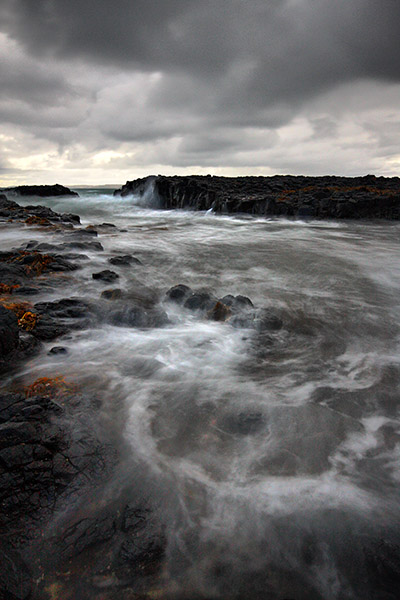
Below – The Ordeal – How the Phillip Island penguins manage to survive the violent Bass Strait surf combined with rocky beaches escapes me.

Below – Through the Vapour
An Afternoon at Sorrento
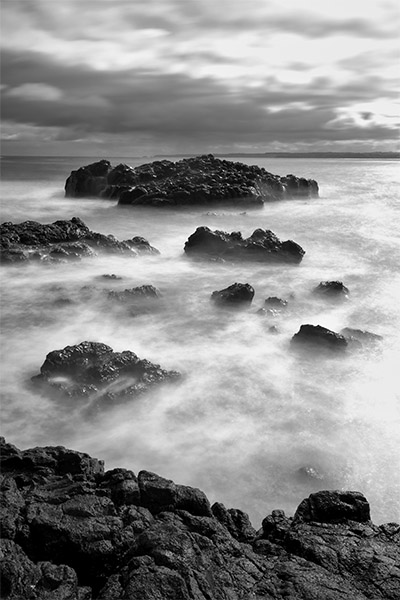
A selection of images from the photographically rich area along Sorrento back beach.
Below – “Her Outstretched Arms”
The sun has dropped close to the horizon giving a warm hue to the sky and rocky plateaus. The vigorous surf is tamed by the camera’s long exposure time.
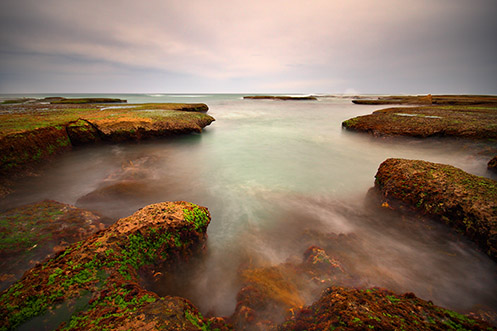
Below – “Sphinx”
In the foreground the violent surf swirls under and around a rocky platform whilst in the background the iconic Sorrento Sphinx rock formation stares out to sea.
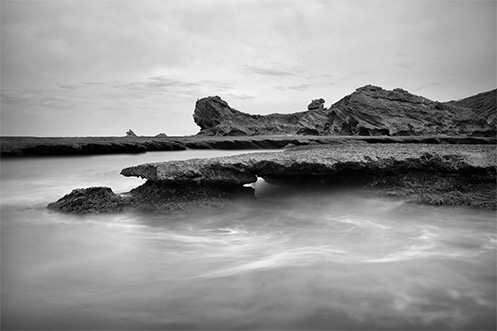
Below – “The Call of White Water”
Low tide at St Paul’s beach Sorrento as the surf crashes over the rocky plateaus filling one of the many natural pools.
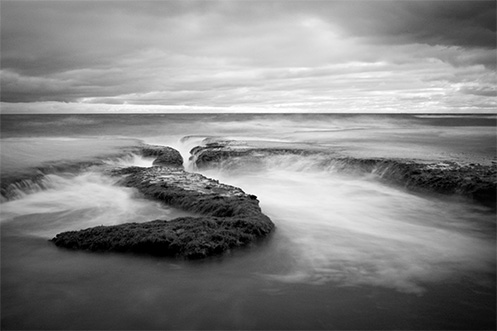
Below – Water continually cascades off the edge of the platforms as waves push across them.

Below – A memorial on the cliff tops at Jubilee Point, Sorrento.
A sobering reminder of how dangerous this area can be.

The Flinders Pier Excursion.
Images from a recent trip to Flinders with friends Christine Wilson and Caroline Gorka.
The objective for the afternoon was to capture some images of the old wooden pier before it’s replaced by the concrete monster that’s currently being constructed right next to it.
As usual I became distracted.
Below – “IiN” some ghostly remains from further along the beach.

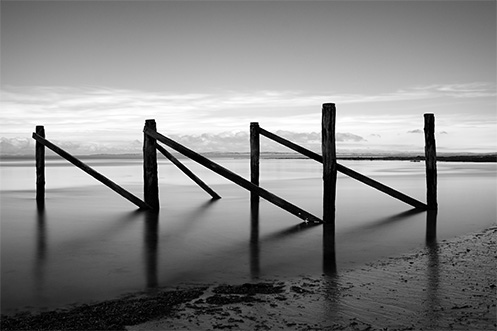
Below – “Flinders Point” just around the corner from the calm harbor area there’s a lot more ocean wave activity.
There were waves crashing all over the place here but the long exposure makes it look deceptively calm.
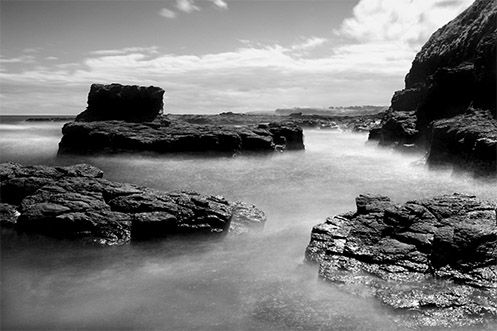
Below – “Flinders Back-Beach” near the blow hole area. Stop giggling, that’s what it’s called !!

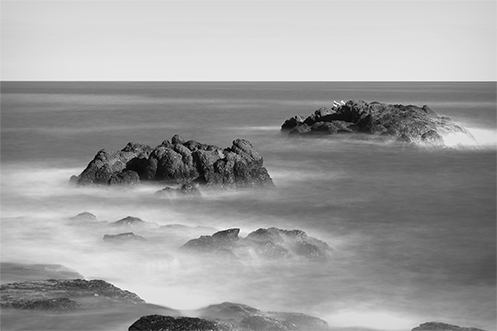
Hunting the white water – Pinnacles, Phillip Island
Following are some images from The Pinnacles rock formation at Cape Woolamai on Phillip Island. We were hoping for some nice big waves but unfortunately the conditions conspired against us that day.
The images were created using HDR techniques to capture the full dynamic range of this very contrasty environment, i.e. 3 bracketed exposures at 0,-2 and +2 EV. I had an ND400 neutral density filter on the front of the lens to allow longer exposure times and give some sense of movement to the water and clouds.
Below – “Chasing Dinosaurs”
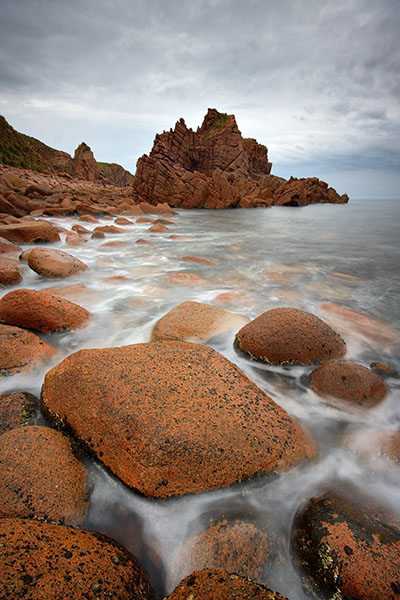
Below – “Waiting for the Swirl of White”
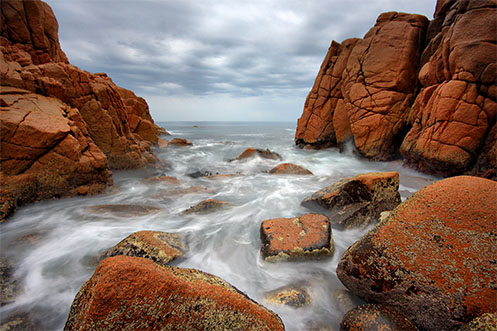
Below – “Sea Level”

Below – “Lost in the Moment”
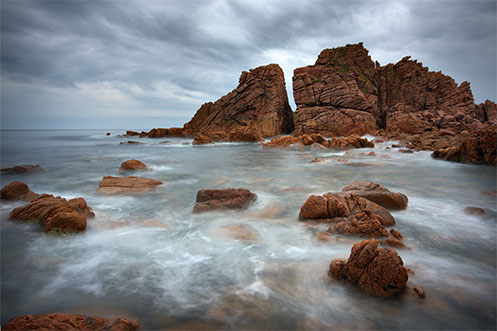
Below – “The Risky Swim”

Exploring Cape Schanck
Cape Schanck is located at the southern tip of Victoria’s Mornington Peninsula.
The beaches here offer a feast of opportunities for photographers. At the tip of the cape sits Pulpit Rock, a huge monolith standing proud amongst tidal rocky platforms.
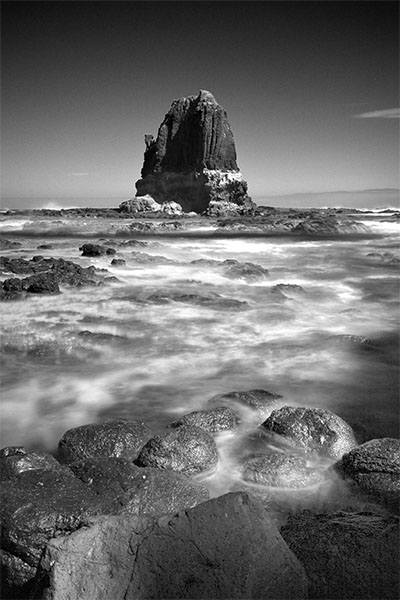
At low tide the rocky platforms are exposed allowing fairly easy access to a large number of rock pools. These pools are home to a variety of sea creatures including small fish, crustaceans and octopuses. Depending on the time of year the pools can contain various forms of brightly coloured seaweed, providing wonderful hiding places for the rock pool residents. This is a great place to dunk your waterproof compact camera if you’re lucky enough to own one. Unfortunately I don’t own one (yet).
Below – Pebbles at the Pulpit

The beach leading out to Pulpit Rock is covered by rounded rocks that roll around and pound into each other with each wave creating an interesting sound that’s quite difficult to describe.
Below – Cape Schanck Lighthouse overlooking the west side of the cape.

Below – Cape Schanck East. The eastern side of the cape provides a rocky beach where there are lots of opportunities for the photographer who enjoys capturing waves crashing over and around rocks. I took quite a few long exposures here.

Below – The Schanck. The white surf and dark rocks contrast each other nicely and provide excellent material for making great black and white images.
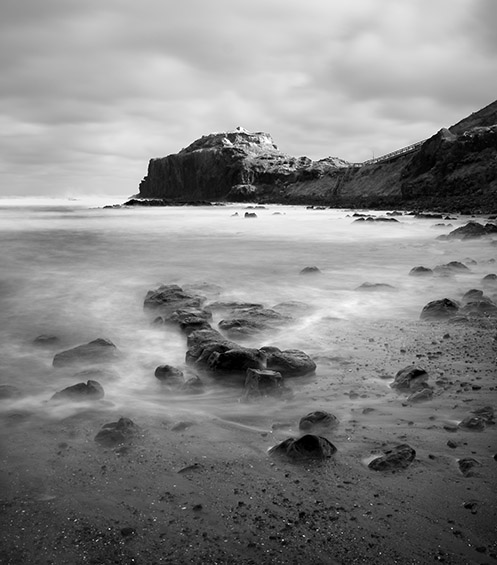
Fluid in Motion – Flinders
One of my favorite spots for photogenic wave action along the Mornington Peninsula is Flinders.
West of the township the rugged coastline features extensive cliffs with access to the rocky beaches in only a few places.
The deliciously dark rocks here provide a wonderful contrast to the bright white surf as waves from Bass Strait relentlessly pound the beach.
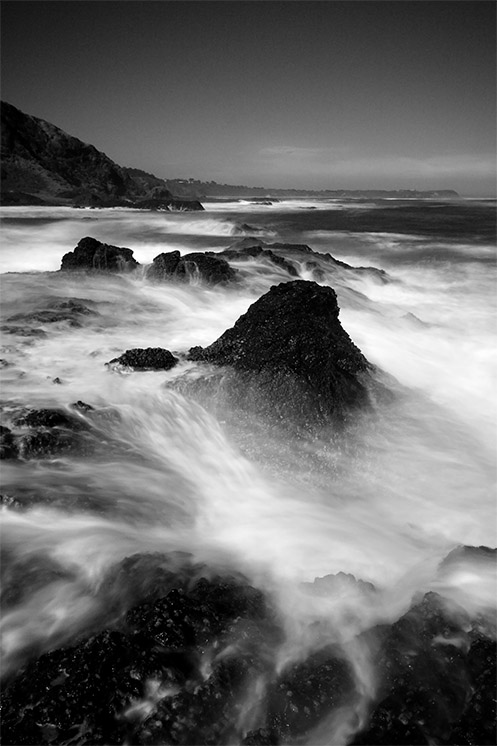
On this occasion I visited the beach during the early afternoon so conditions were extremely bright and contrasty.
I used an ND400 filter, sometimes in combination with an additional ND8 filter, to darken the scene and enable the use of slow shutter speeds to blur the moving water.

It’s always fun and games being close to the edge in places like this. Despite keeping one eye on the camera and the other eye on incoming waves I was caught by surprise on a couple of occasions during the afternoon and drenched by rogue waves exploding on the rocks.
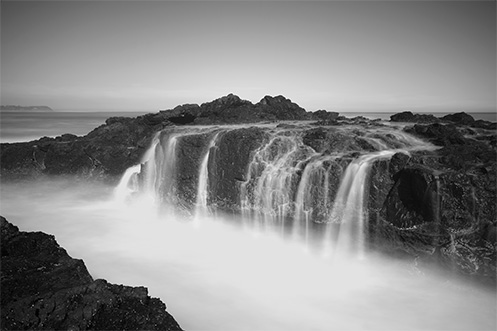
This is really quite an extraordinary spot from a photographer’s perspective. Not so special for the grand seascape but more for the myriad of recesses where the surf dynamically interacts with the rocks.

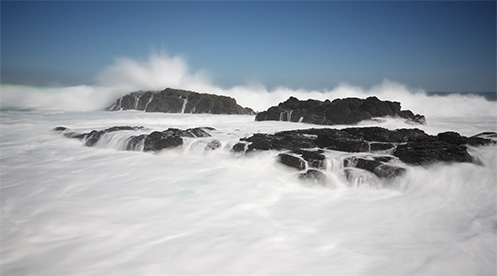
Construction at Powlett River
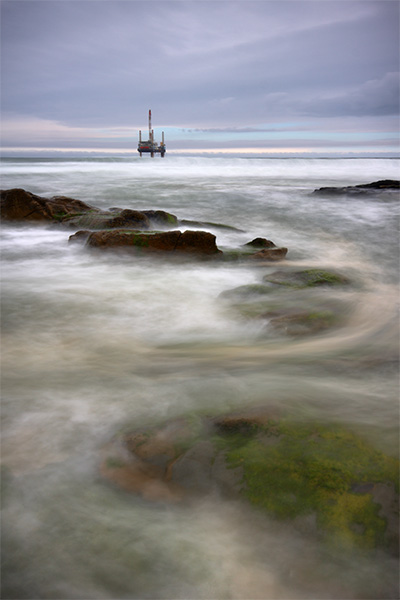
The construction of the controversial desalination plant near the mouth of the Powlett River has yielded a temporary point of interest for photographers.
A large platform has been placed offshore to assist with the construction of the required underwater pipeline.
Although not the most beautiful structure in the world, it acts as a nice point of interest for an otherwise potentially boring background.
I’m in no way a supporter of this project but I decided to take advantage of the platform while it’s there and took a series of images from the spot where the Powlett River meets the ocean.
The idea behind the images was to use the lines created by running water and rock edges to draw the viewer into the scene towards the platform in the background. The images were taken in bright mid afternoon light using strong ND filtering to enable the exposures to be long enough to blur the water.
Below – Platform One

Below – Platform Two

Below – Platform Three
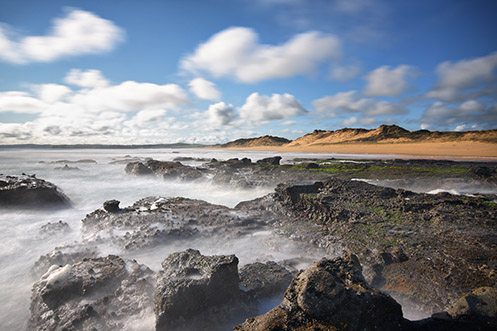
Below – Mouth of the Powlett – Looking north-west across the mouth to the sand dunes, the waves crashing onto the rocks in the foreground just appear as mist due to the long exposure time.
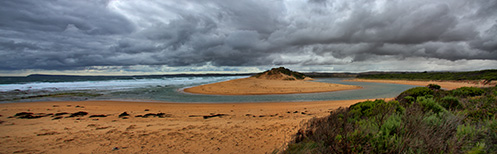
Below – a couple of experimental panoramic shots of the river and dunes.

The Beauty of Polly McQuinn’s Weir, Strathbogie.
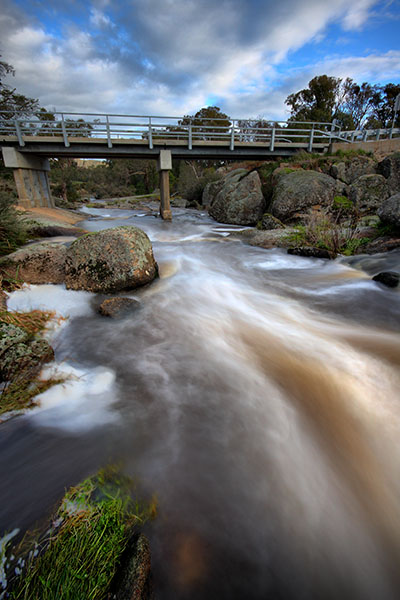
The picturesque Polly McQuinn’s Weir is well sign posted and located a few kilometers south-west of Strathbogie, Victoria, Australia.
The weir features a spillway where water streams over a concrete wall and onto large exposed granite boulders.
The water then continues snaking around more boulders before flowing under a road bridge then traversing a gently sloped granite plateau before reaching a deep pool surrounded by native vegetation.
There are many opportunities here for the keen photographer.
Below – A long exposure of water cascading over the spillway wall and onto granite boulders beneath.
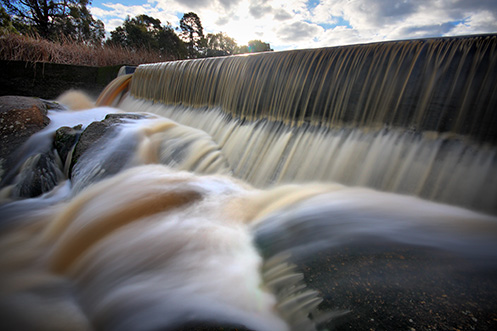
Below – Looking back towards the spillway wall, water flows rapidly over and around granite boulders on it’s way downstream.

Below – In the days preceding my visit to the weir the area had received heavy rainfall.
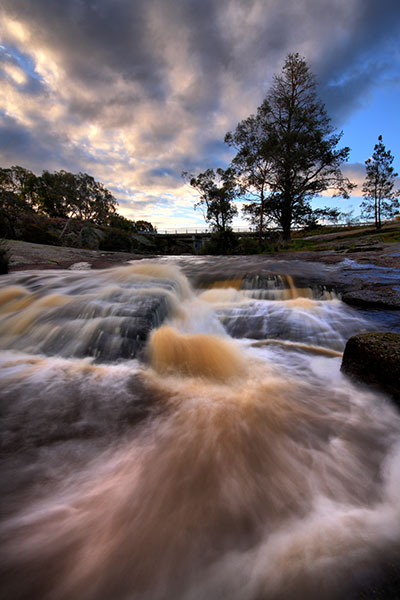
I suspect this caused lot of the brown silt present in the water. This caused an interesting effect in the water with the deeper sections of the flow taking on a brownish tinge and the shallow sections appearing bluish during long exposure shots.

Below – The view from the bottom of the spillway looking downstream.
The silted water runs rapidly under the road bridge.
Below – “Polly’s Overflow” – Looking upstream from the pool, the water traverses a gentle granite plateau then strikes some foreground boulders whipping the water into a frenzy before it finally enters the tranquility of the pool. This image is available to buy as a print at my Zazzle and RedBubble sites.
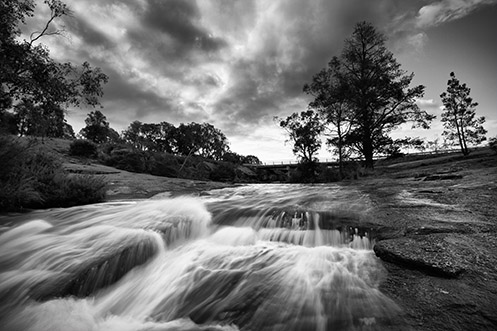
Below – “In Search of Polly”
Apparently the weir was named after a young woman called Polly McQuinn who drowned here more than 100 years ago. Legend has it that the ghost of Polly can sometimes be heard calling for help from passer by.
Unfortunately I didn’t hear Polly on the day I was here.
West – along the coast
Following is a short series of seascape images taken on a recent trip along the Victorian/South Australian coastline.
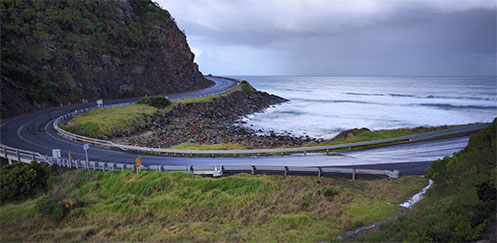
Below – The Great Ocean Road – just south of Lorne, Victoria, Australia.
Notice the skid marks on the road at the bend, …this road is a popular tourist route attracting visitors from all over the world.
Some of these visitors unfortunately forget that we drive on the left side of the road in Australia. This causes all sorts of drama.
Below – Along the Edge – A view of the incoming storm from the lookout at Glenaire, Victoria, Australia.

Below – Bay of Martyrs – A long exposure image from down on the beach at the Bay of Martyrs, on the Great Ocean Road, Victoria, Australia. I was attracted by the unusual shapes that the ocean had managed to create with the foreground rocks here.

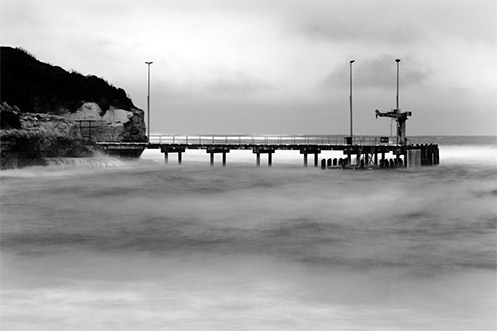
Below – Storm at Port Campbell Pier – a long exposure image made during a stormy morning at Port Campbell pier. This pier really has quite a hard life being continually hammered by waves from the open ocean.
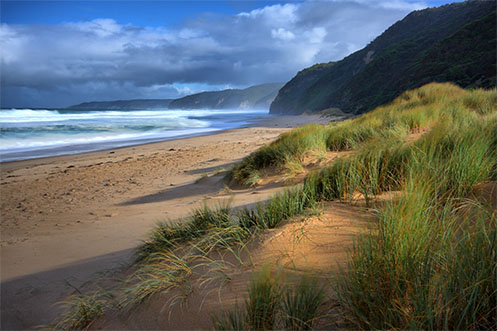
Below – Johanna’s Morn – The morning sun starts to warm the sands of Johanna beach, Victoria, Australia.
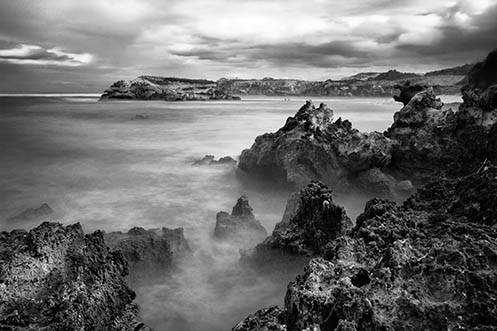
Below – Her Deceptive Charm – A long exposure image from Cape Northumberland in South Australia.
The waves were really ripping into the rocks here, …….although the image looks deceptively calm due to the long exposure time.
Below – At Ocean’s Edge – On the beach at Cape Northumberland, South Australia.

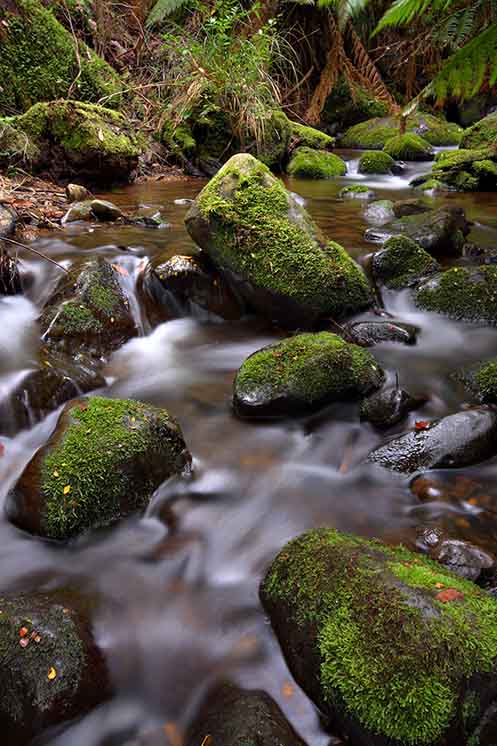
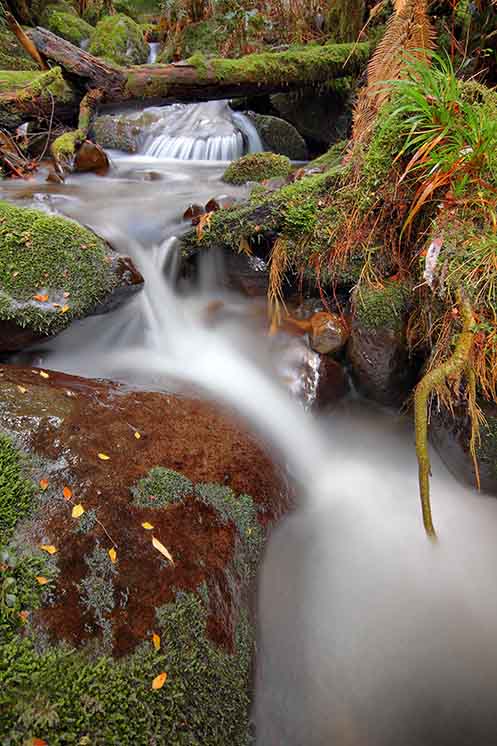
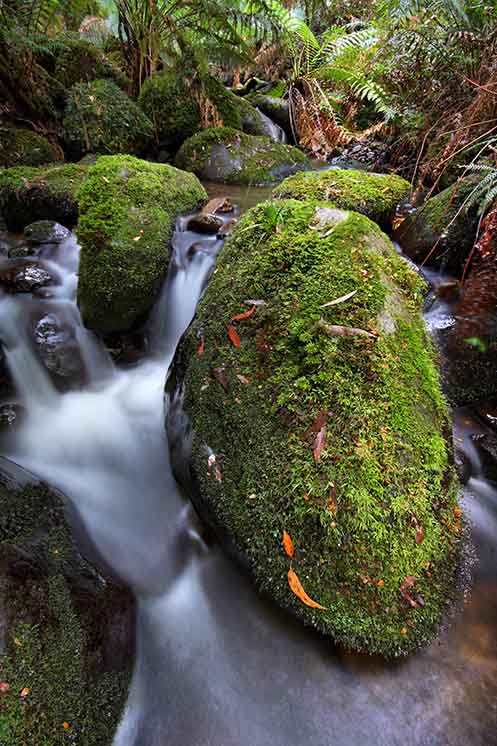
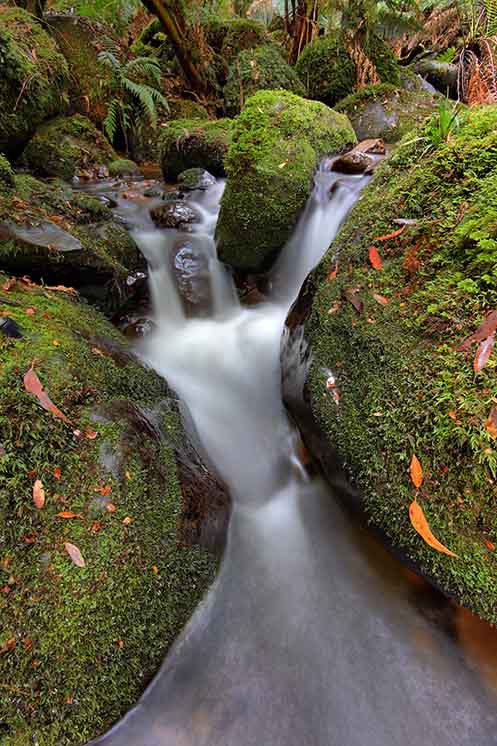
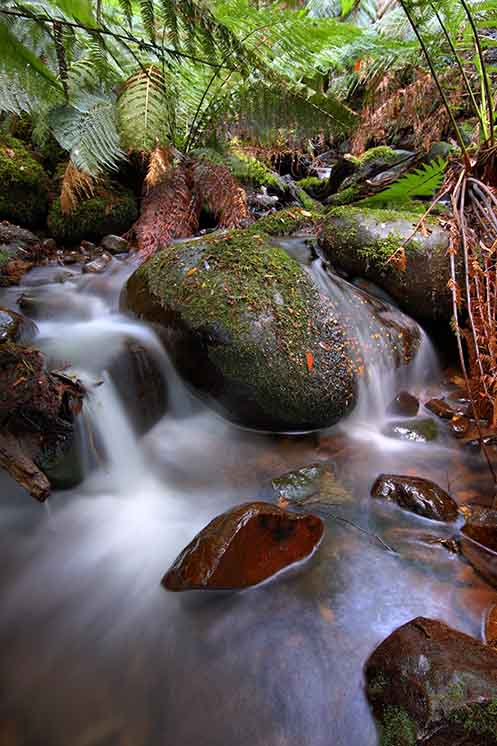
Exploring Cement Creek
It seems to me that Cement Creek was dealt an injustice when it was first named.
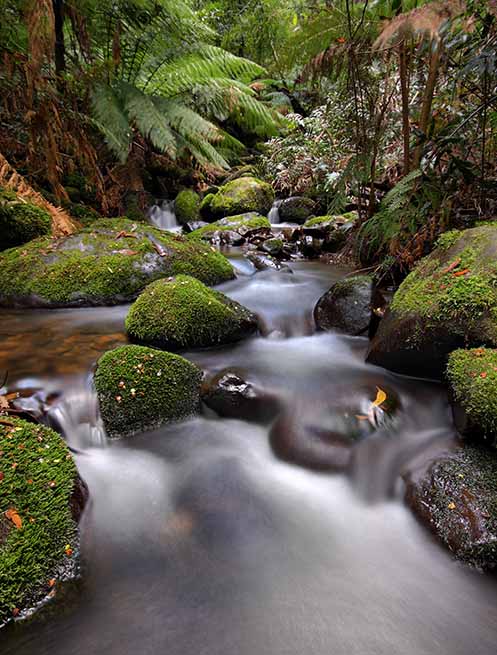
Despite it’s odd name, it really is quite an attractive location and a fine example of lush Victorian forest.
Cement Creek in located at the foot of Mount Donna Buang, near the intersection of Donna Buang Rd and Acheron Way.
On this excursion we gained access to the creek by walking along raised platforms which got us most of the way, then we jumped the handrail into the forest to get to the flowing water. At this location you need to be prepared to get muddy and wet, so it’s advisable to keep a change of clothes in the boot of your car.
The main hazard here is the slippery moss covered rocks. A minor hazard is the hungry leeches.
Incorporating HDR tonemapping techniques with long exposures
The following images were experiments using HDR tone mapping techniques combined with the effects of long exposure times.
Each image was constructed from at least 3 separate exposures using in-camera auto exposure bracketing. In my case, being a Canon shooter, I used 3 exposures of -2,0 and +2 simply for convenience. I believe Nikon shooters have a bit more flexibility in this area.
The images were all taken during daylight hours so it was necessary to use some heavy ND filtering in order to increase the exposure times and achieve a nice misty look to the water. In my case I used an ND400 and an ND8 filter stacked together to achieve this.
With the camera set to aperture priority mode I adjusted the aperture and filter combination (sometimes removing the ND8) to achieve an exposure of 8 seconds. When the shutter button is depressed the camera would then give me 3 exposures at 8 seconds, 2 seconds and 30 seconds (which is close enough to 0,-2 and +2). My particular camera doesn’t let me expose for longer than 30 seconds unless I go to bulb mode and use a remote timer, so out of laziness I tend to limit many of my exposures to 30 seconds. 🙂
The exposures were then combined and tonemapped using HDR software and tweaked in Photoshop to achieve the end result.
Despite all of this sounding a bit technical it’s really quite simple and I encourage you to try it. The results are often very rewarding.
BELOW – Jurassic Afternoon – Sunlight and waves break through a slit in the prehistoric Pinnacles rock formation on Phillip Island.

BELOW – The Mist of St.Pauls – A long exposure at St. Pauls beach, Sorrento, Victoria, Australia.

BELOW – Prehistoria – An image from The Pinnacles, at Phillip Island, Victoria, Australia.

BELOW – Swimming with Dinosaurs – Down amongst the prehistoric Pinnacles rock formations at Phillip Island, Victoria, Australia.


 Photography by Jim Worrall