
Exploring the Pointy End of Phillip Island
I’d been to this part of Phillip Island on previous occasions but I loved it so much I thought I’d revisit.
That’s one of the joys of photography, you can visit the same location on several occasions and come away with completely different images each time.
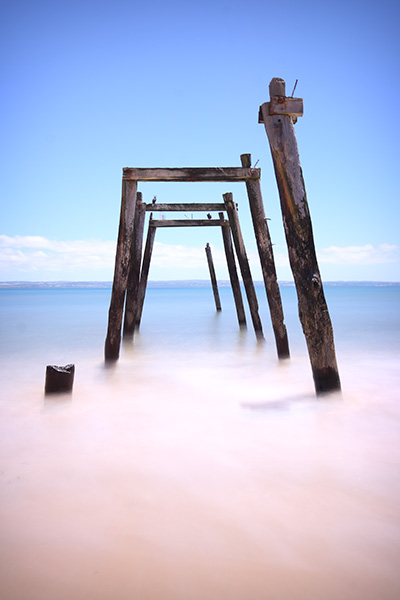
Pictured below – Old wooden remnants at Cat Bay, Phillip Island.


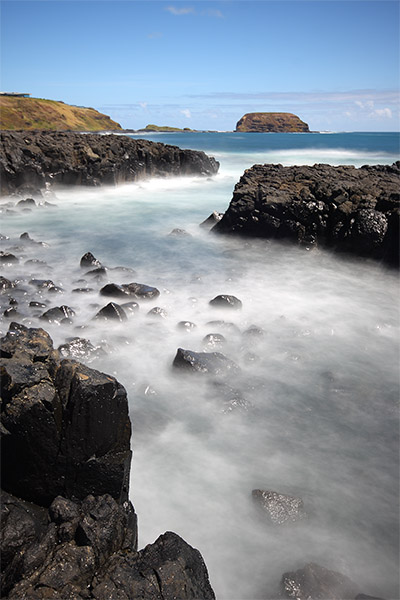
Pictured below – The beach at Right Point, Phillip Island, located between Cat Bay and the Nobbies. The violence of the ocean waves smoothed by the use of long exposure.

Sorrento to Queenscliff
The day started out well with brunch in Sorrento at the Buckley’s Chance restaurant with friends Christine and Caroline.
After being suitably fueled by brunch we strolled to the other end of town and boarded the Sorrento-Queenscliff Ferry for the short trip across the mouth of Port Phillip Bay to Queenscliff.
On arrival we departed the ferry to see what photographic treasures we could find along the beach.
Pictured below – Queenscliff Pier, shot in the early afternoon using an ND400 filter to extend the exposure time and soften the waves.
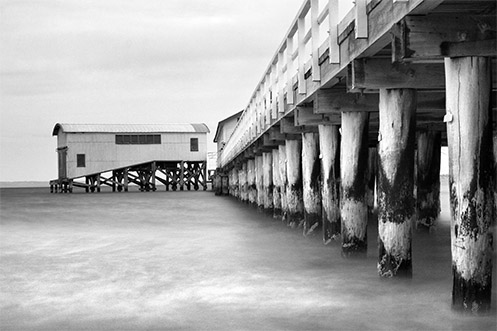
Pictured below – Evidence of Dredge, a pipeline from the offshore dredger snakes it way past heavy posts buried in the sand at the shoreline. The waves softened to a mist by the use of long exposure time.

Pictured below, an unusual long exposure action shot of the ferry departing the Queenscliff beach on one of it’s many return journeys to Sorrento.

Pictured below – Caroline and Chris explore the beach with a ship load of onlookers viewing from the top deck of the ferry.

Snapshots from Tooradin
Tooradin is right at the top of my list when it comes to escaping for a little bit of quiet time. Located just a few minutes down the road from my home, Tooradin’s features include a serene creek that runs through the town and winds it’s way down to a great foreshore area where it joins with Westernport Bay.
The foreshore area usually has lots of parking spaces available and serves as a fine place to devour whatever delicacy you’ve chosen from the local bakery, fish and chip, or pizza shop.
Alternatively you can bring along your own boring food and make use of the BBQs.
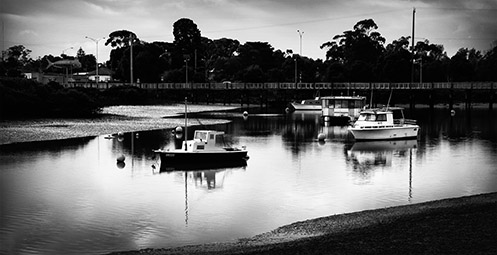
Pictured below – The view looking down the channel towards Westernport Bay at low tide.

During low tide, large expanses of mud are exposed along both sides of the channel.
You can stroll along the elevated edge of the channel and watch as thousands of tiny crabs, disturbed by your presence, dive for cover into their tiny holes in the mud.
Pictured below – The view looking up the channel towards the main road.
Back to the serious topic of food for a moment, I highly recommend the Tooradin bakery with it’s fine selection of meat pies. They also have more sweet cake/bun/doughnut thingies than you could poke a stick at, …..and the coffee isn’t too bad there either.
The bakery is also conveniently located next to the fine Ice Cream shop, offering heaps of different flavours for those craving even more sugar. 😉
Fish n’chips must be big business in Tooradin because this tiny town has no less than two fish n chip shops.
On one side of the main road is the Tooradin Original Fish & Chip Shop and across the road is the Boardwalk Chippery. The Boardwalk shop boasts the use of “healthy rice bran oil”. The rice bran oil must be an acquired taste, …I’ve tried it but I haven’t yet acquired that particular taste,….but each to their own.
Pictured below – Down the channel a short distance, remnants of the old jetty pictured at high tide, complete with “god rays” shooting through the clouds signaling the end of a beautiful day.

Below – The same jetty remnants pictured at low tide, complete with an amazing number of mud dwelling crabs and their mud holes. 🙂
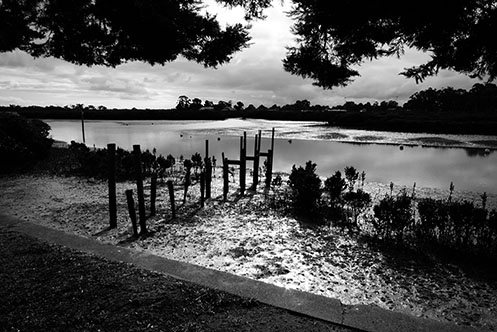
For the curious photographers who might be reading this post, the camera I used was a Panasonic Lumix LX3 in “dynamic B&W” mode with some minor corrections later in Photoshop.
If you’re interested in using any of these images or would like to purchase a high quality print then please contact me at – jim.worrall@gmail.com
What a Difference the Tide Makes.
A couple of images from the Flinders foreshore showing what a huge difference the tide can make.
Both images feature the same structure albeit from slightly different angles.
Below – Flinders Hombres – high tide at the jetty remnants.

Below – liN – the same jetty remnants at low tide.

Magic of the Phillip Island coastline.
Following on from previous posts I thought I’d share with you just a few more images from the Phillip Island coastline. I feel like I’ve just scratched the surface down there, …….there’s just so much beauty to explore and discover.
Pictured below – The Roost – old jetty remnants that serve as a safe roost for the local birds at Cat Bay.

Pictured below – Evidence of Life – a soft misty view of some wonderful wave action off Cowrie beach.

Pictured below – The Long Swim Home – another view from Cowrie beach looking towards the Nobbies in the background.

Pictured below – Pyramid Rock, taken in strong windy and wet conditions from a vantage point ahead of the lookout area.

In Lieu of Rapture
I’m dedicating this image to the recent passing of Rapture Day, May 2011.
Never has such a silly idea generated so much noise in the media and on social networks.
Pictured below – In Lieu of Rapture.

The image was captured at Cat Bay on Phillip Island.
The bollard, the boat, the buoy and the beginning of a rainbow.
Saturday’s excursion was down towards the pointy end of the Mornington Peninsula.
After a hearty lunch of fish ‘n chips on Dromana beach, it was off to Sorrento for a cappuccino and also check out the surf conditions on the ocean side.
On arrival at the back-beach the surf was violent and unruly, fueled by a ferocious onshore wind.
I’ve tried to capture long exposure images under these conditions a couple of times before and come away from the experience with disappointing results. A howling wind always manages to soften my long exposure images regardless of tripod technique.
With this in mind I resigned myself to exploring the calmer more docile side of Sorrento, the bay side. The view from the beach here was quite nice with small boats bobbing and wobbling around in the water. I took a few shots of the little boats but couldn’t find anything particularly satisfying so I moved my attention to the huge bollards near the pier.
Pictured below – Bollard.
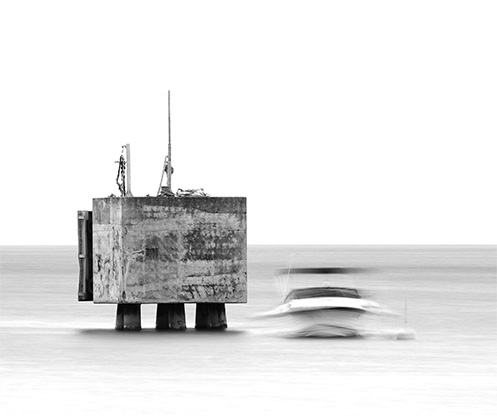
Above – In this image the huge concrete bollard remains motionless whilst surrounded by the blurred movement of waves on the water. It’s nearby neighbors, the boat and the buoy wobble and rock in compliance with the waves. I used a high key effect to eliminate some distracting elements from the background. Both ND400 and ND8 neutral density filters were attached to the lens to achieve the desired long exposure under fairly bright conditions.
Pictured below – The Sorrento Bollards.
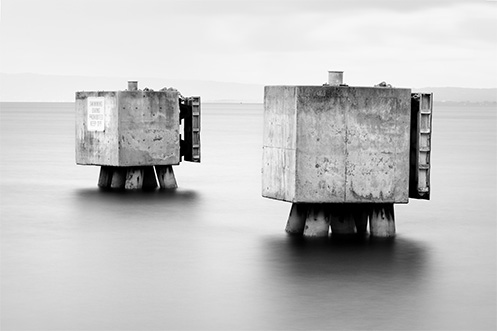
Above – The massive bollards are used to assist with holding the Queenscliff-Sorrento ferry in place at the pier during the exchange of passengers and cars.
After shooting the bollards, mother nature tried to grow me a rainbow. The left and right ends of the rainbow were developing nicely and gradually growing skywards then suddenly fizzled into nothingness.
Pictured below – the left end of the incomplete rainbow.

Pictured below – the right end of the incomplete rainbow.

By the Seaside – Tooradin and Corinella
Following are some images from the shores of Westernport Bay.
Pictured below – The Journey Home, seagulls at the Tooradin foreshore take off en masse as the day gives way to night.

Below – Corinella Sunset, a series of “God beams” appear from behind a cloud as the sun sets at Corinella pier. These “God beams” are also known as crepuscular rays and are explained at Wikipedia here.

Below – The Living Jetty.
At Corinella a jetty platform disappears below the surface during a king tide.
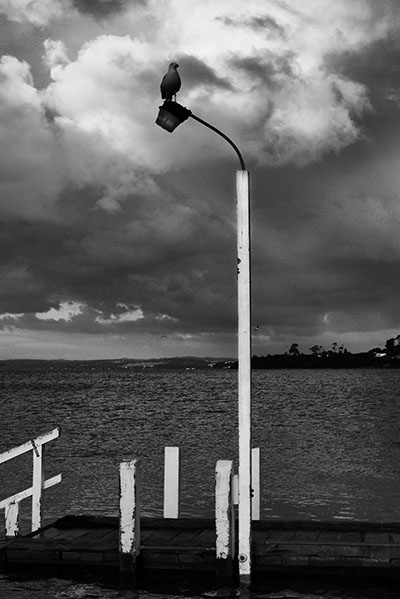
The local sea birds take advantage of the exposed posts by using them as a safe roost.

Below – The best position for overseeing the activities at the Corinella jetty area.
A King Tide at Grantville
My initial plan was to stop at Grantville, visit the bakery for a mandatory steak pie and cappuccino, then take a long stroll along the beach.
The consumption of the pie and cappuccino went nicely to plan. On arrival at the beach all that had changed.
Where’s the beach gone? ………….
I had apparently arrived at the peak of a king tide. There was no sand to be seen anywhere, much less walk along.
Pictured below – looking out towards the jetty the fishermen appeared to be almost walking on water. It was unusual to see the water lapping across the platform on the lower section of the jetty.

Luckily there aren’t many jumping sharks in Westernport Bay!
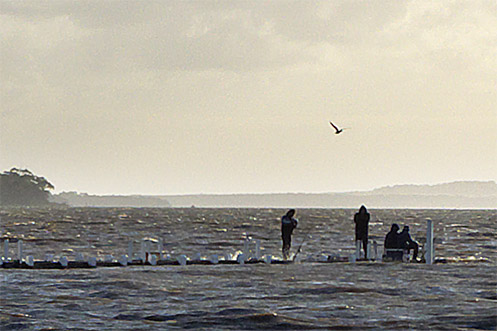
Pictured below – A few images from along the beach, north of the jetty, taken with a Lumix LX3 camera.
It’s amazing how salt tolerant these trees can be.


Where’s my sandy beach gone?
Due to the king tide, navigating the coast required walking through low lying vegetation, and it didn’t feel right. 😦

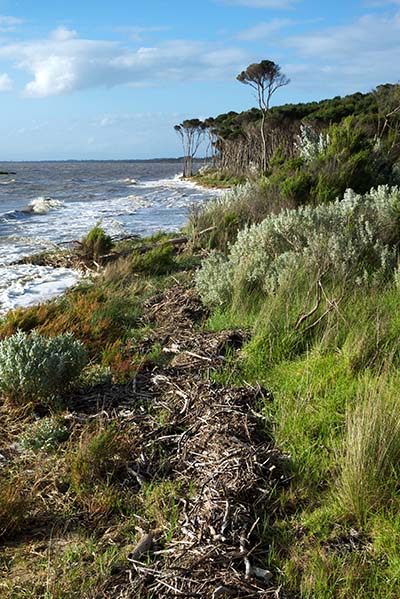
I should check my tide charts more often.
If you’re interested in buying any of these images as prints then please contact me at – jim.worrall@gmail.com
The Flinders Pier Excursion.
Images from a recent trip to Flinders with friends Christine Wilson and Caroline Gorka.
The objective for the afternoon was to capture some images of the old wooden pier before it’s replaced by the concrete monster that’s currently being constructed right next to it.
As usual I became distracted.
Below – “IiN” some ghostly remains from further along the beach.

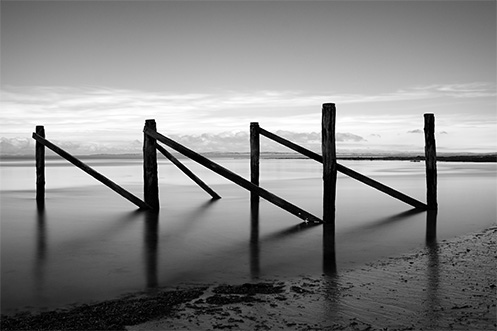
Below – “Flinders Point” just around the corner from the calm harbor area there’s a lot more ocean wave activity.
There were waves crashing all over the place here but the long exposure makes it look deceptively calm.
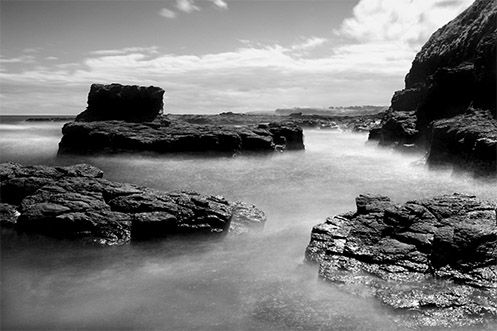
Below – “Flinders Back-Beach” near the blow hole area. Stop giggling, that’s what it’s called !!

ND400 Long Exposures at Safety Beach (Bracketing and tonemapping long exposures)
Following is a series of bracketed and tone-mapped long exposure images from Safety Beach, Victoria, Australia.
All were shot in the late afternoon using ND400 and ND8 filters combined to achieve the desired long exposure times.
Below – “Safety Beach Jetty”

Here’s how I do my bracketed images – Many of my waterscapes are long exposure tonemapped images generated from 3 exposures at 0,-2 and +2 EV. In order to achieve these 3 exposures I set my camera to aperture priority mode, enable auto bracketing and set the ISO as low as it will go. I then tinker with the aperture value, iso value and either add or remove ND filters in order to force the camera to achieve a shutter speed of 8 seconds for the first exposure (0 EV). Now when the shutter button is activated the camera gives me 3 exposures at 8 seconds, 2 seconds and 30 seconds (which corresponds to approximately 0,-2 and +2 EV)
When these 3 exposures are blended together (tonemapped) in an HDR program the resulting image contains the misty silky effects from the 8 and 30 second exposures and also contains some details from the slower 2 second exposure. When shooting REALLY fast moving water I usually aim for a faster initial exposure time of say 4 seconds. The camera then gives me 3 bracketed exposures at 4 seconds, 1 second and 16 seconds (0,-2 and +2 EV)
The aim is to catch some detail in the fastest exposure but also benefit from the misty effect of the longer exposures.
UPDATE – Oct 2012 – If you’re looking for an introductory guide on how to use the ND400 have a look at my other blog post here.
Below – “Seep” a stormwater drain at Safety Beach.
Yes, a drain can look beautiful. 🙂
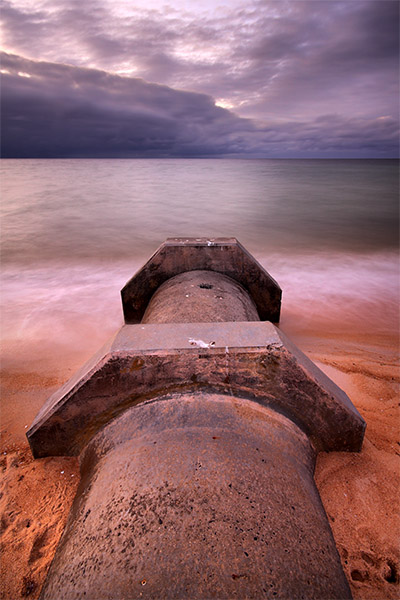
Below – “Jettison” another stormwater drain at Safety Beach.

The Window of Opportunity – Grantville Beach.
Amongst the photographic gems that Grantville beach makes available to photographers is a set of 3 rows of short pylons.
No doubt these pylons are the remains of an old jetty but they differentiate themselves from other such sites in a couple of interesting ways. Firstly, it’s unusual to see 3 rows of pylons like this. Most old jetties leave behind only two rows of pylons.
Secondly the pylons are extremely short here, with most of them extending from the muddy base by only a few short inches.
The short stature of these pylons provides photographers with an interesting challenge. At high tide the pylons are invisible as they’re completely submerged by water, and at low tide they’re an awful looking series of posts sitting in mud.
The challenge for the photographer is to arrive at the site during a narrow window of opportunity whilst the tidal transition ideally has all of the pylons surrounded by water around their bases and yet not enough water to make them shorten or disappear below the surface.
Below – “Runway to the Afterlife”
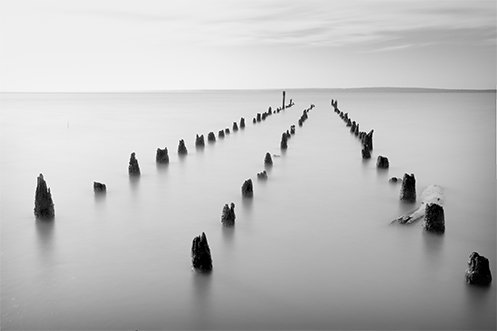
On my first visit to the site I was extremely lucky and caught the tide at just the right height. I wasn’t aware of how elusive these pylons could be until subsequent visits, hoping to catch the pylons in a different light, I haven’t been fortunate enough to arrive at the right time. 😦
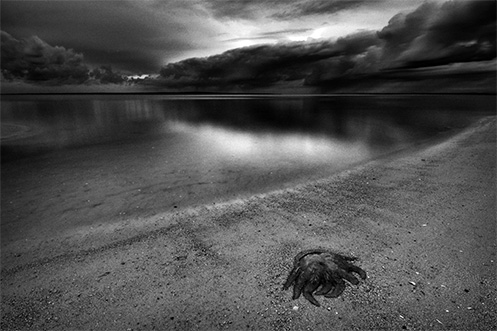
Below – “Mortality” an image taken near the pylons on a different evening. The dark brooding sky sets the mood of the image. In the foreground lays a dead jellyfish, stranded by the outgoing tide.
Below – “Deep Creek Reflections“, also near the pylons Deep Creek enters the Westernport Bay.
Trolling around under bridges and piers
On excursions where I’m near a bridge or pier, my inner troll has a tendency to take control and drag me under.
Sometimes the results are quite pleasing. Strangely enough I often find the underside to be more photographically pleasing than the top side.
Below – “Gateway” the underside of the San Remo bridge.
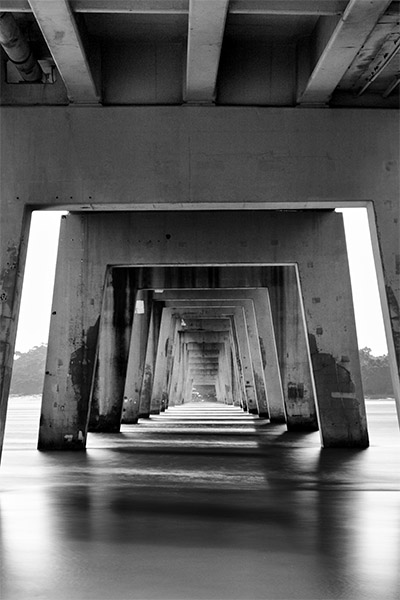
Below – “San Remo Bridge” the gateway to Phillip Island, Victoria, Australia.

Below – “Dromana Downunder” the underside of Dromana pier. No trolls under here!

A Photo Exploration of Grantville beach.
I visited Grantville the day after Victoria had been hammered by unusually high rainfall.
Apparently the extreme rainfall was a side effect of cyclone Yasi’s passage across Queensland and into central Australia.
With the worst of the rain over, the day provided some beautiful photographic conditions with the sun filtered through an interesting arrangement of constantly changing storm clouds.
I love the beach down this way. Each time I visit here I discover something new.
Before I discovered photography I would never have guessed that I would find storm water drains interesting. 🙂
Below – “Purge” a storm water drain running into Westernport Bay.

For those who are interested in the technical details, the drain images are constructed using HDR tone mapping techniques. The long exposures were achieved using a combination of ND400 and ND8 filters on the end of the lens to smooth the waves on the water.
Below – “Running from the Idols” – another drain dumping water into Westernport Bay.
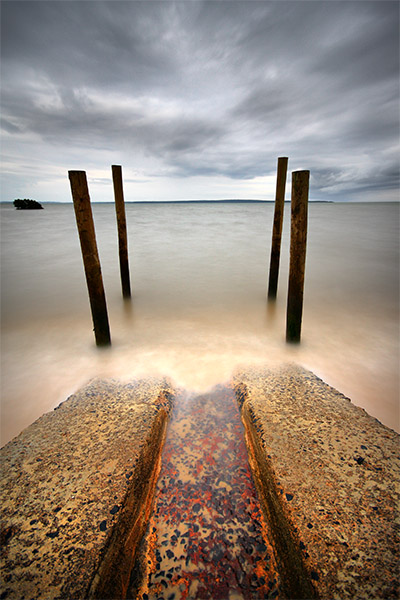
Below – A long exposure self portrait, standing at the end of the Grantville jetty.

Below – “Grantville Jetty” – a view from the jetty looking out towards the boat ramp marker posts.
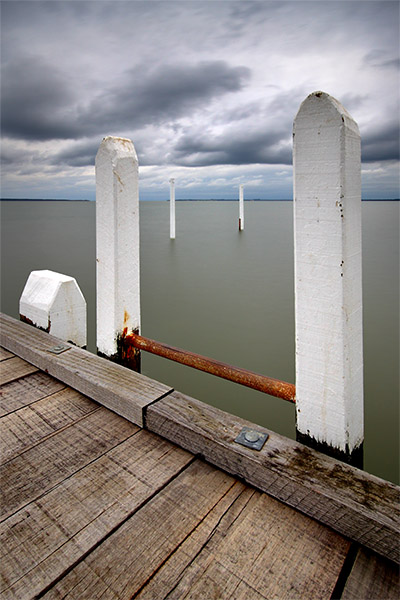
Below – “After the Rains” – a long exposure image from Grantville beach as rain clouds exit. An old boat trailer sits semi-submerged in the foreground.
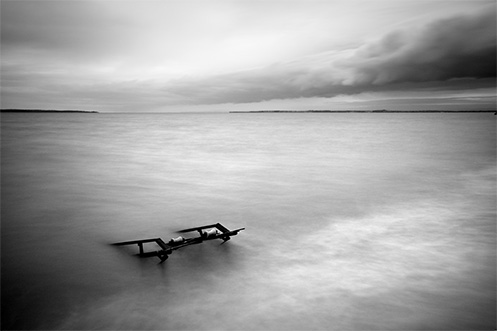
A Photographic Trip to Tenby Point.
Tenby Point is a coastal village located on the shores of Westernport Bay, just a few kilometers east of Corinella, Victoria, Australia.
On this particular photography excursion conditions weren’t ideal. The sun was harsh and high in the sky, and there were no clouds around. Due to these harsh light conditions I chose to make a series of high key images whilst the tide was favorable.
Below – The Counsel of Many

It’s important to know what the tides are doing here from a photographer’s prespective.
I think it’s best here to avoid visiting at low tide unless you’d like images of sticks or trees sitting in mud.
The black and white images in this post were taken with both an ND400 and an ND8 filter attached to the end of the lens to achieve long exposure times in bright sunny conditions. The goal behind using such heavy filtering is to achieve long exposure times in order to blur as much detail as possible from the sky and water.
The result is a more minimalistic image.
Below – Sweet Survivor

Below – The Path to Yesterday

Eventually all good things come to those who wait. The afternoon dominated by harsh white light gave way to a pearler of a sunset when some clouds moved across the sky at just the right moment. I drove home from Tenby Point wearing a satisfied grin. 🙂
Below – Sunset at Tenby Point

Exploring Beachport, South Australia.
I visited the town of Beachport just prior to the summer “silly season”. This provided me the with the opportunity to explore the area without the usual crowds of holiday makers cluttering up the splendid beaches.
The town sits on the end of a small cape with one side facing towards the open ocean and the other side facing more towards the mainland providing a relatively safe harbour area and calmer beaches.
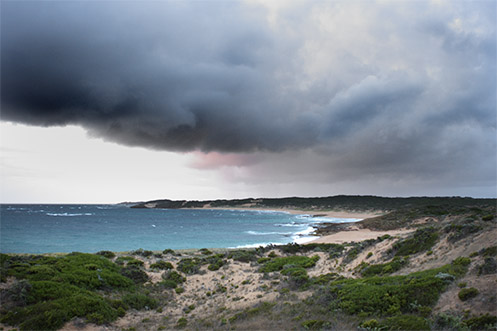
Below – Thar She Blows – a storm approaches Beachport from the ocean.
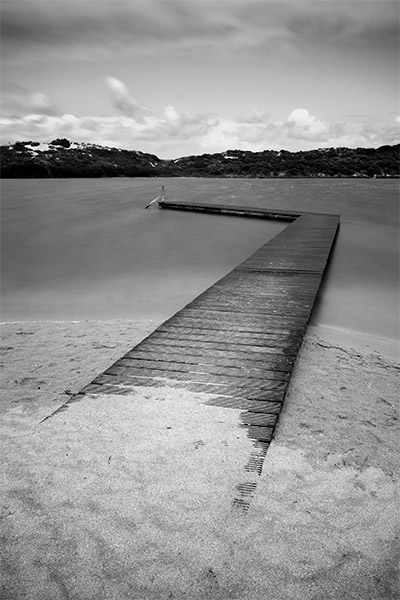
Below – Beachport Pier – located on the calmer east side of the cape, is apparently the second longest pier in Australia. You need a cut lunch and a sherpa to trek from one end of the pier to the other. 🙂

Below – The Pool of Siloam at Beachport contains water which is claimed to be seven times saltier than seawater which makes floating really easy. The pool is fed by underground springs.
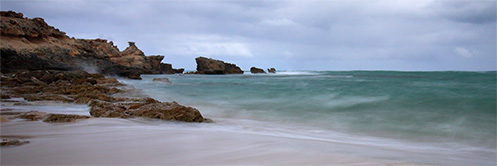
Below – Back on the rougher ocean side Post Office Rock at Beachport provides some nice wave action.
I lost a pair of runners and socks here to an unexpected wave.
The Water is Back – Meningie
Following are a few images from Meningie, on the banks of Lake Albert in South Australia taken in December last year (2010).
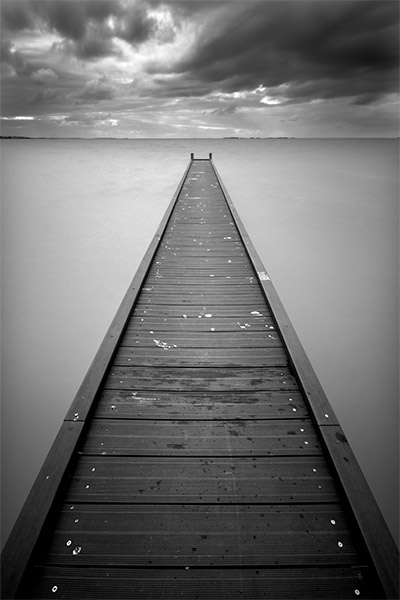
I was told by the Bev at the Lake Albert Motel that the lake has only recently recovered from the drought. Apparently for some time there wasn’t water anywhere near the jetty pictured below.
Below – Traces – Meningie, South Australia, Lake Albert.
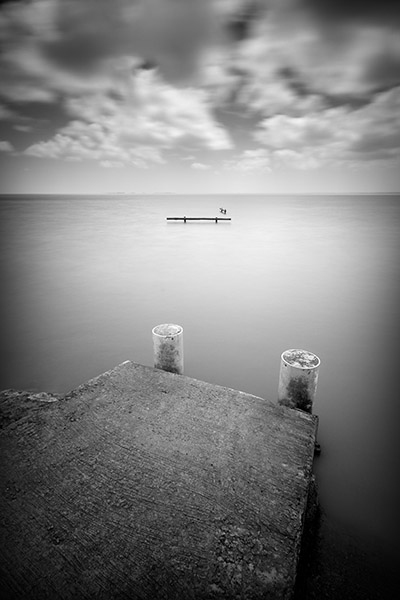
Below – Rise and Fall – Meningie, South Australia, Lake Albert.
I have no idea what those posts are doing out there in the water.
(Update – 31-01-11 Bev at the Lake Albert Motel has informed me that the posts in the water are there to provide a roost for the local pelicans. That makes sense.)
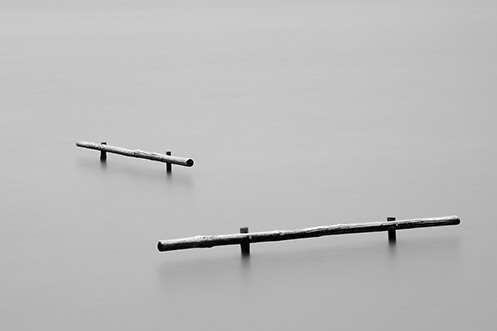
Below – Aspects of Abundance Meningie, South Australia, Lake Albert.
Pelican roosting posts.
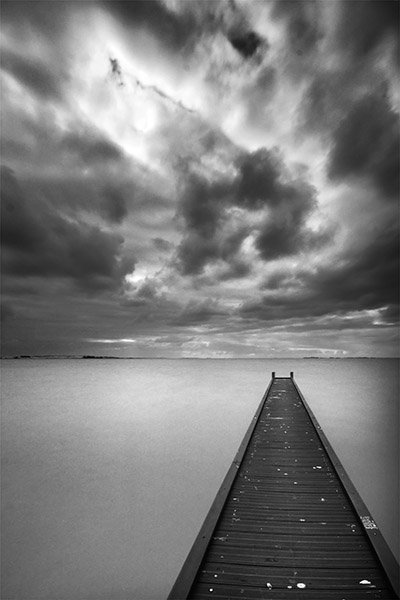
Below – Meningie Some wonderful action going on in the clouds here.
Below – Unbreakable – The second most sturdy piece of outdoor furniture I’ve ever had the pleasure of sitting on.

The Grantville Goal Posts
Captured below, a long exposure image of the incoming tide starting to submerge the concrete boat ramp at Grantville on Westernport Bay.
Due to the long shallow nature of the ramp the “goal posts” are used as a guide by boat owners to help prevent boat trailers from being driven over the sides or end of the ramp and into the mud/water.
Below – “Moving the Goal Posts”

Below – The boat ramp fully submerged with the Grantville jetty to the left and the sun shimmering on the foreground water.

At the end of Seaford pier.
This excursion to Seaford pier was a second visit. My goal was to capture an image that I’d had in my mind for some time but wasn’t able to quite capture on the first visit.
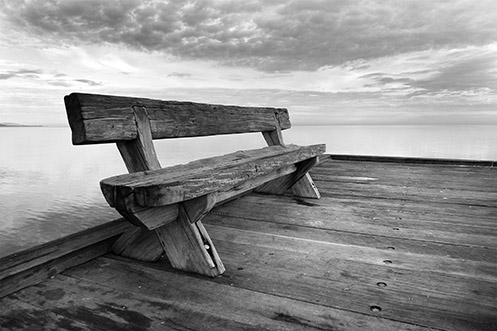
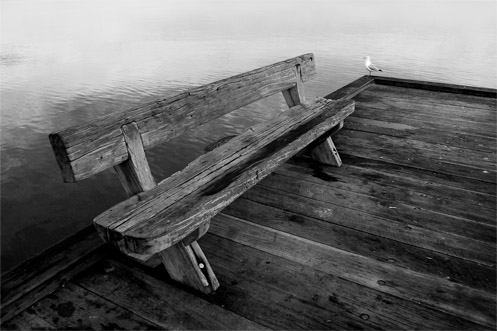
The subject of the image was a wonderful old wooden bench seat located at the end of the Seaford pier.
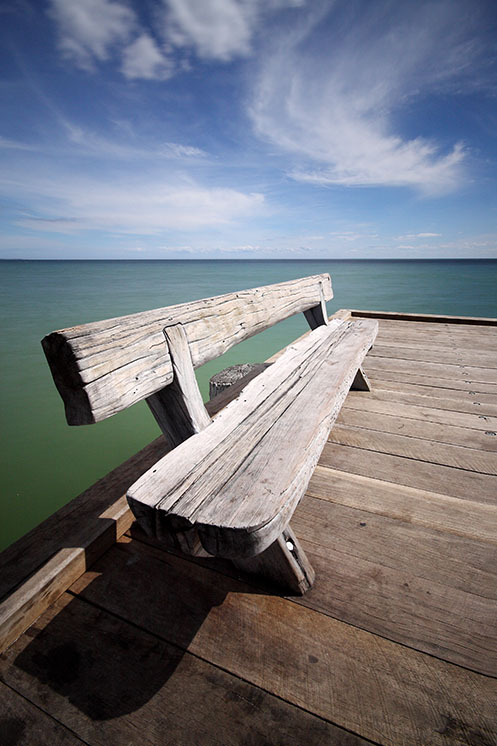
Pictured above – “The Silent Partner” is available as a print here.
I chose to use a long exposure here to smooth out the waves on the water and soften the clouds in the sky. This has the desirable effect of making the image less busy and draws the viewers attention to the wonderful grain and smooth worn texture of the wood.
Conveniently the lines of the bench also draw the viewers eyes into the image and towards a swirling cloud in the background providing a second point of interest.
Pictured below – “Observer” is available as a print here.
This is the image I took on the first visit. I like this image but it wasn’t the vision I initially had in mind. A local resident paid me the ultimate compliment by purchasing a framed print of this one.
Exploring the Mordialloc pier.
A series of long exposure images exploring the Modialloc pier and it’s surroundings.
Below – Pier Group Pressure available as a print here.

Below – The Mordi Run available as a print here.

Below – “Troll” available as a print here.

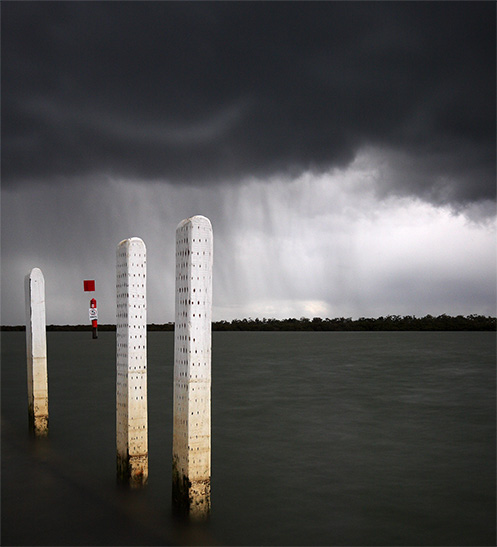
Below – “Markers Three” available as a print here.

Grantville – the pie and pier photography tour.
My excursions are never entirely about the photography. Often they’re about the escape, ….often they’re about self exploration, …….every now and then they might even result in a nice photographic image. Well, nice to me anyhow. 🙂
On previous visits to Grantville I’ve tended to concentrate on trying to capture an inspiring image or two from the mangroves dotted along the coast here. The mangroves are a fairly easy target for photography purposes. At high tide it’s possible to visually isolate them between the water and the sky which works to simplify the image by excluding potentially distracting background elements. On calm days the water can also act as a fantastic mirror for capturing reflections, particularly when doing long exposures.

This particular visit to Grantville was all about capturing the pier though, so here it is.
In the black and white image above I’ve deliberately over exposed the image to blow out the sky and increase the contrast between the pier and the background. I personally like the contrasty result here, but I know this style of image is not everyone’s cup of tea.
Pictured below – “The First Days of Sun” which is available to purchase as a print here.
This image from the pier was created from 3 exposures using HDR tone mapping techniques to maintain details in both the bright sky and the dark shadows.

Pictured below – “The Promise of Warm Days” which is available to purchase as a print here.
Another 3 exposure HDR shot converted to black and white and processed with a bit of dodging and burning in Photoshop.

Now for some serious business. I’ve discovered that the cafe on the corner of the Bass Hwy and Grantville Glen Alvie Road in Grantville sells excellent homemade meat pies made with flaky puff pastry. The coffee is pretty good there too.
(Disclaimer – I have no connection with this cafe at all, I just enjoyed the pie so much I felt the need to share it with you.)
Slowly submerging in Tooradin
The coastal village of Tooradin is located on the shores of Westernport Bay, Victoria, Australia.
Since I live fairly close to Tooradin I often pick up a hot pie and a cappuccino from the wonderful bakery here and drive down to the jetty area for a relaxing break.
Tooradin has two jetties right next to each other. One jetty is of a floating pontoon design which rides on the surface of the water, rising and falling as the tides change. The other jetty is the usual kind consisting of a raised platform fixed to sturdy wooden pillars.
An interesting thing about the fixed platform jetty is that the platform gradually disappears below the surface of the water as the tide rises. This provides the photographer with some interesting possibilities.
Below – the rising tide starts to envelope the platform.

Standing on this jetty makes one feel like a captain going down with his ship.
Below – “Channel” which is available to purchase as a print here.
The platform is just a few centimeters below the surface.

After taking a few long exposures at the jetty mother nature decided to give me a nudge. The thick black storm clouds opened up and sent down a barrage of hail to chase me back to the car.
Below – Run from the Hail
Strolling at Seaford beach with the LX3
This morning I dropped my car off for a service.
With the knowledge that I’d have a couple of hours to kill I took along the Panasonic LX3 to see what I could find. After a leisurely breakfast at the local cafe I strolled down to the beach at Seaford and gave the LX3 a bit of a run in “Dynamic B&W” mode.
This little camera never fails to amaze me. Of course the image quality is not as good as a DSLR but to me the quality is certainly quite acceptable. I just love the LX3 for portability when I don’t want to lug around the DSLR and lenses.
Below – K-Nine. (paw prints in the sand)
Note that the background is blurred because the shot was taken at f2.0.

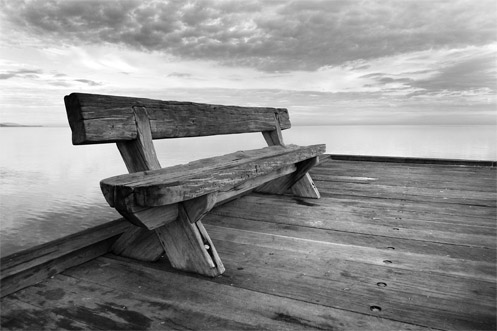
Below – Observer. (bench at the end of the pier)
Below – Gull.
Below – Last Man Over.


 Photography by Jim Worrall