
Down amongst the Mangroves, Westernport Bay.
You certainly have to admire the hardiness of the Mangrove tree.
It thrives in poor quality soil in tidal areas, and twice a day has it’s roots submerged in salty sea water. Under storm conditions the Mangrove is battered by both wind and waves yet it still manages to hold firmly.
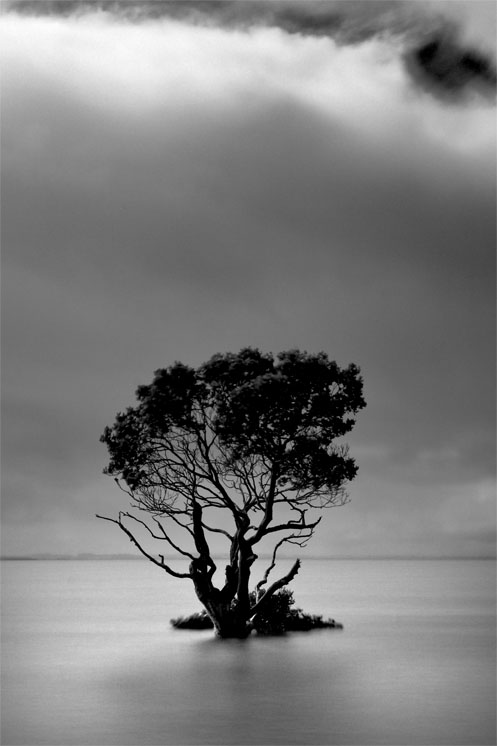
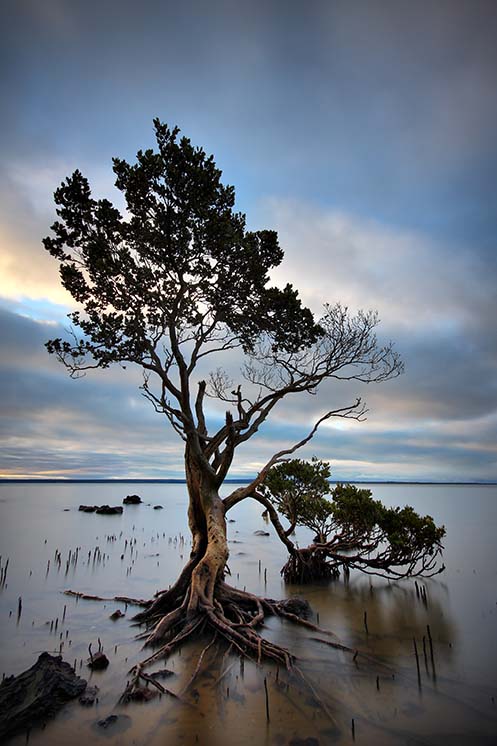
The Mangrove tree is also an interesting subject from a photographer’s perspective. At high tide with the roots submerged it’s fairly easy to photographically isolate the subject from it’s surroundings by using a long exposure time to smooth any waves around it’s base and blur any clouds in the sky.
Below – TimeKeeper
Below – The Risen

Below – Approaching the Forest

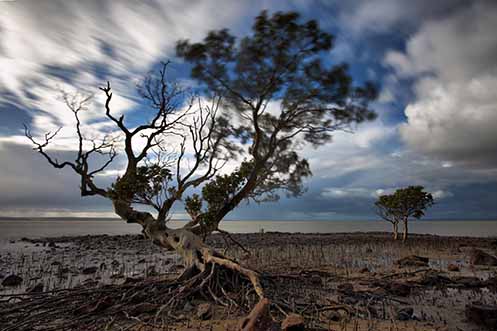
At low tide the Mangrove tree has it’s roots exposed creating potentially a new subject of interest for the photographer. The long roots are often intertwined with each other giving the impression of writhing serpents (perhaps that’s just my imagination running wild).
Below – The Serpent Tree
Below – Wild n’ Woolly a long exposure with the roots exposed and the leaves thrashing around in the wind.
Below – On Borrowed Time the same tree as above but at high tide.

Exploring Cement Creek
It seems to me that Cement Creek was dealt an injustice when it was first named.
Despite it’s odd name, it really is quite an attractive location and a fine example of lush Victorian forest.
Cement Creek in located at the foot of Mount Donna Buang, near the intersection of Donna Buang Rd and Acheron Way.
On this excursion we gained access to the creek by walking along raised platforms which got us most of the way, then we jumped the handrail into the forest to get to the flowing water. At this location you need to be prepared to get muddy and wet, so it’s advisable to keep a change of clothes in the boot of your car.
The main hazard here is the slippery moss covered rocks. A minor hazard is the hungry leeches.
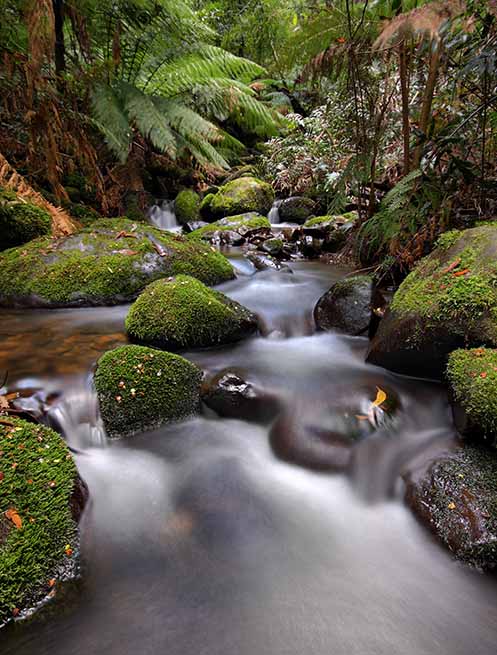
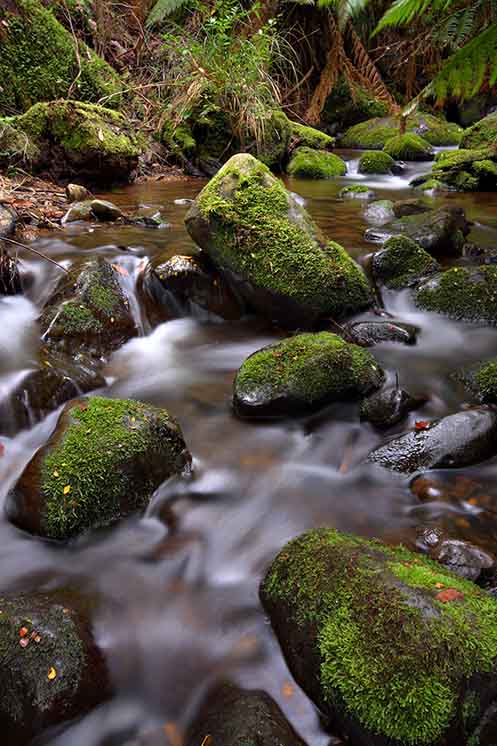
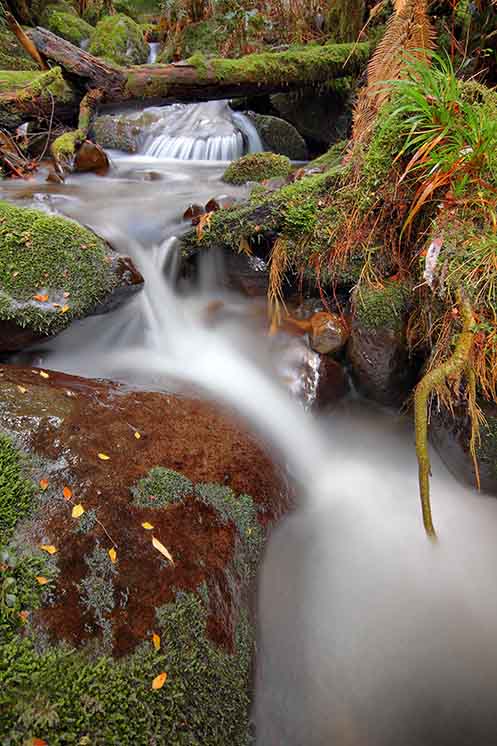
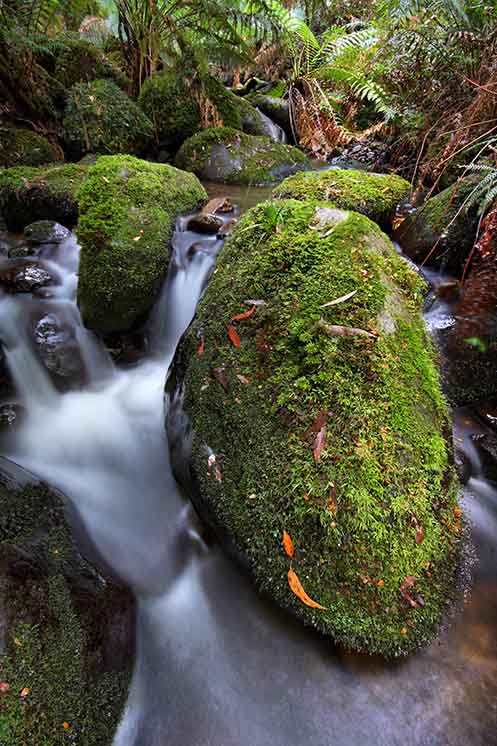
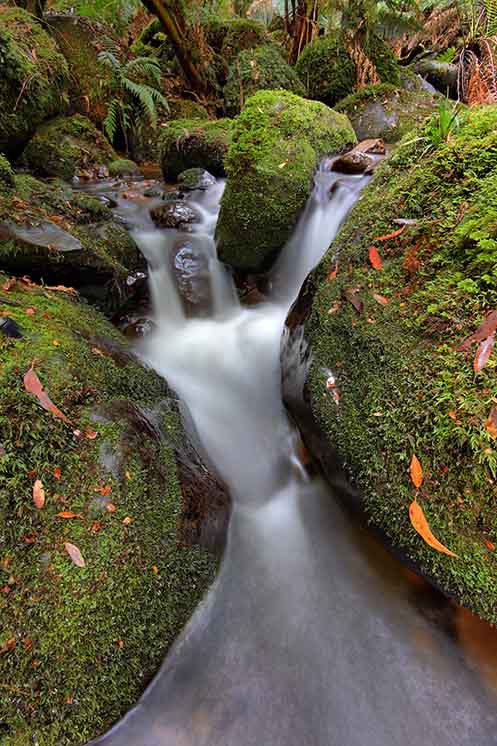
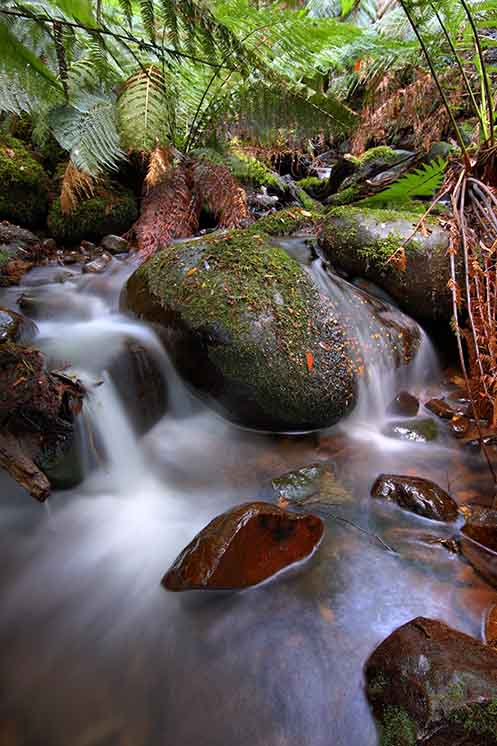
Incorporating HDR tonemapping techniques with long exposures
The following images were experiments using HDR tone mapping techniques combined with the effects of long exposure times.
Each image was constructed from at least 3 separate exposures using in-camera auto exposure bracketing. In my case, being a Canon shooter, I used 3 exposures of -2,0 and +2 simply for convenience. I believe Nikon shooters have a bit more flexibility in this area.
The images were all taken during daylight hours so it was necessary to use some heavy ND filtering in order to increase the exposure times and achieve a nice misty look to the water. In my case I used an ND400 and an ND8 filter stacked together to achieve this.
With the camera set to aperture priority mode I adjusted the aperture and filter combination (sometimes removing the ND8) to achieve an exposure of 8 seconds. When the shutter button is depressed the camera would then give me 3 exposures at 8 seconds, 2 seconds and 30 seconds (which is close enough to 0,-2 and +2). My particular camera doesn’t let me expose for longer than 30 seconds unless I go to bulb mode and use a remote timer, so out of laziness I tend to limit many of my exposures to 30 seconds. 🙂
The exposures were then combined and tonemapped using HDR software and tweaked in Photoshop to achieve the end result.
Despite all of this sounding a bit technical it’s really quite simple and I encourage you to try it. The results are often very rewarding.
BELOW – Jurassic Afternoon – Sunlight and waves break through a slit in the prehistoric Pinnacles rock formation on Phillip Island.

BELOW – The Mist of St.Pauls – A long exposure at St. Pauls beach, Sorrento, Victoria, Australia.

BELOW – Prehistoria – An image from The Pinnacles, at Phillip Island, Victoria, Australia.

BELOW – Swimming with Dinosaurs – Down amongst the prehistoric Pinnacles rock formations at Phillip Island, Victoria, Australia.

Daytime experiments with the ND400 filter.
The following long exposures were taken during daylight hours using an ND400 and ND8 filter stacked together on the front of my Sigma 10-20mm lens. The combination of these two filters attenuates so much light that peering into the viewfinder reveals an inky blackness even during bright daylight conditions.
It’s therefore necessary to compose the image BEFORE screwing the filters onto the lens. It’s also necessary to adjust the focus manually since the auto-focus system has no chance of working under such conditions.
*** (Update October 2012) The introduction of “live view” to many DSLR cameras means that is’s no longer necessary to compose and pre-focus with the dark filters off the lens. I shoot all the time now using live view to peer through the combined darkness of an ND400 and ND8. The filters now stay on the lens which means there is a lot less fiddling around. If you’re looking for a guide to show you how to use an ND400 have a look at my recent blog post here.***
I found that if I set the ISO as low as possible, and set the aperture very small (i.e. a high number), then it was possible to obtain a shutter duration of about 3 minutes. Such long exposures during daytime create some interesting images. I’m looking forward to experimenting more with the ND400.
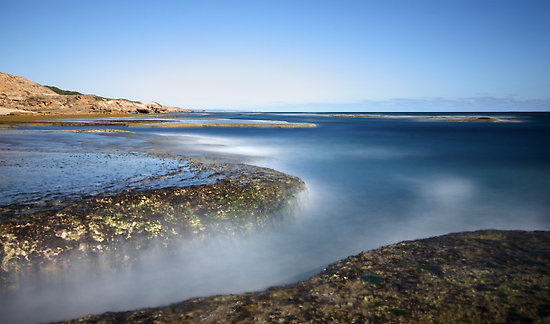


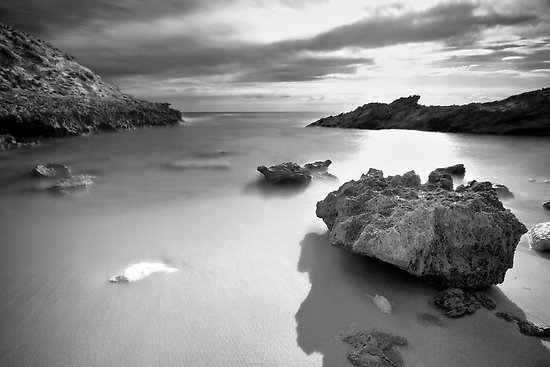
An Evening at Spray Point, Blairgowrie.
The following images were taken on an evening excursion to Spray Point / Montforts beach, Blairgowrie.
I’m never really sure where one beach ends and the other begins. 🙂
Tidal Trickle (below) was taken just prior to the sun dropping below the horizon giving some nice pinks in the sky.

Friends and Fatalities (below) is a long exposure shot taken just after the sun had dropped below the horizon.
The extended exposure time makes the moving water take on a misty appearance and blurs the clouds whilst the foreground rocks remain in focus.

The Unpredicted (below) is a long exposure shot showing water flowing off the rock plateaus after sunset.
Despite the deceptively calm appearance of the image this is really a potentially treacherous area with unexpectedly large waves occasionally sweeping across the plateaus.

Out on the rock shelves
The following three images were taken on an excursion to the rock shelves of Montforts beach, in Blairgowrie.
It’s an interesting place to be during the transition from high to low tide, as the water on the expansive rocky plateaus cascades over the sides on it’s return to the ocean.
Whilst here it’s important to be aware of which way the tide is going and also keep an eye out for occasional large rogue waves that sweep across the shelves. Prepare to get wetter than you expected here.
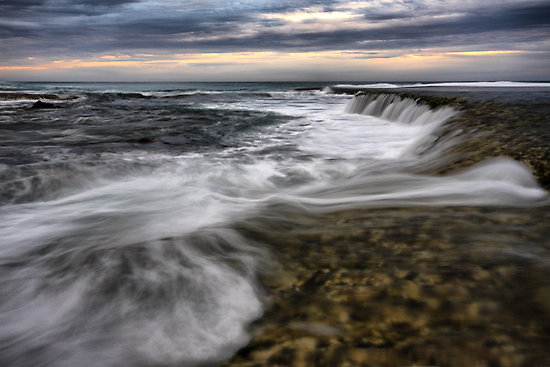
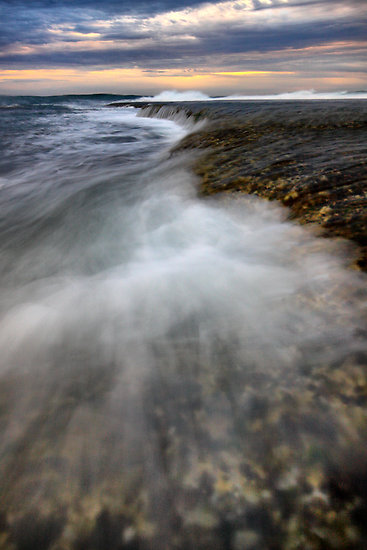

The image below was taken at the neighboring Sorrento beach.
It’s a long exposure taken after sunset giving the oceans surface a deceptively calm and smooth appearance.
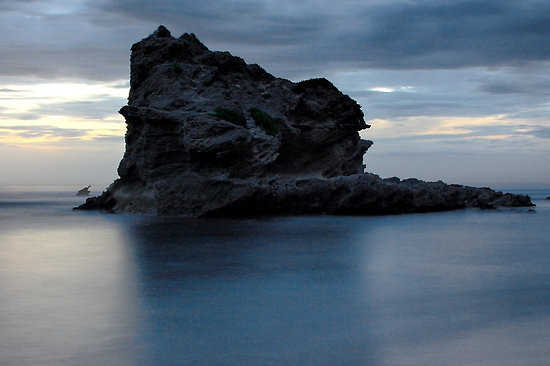
Light and Time at my Ocean Beach
A selection of images taken from two excursions to Sorrento beach.
Return to Primal is a long exposure taken after sunset. The true motion of the waves disguised by the slow shutter speed.

High Tide Sphinx is a slow(ish) exposure taken at high tide as the sun was setting behind the Sphinx rock formation at Sorrento beach, Australia.
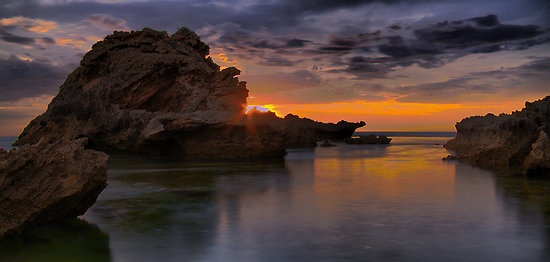
Life in the Good Pond is a slow(ish) exposure taken at sunset. A polarizing filter was used to take the reflection off the surface of the rock pool allowing the scene below the surface to become visible. The blurring on the water was caused by the wind rippling the surface.

I Peek Around the Corner is another image from Sorrento where a polarizing filter was used to remove the unwanted reflection of the sky from the surface of the water enabling us to see the wonder below. In the distance on the horizon the Sphinx rock formation is visible.

Around the Sorrento Sphinx
These images were taken while visiting the Sphinx rock formation at Sorrento beach.
It was quite a windy day causing a lot of ripples on the surface of the rock pools so I used a long exposure (several seconds) to smooth them out and make the ripples disappear.


Dusk at Sorrento ocean beach – some long exposures
A series of long exposures taken at Sorrento beach, Australia.


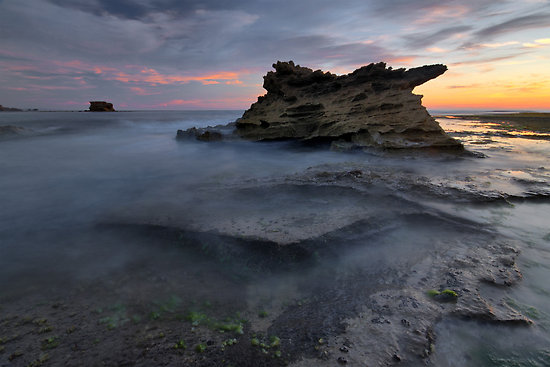
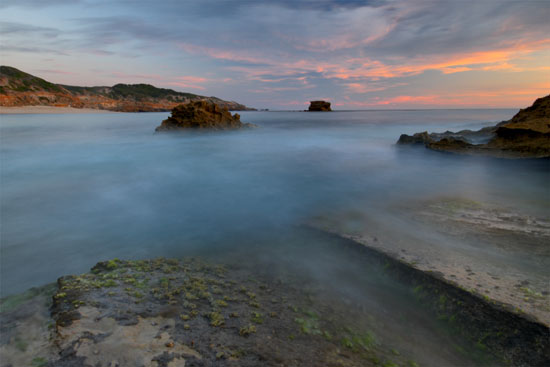

Images from Koonya beach
These images were taken on a recent dusk excursion to Koonya beach on the Mornington Peninsula in Victoria, Australia.
Dusk is my favorite time of day for shooting, ……it’s certainly MUCH more user friendly than that other time of day, …….what do they call it, ….”dawn” or something like that. 🙂


Long exposures on the Mornington Peninsula
A series of long exposures taken at Sorrento and Blairgowrie beaches on the Mornington Peninsula, Australia.
These images were taken using the Sigma 10-20mm and Canon 17-85 mm lenses with ND8 and polarizing filters stacked on the front in order to slow the shutter speed.
Note – when stacking two filters on the 10-20mm lens the rim of the outermost filter becomes visible in the corners of the images necessitating a little cropping in post processing.
All of these images are available to purchase in various forms and sizes by clicking on their titles.
Blaze – taken at Sorrento beach.
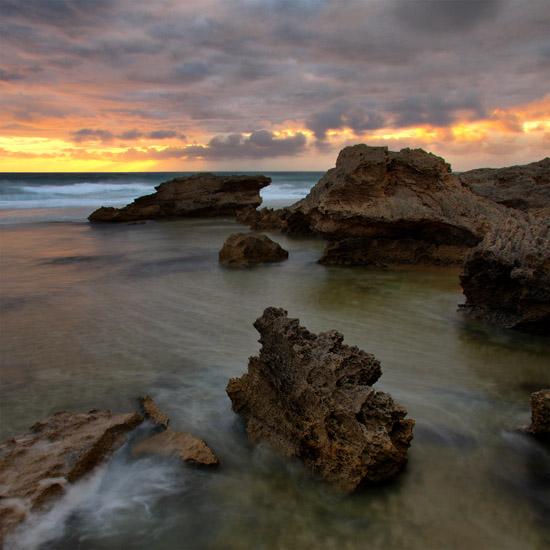
The Glow of Last Light – taken at Sorrento beach.

The Pastel Kiss of Night – taken at Blairgowrie beach.
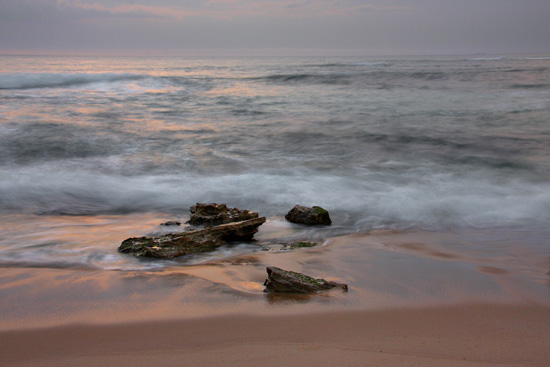
Welcome the Night – taken at Blairgowrie beach.

Koonya Isle – taken at Blairgowrie beach.

Through Angler’s Eyes – taken at Blairgowrie beach.

Flying Solo – exposure after sunset
This image was taken at Sorrento beach shortly after the sun had dropped below the horizon.
The long exposure (30 seconds) smooths out the motion of the waves and gives the ocean a smooth, almost cloud like appearance. The pink hue is a remnant of the sunset.
This image is available to purchase as a high quality print here.

Serpent’s Haven – a nocturnal river scape

A nighttime river scape image taken at Port Douglas, Australia, using the Lumix LX3.
This image is available to purchase as a print here.
Southern Rendezvous
A six minute exposure taken at night, aperture f11, iso 100 on Blairgowrie beach.
The long exposure reveals the apparent path of objects around the south celestial pole and also transforms the motion of the rough ocean waves into a soft mist.

This image is available to purchase as a print here.
Harvest of the Night Keeper
A 30 second long exposure taken at Sorrento ocean beach shortly after sunset.
The moon and Venus visible in the sky.

This image is available to purchase as a print in various forms and sizes here
The Time of Two Minds
A long exposure shot taken early in the morning.
Title – The Time of Two Minds
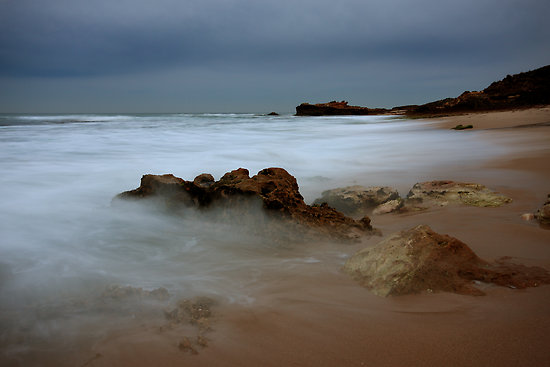
Primordial Dawn, ….and Third Planet.
Some long exposures taken well before dawn. It was extremely dark looking through the viewfinder so some guesswork was involved with the composition of these.
Note that the violent crashing waves of the ocean appear as a gentle mist due to the long exposure time. Unfortunately it wasn’t possible to capture the stars in the sky due to clouds rolling in just a few minutes before I arrived on location (bugger).
shutter – 180 seconds
aperture – f8
ISO – 400
Title – Primordial Dawn

Title – Third Planet
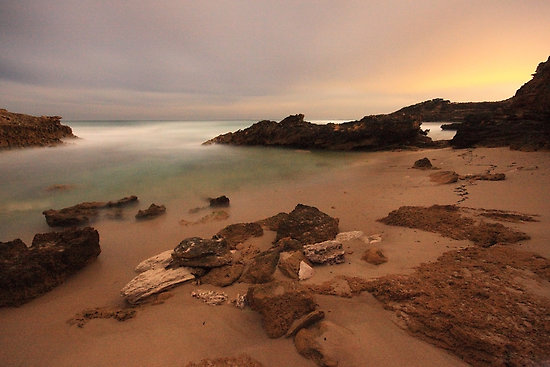
Both of these images are available to purchase as prints
Hush, …and Water on Mars.
Some more long exposures taken at night during an almost full moon.
shutter – 120 seconds
aperture – f8
ISO – 400
Title – Hush
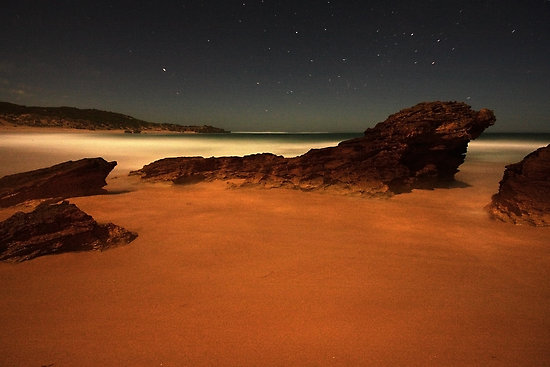
Title – Water on Mars

Mind Space – night photography
A long exposure taken at Blairgowrie beach at night.
shutter – 2 minutes
aperture – f8
ISO – 400
Lighting provided by an almost full moon.
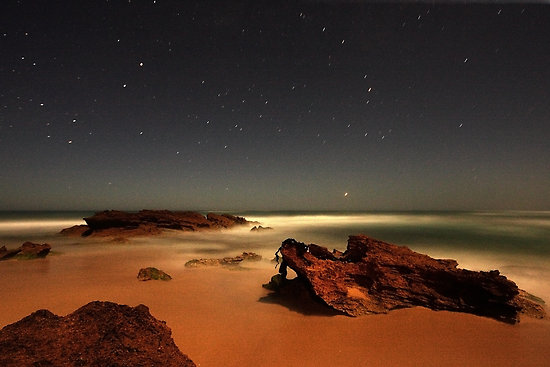
Lions of the Night
I’ve found my new love, ……and she is long exposure night photography.
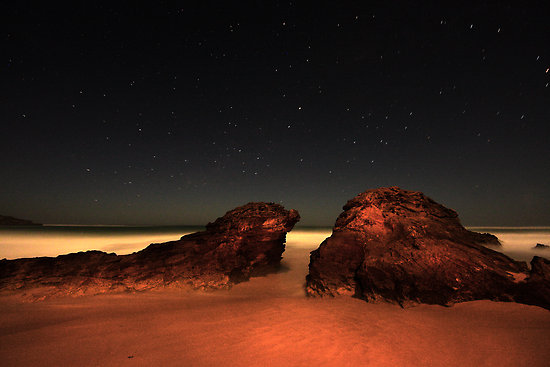
shutter speed – 2 min
aperture – f8
iso – 400
Long exposures at the Bay of Islands.
Two long exposures taken before sunrise at Sorrento beach, Australia.

Title – Slowly Creeps the Dawn.

Title – Bay of Islands.
Angler’s Choice – a long exposure seascape.
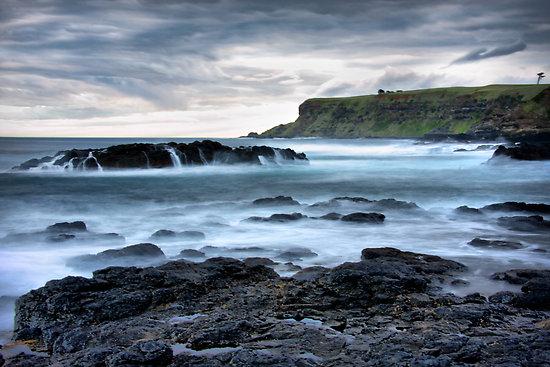
Angler’s Choice is a blend of long exposure images taken shortly after sunset at “The Blowhole”, Mornington Peninsula.

Wet bum at the Toorongo Falls, Yarra Ranges National Park, Victoria, Australia.
The Toorongo Falls, in the Yarra Ranges National park, offers an excellent opportunity for those photographers who like to capture fast moving water over mossy green rocks. The dense foliage overhead provides low light conditions well suited to long exposures, giving that silky smooth appearance to the flowing water. Of course a tripod or beanbag is mandatory to stabilize the camera under these conditions.
The fun starts while trying to negotiate your way across the slippery logs and rocks to find the best vantage point for a shot. My advice for the serious tog would be to take along a spare pair of pants, or even better, a pair of fisherman’s waders. Both my friend and myself ended up with wet bums from unexpected sittings. Luckily my unreasonable fear of leeches remained under control. 😉
I’m definitely going to return to this site again in the future to explore it in more detail. The following three images from the Toorongo Falls area are available as prints from my Redbubble site at –
http://www.redbubble.com/people/pixelmuser
Title – Shivers of the Green.
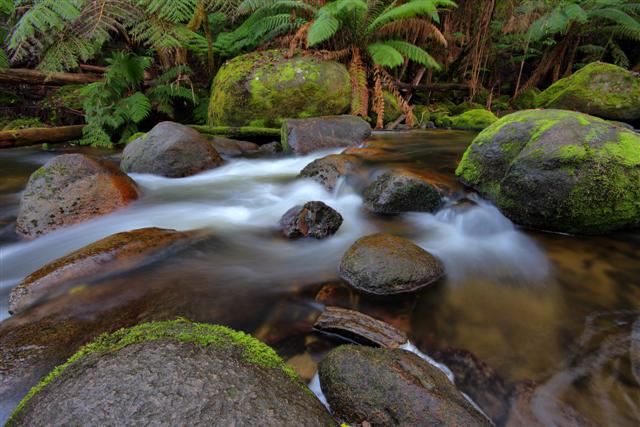
Title – She ran.

Title – Toorongo Torrent.

Shiprock Falls in Gembrook
Shiprock Falls is one of those poorly signposted gems that you could quite easily drive past if you weren’t looking for it.
Unfortunately the pedestrian track leading down to the falls has been blocked by a strategically placed viewing platform. To get the best experience and the best shots here you need to climb around the outside of the platform and trek down the hill to the flowing water. Here you can immerse yourself in the total experience of the falls, ….the sounds, the smells, the chill of the water.
For the more adventurous you can climb the rocks and scattered trunks around the flowing water to reach the top where it appears that the water is coming out of a slot in the rocks. Great experience and a wonderful view of the surrounding bush from the top.
A special thanks to Di Jenkins for introducing me to this place.

This image is available for purchase as a print at – http://www.redbubble.com/people/pixelmuser/

 Photography by Jim Worrall