
SS Speke Shipwreck and Kitty Miller Bay
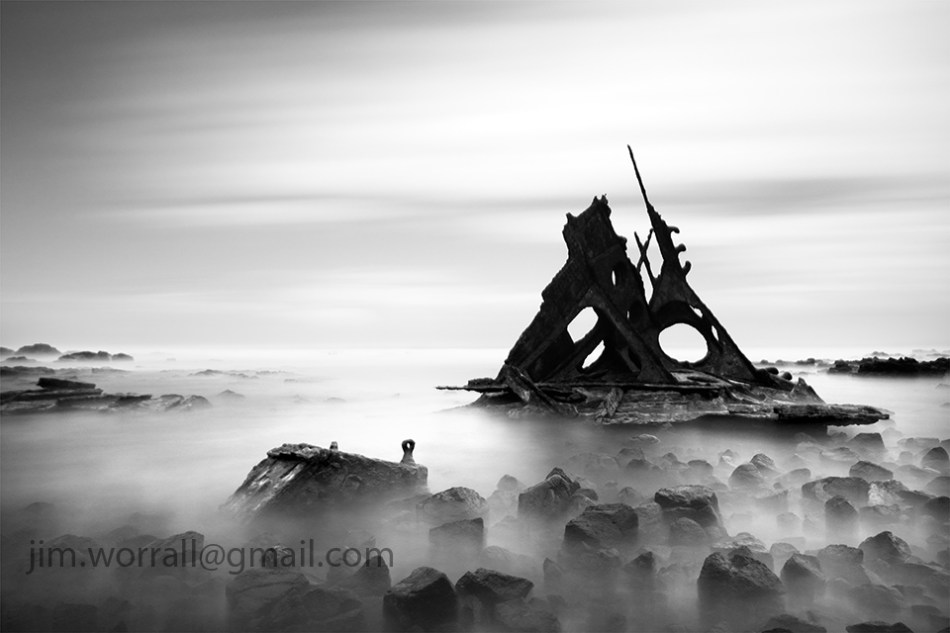
Following are a couple of long exposure images of the SS Speke shipwreck at Kitty Miller Bay on Phillip Island.
The first image was captured using an ND400 and two ND8 filters stacked together to achieve an exposure time of 195 seconds on a bright afternoon. Such a long exposure allows blurring of both the ocean waves and the moving clouds.
The image below is a 13 second exposure. This shorter exposure allows misting of the waves but leaves the moving clouds only slightly blurred.

Pictured below, a 10 second exposure of surf washing over the dark rocks at Kitty Miller Bay.

Below, a 2.5 second exposure of waves crashing onto the beach at Kitty Miller Bay.
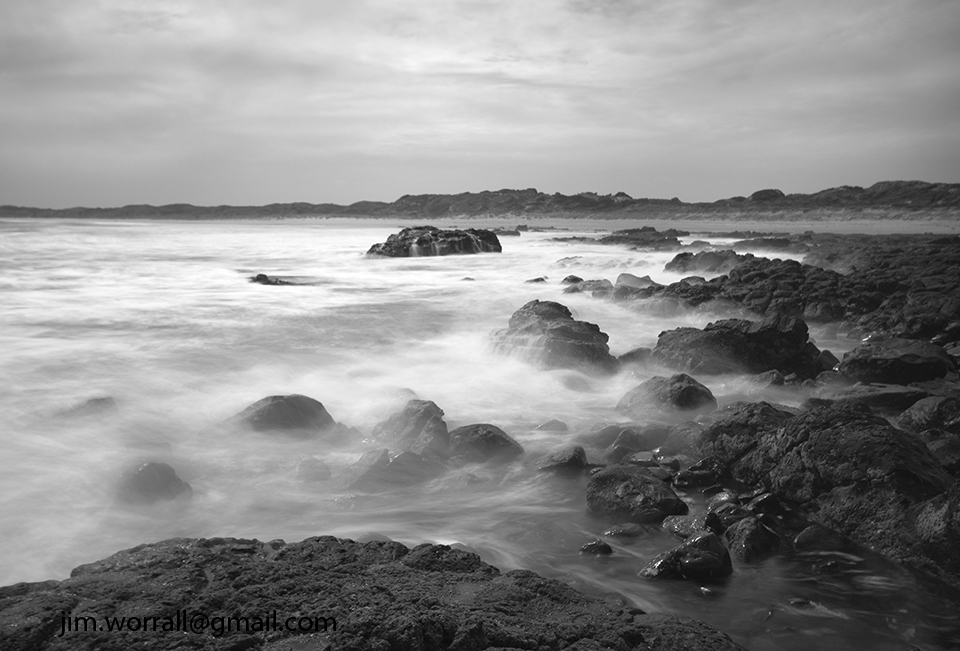
Finally, a 0.8 second exposure of a large wave slamming into a rock on Kitty Miller beach.

If you’re new to long exposure photography using dark ND filters then you might like to check out this page for some tips to get you started.
Life on the Dunes – Powlett River
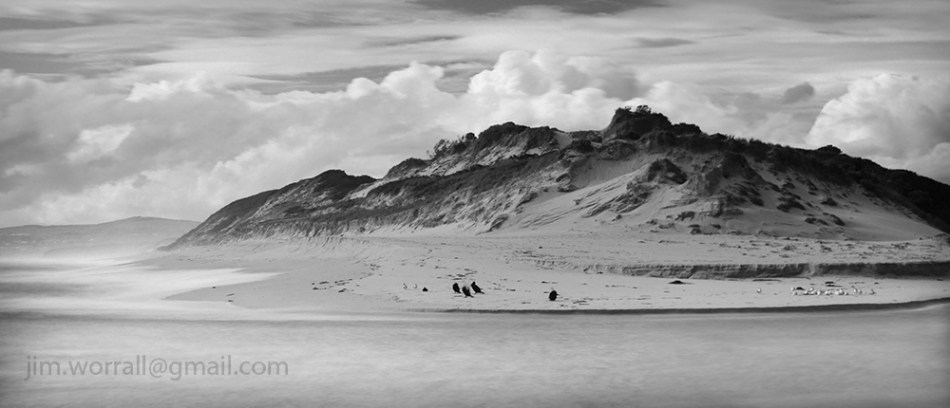
Cormorants and gulls resting at the base of huge sand dunes at the mouth of the Powlett River.
Bay of Islands – Sorrento
Pictured below, a long exposure image from the Bay of Islands on the back beaches of Sorrento. Access to the Bay of Islands is via Diamond Bay Road, Sorrento. There’s a small car park at the of the road. On arrival at the car park take the walking track to Diamond Bay and branch left at the Bay of Islands sign. It’s an easy short walk to the viewing platform.
Access to the beach is discouraged by Parks Victoria due to erosion on the beach, hence a short climb down is required from the viewing platform if you want a view from sea level.
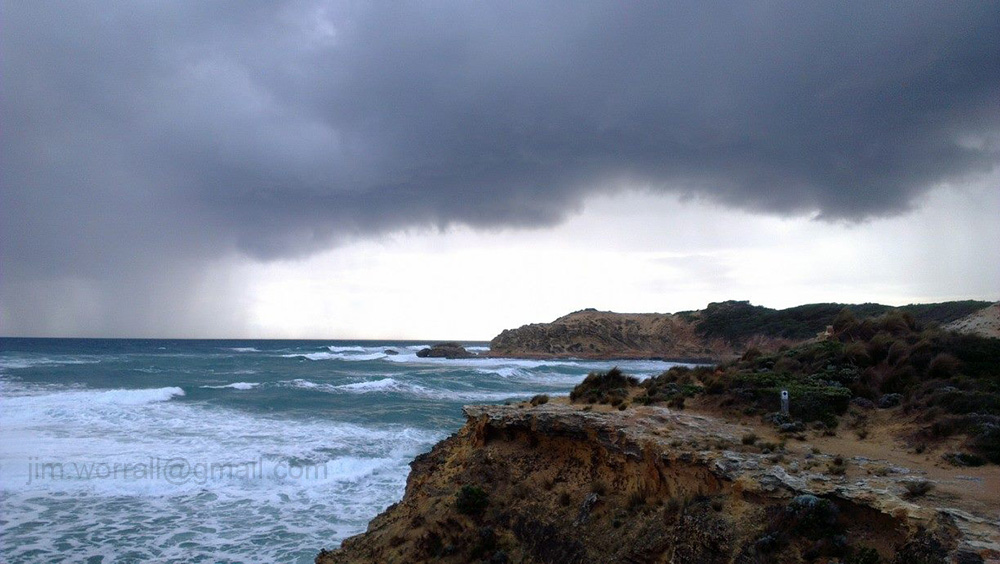
Pictured below – A phone camera shot of a storm brewing over Diamond Bay as viewed from near the viewing platform.

Pictured below – A phone camera shot of the rain rapidly approaching my vantage point. The rain caught up with me before I could make it back to the car. 😦
The Gateway – Coronet Bay
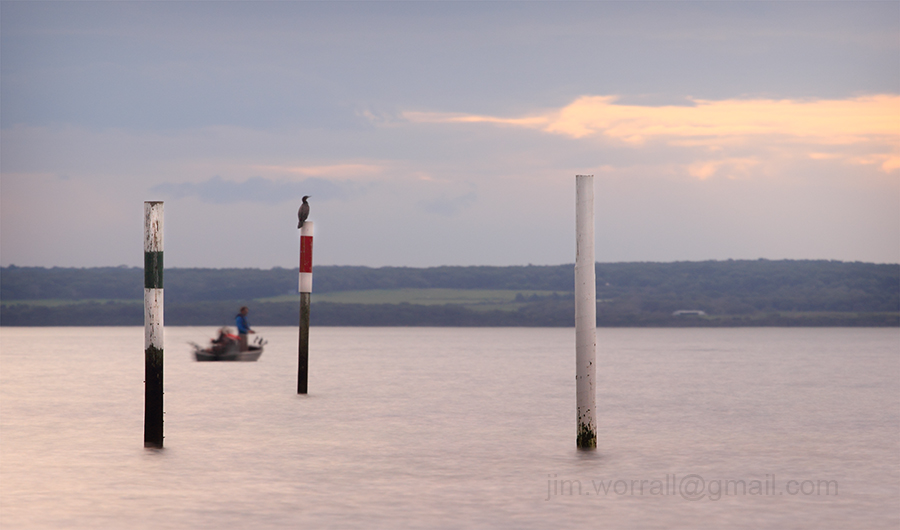
Using the ND400 filter to obtain a ten second exposure during the afternoon at Coronet Bay, Victoria, Australia.


A Hot Starry Night at the Shed
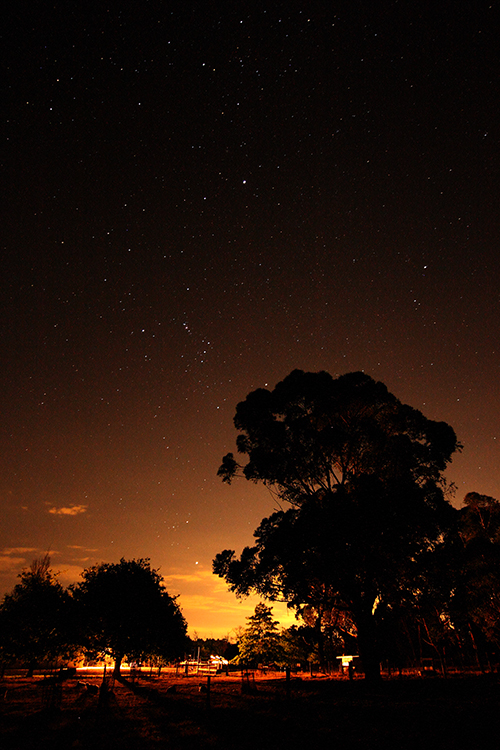
An night time image from semi rural Devon Meadows. The foreground is lit by the long exposure picking up light from a neighbour’s house. Stars are apparent in the night sky.
Cat Bay and Ventnor, Phillip Island long exposures
It was a fine day with fluffy white clouds scooting along on the breeze. It didn’t take long for me to convince myself to go down along the coast and play with some dark ND filters.
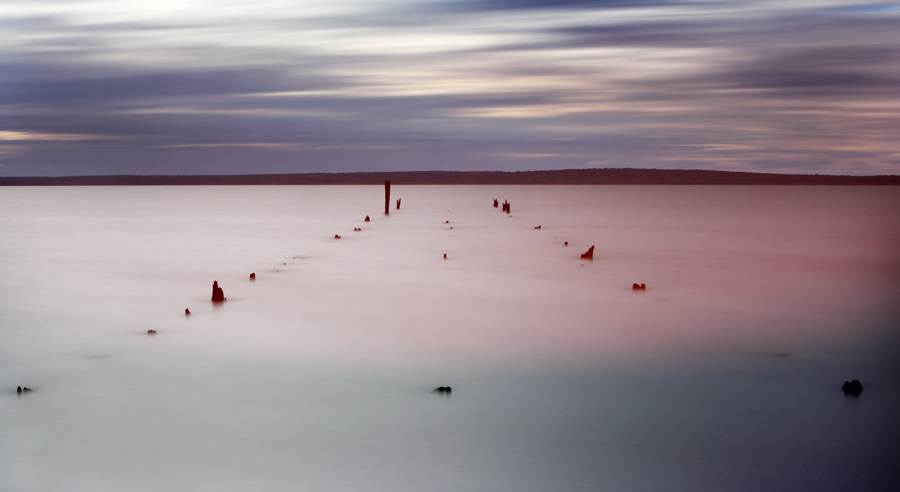
Below – The old jetty remnants at Cat Bay, Phillip Island.

Below – The old jetty remants at Cat Bay, Phillip Island.

Below – Summerlands beach, Phillip Island. I was lucky to catch this one with no footprints near it since this is a popular stretch of beach for the locals to wander on.

Below – Red Rocks beach, Ventnor, Phillip Island.

Below – Red Rocks beach, Ventnor, Phillip Island.

Below – Red Rocks beach, Ventnor, Phillip Island.

Below – Some old jetty remnants at Grantville beach, shot at dusk on the way home.
Playing in the Wind – Flinders, the Blowhole Track
A selection of images from the beach at the end of the Blowhole Track at Flinders on the lovely Mornington Peninsula.
On the day I was there the wind was so horrendously strong I had to push down hard on the tripod to stop it from vibrating and blurring all of the long exposure shots.
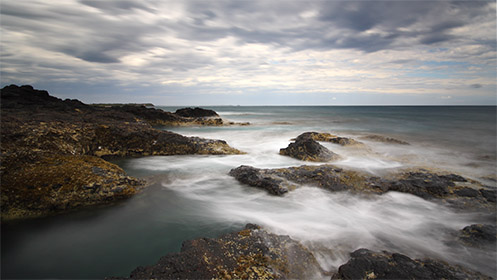
Pictured below – Flinders Beach, the Blowhole Track.

A very picturesque coastline battered by the relentless surf.

By the Seaside – Tooradin and Corinella
Following are some images from the shores of Westernport Bay.
Pictured below – The Journey Home, seagulls at the Tooradin foreshore take off en masse as the day gives way to night.

Below – Corinella Sunset, a series of “God beams” appear from behind a cloud as the sun sets at Corinella pier. These “God beams” are also known as crepuscular rays and are explained at Wikipedia here.

Below – The Living Jetty.
At Corinella a jetty platform disappears below the surface during a king tide.
The local sea birds take advantage of the exposed posts by using them as a safe roost.

Below – The best position for overseeing the activities at the Corinella jetty area.
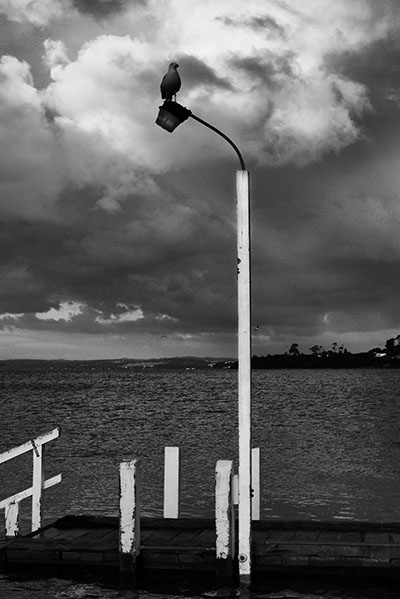
The Window of Opportunity – Grantville Beach.
Amongst the photographic gems that Grantville beach makes available to photographers is a set of 3 rows of short pylons.
No doubt these pylons are the remains of an old jetty but they differentiate themselves from other such sites in a couple of interesting ways. Firstly, it’s unusual to see 3 rows of pylons like this. Most old jetties leave behind only two rows of pylons.
Secondly the pylons are extremely short here, with most of them extending from the muddy base by only a few short inches.
The short stature of these pylons provides photographers with an interesting challenge. At high tide the pylons are invisible as they’re completely submerged by water, and at low tide they’re an awful looking series of posts sitting in mud.
The challenge for the photographer is to arrive at the site during a narrow window of opportunity whilst the tidal transition ideally has all of the pylons surrounded by water around their bases and yet not enough water to make them shorten or disappear below the surface.
Below – “Runway to the Afterlife”
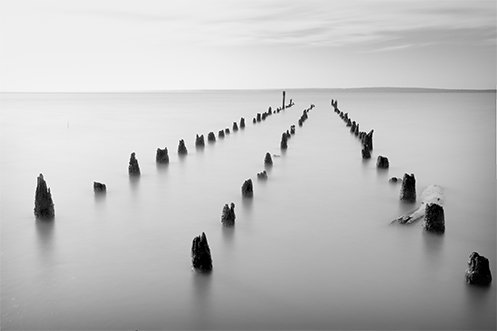
On my first visit to the site I was extremely lucky and caught the tide at just the right height. I wasn’t aware of how elusive these pylons could be until subsequent visits, hoping to catch the pylons in a different light, I haven’t been fortunate enough to arrive at the right time. 😦
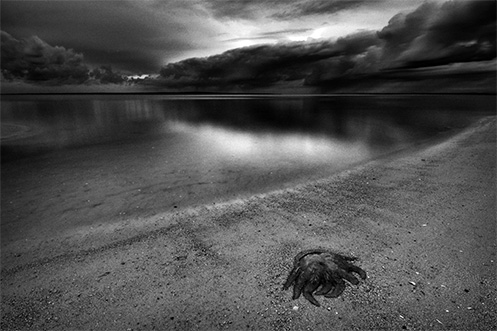
Below – “Mortality” an image taken near the pylons on a different evening. The dark brooding sky sets the mood of the image. In the foreground lays a dead jellyfish, stranded by the outgoing tide.
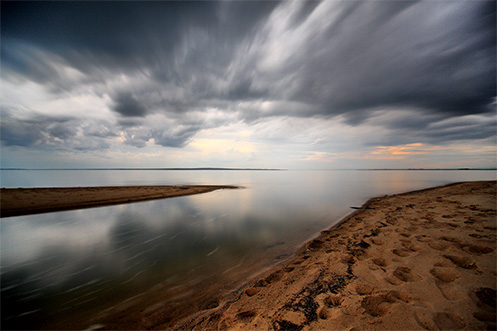
Below – “Deep Creek Reflections“, also near the pylons Deep Creek enters the Westernport Bay.
Contrasts – Views from Jam Jerrup
Contrasting views from the beach at Jam Jerrup, Victoria, Australia.
It’s interesting to see how different a location can appear under different light and tidal conditions. This is exactly the reason why I like to return to the same places many times.
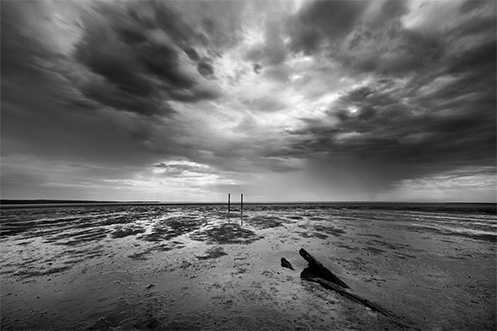
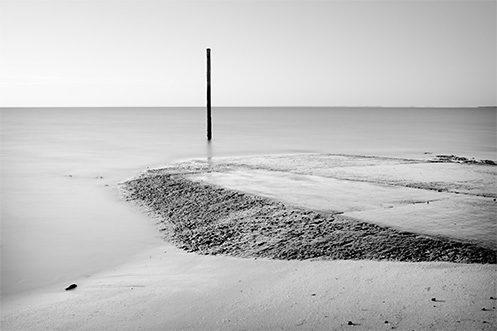
Below – “Aspirations” is a minimalistic long exposure image taken at high tide.

Below – “Blunderbuss” is a wider view of the same area taken at low tide with some more drama taking place in the clouds.
Below – “Exploring the Meme” is the boat ramp and single post at Jam Jerrup.
A Photo Exploration of Grantville beach.
I visited Grantville the day after Victoria had been hammered by unusually high rainfall.
Apparently the extreme rainfall was a side effect of cyclone Yasi’s passage across Queensland and into central Australia.
With the worst of the rain over, the day provided some beautiful photographic conditions with the sun filtered through an interesting arrangement of constantly changing storm clouds.
I love the beach down this way. Each time I visit here I discover something new.
Before I discovered photography I would never have guessed that I would find storm water drains interesting. 🙂
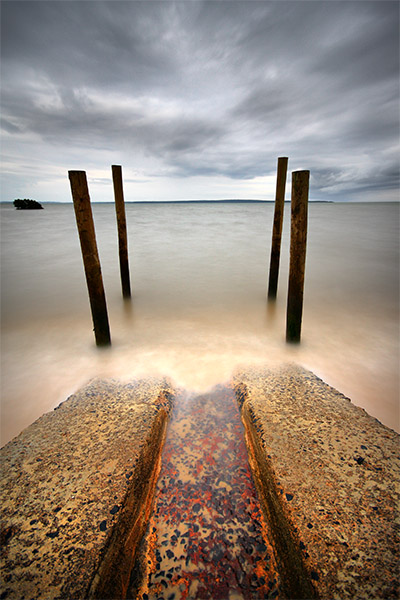
Below – “Purge” a storm water drain running into Westernport Bay.

For those who are interested in the technical details, the drain images are constructed using HDR tone mapping techniques. The long exposures were achieved using a combination of ND400 and ND8 filters on the end of the lens to smooth the waves on the water.
Below – “Running from the Idols” – another drain dumping water into Westernport Bay.
Below – A long exposure self portrait, standing at the end of the Grantville jetty.

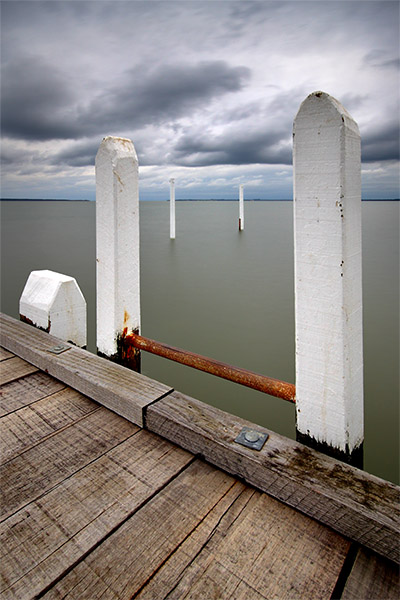
Below – “Grantville Jetty” – a view from the jetty looking out towards the boat ramp marker posts.
Below – “After the Rains” – a long exposure image from Grantville beach as rain clouds exit. An old boat trailer sits semi-submerged in the foreground.
A Photographic Trip to Tenby Point.
Tenby Point is a coastal village located on the shores of Westernport Bay, just a few kilometers east of Corinella, Victoria, Australia.
On this particular photography excursion conditions weren’t ideal. The sun was harsh and high in the sky, and there were no clouds around. Due to these harsh light conditions I chose to make a series of high key images whilst the tide was favorable.
Below – The Counsel of Many

It’s important to know what the tides are doing here from a photographer’s prespective.
I think it’s best here to avoid visiting at low tide unless you’d like images of sticks or trees sitting in mud.
The black and white images in this post were taken with both an ND400 and an ND8 filter attached to the end of the lens to achieve long exposure times in bright sunny conditions. The goal behind using such heavy filtering is to achieve long exposure times in order to blur as much detail as possible from the sky and water.
The result is a more minimalistic image.
Below – Sweet Survivor

Below – The Path to Yesterday

Eventually all good things come to those who wait. The afternoon dominated by harsh white light gave way to a pearler of a sunset when some clouds moved across the sky at just the right moment. I drove home from Tenby Point wearing a satisfied grin. 🙂
Below – Sunset at Tenby Point

Exploring Beachport, South Australia.
I visited the town of Beachport just prior to the summer “silly season”. This provided me the with the opportunity to explore the area without the usual crowds of holiday makers cluttering up the splendid beaches.
The town sits on the end of a small cape with one side facing towards the open ocean and the other side facing more towards the mainland providing a relatively safe harbour area and calmer beaches.
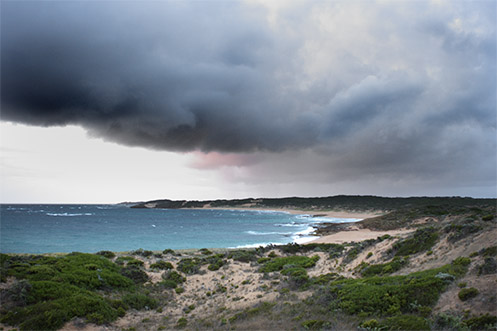
Below – Thar She Blows – a storm approaches Beachport from the ocean.
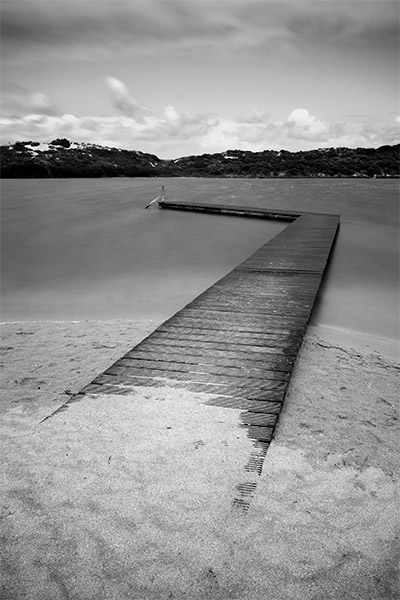
Below – Beachport Pier – located on the calmer east side of the cape, is apparently the second longest pier in Australia. You need a cut lunch and a sherpa to trek from one end of the pier to the other. 🙂

Below – The Pool of Siloam at Beachport contains water which is claimed to be seven times saltier than seawater which makes floating really easy. The pool is fed by underground springs.
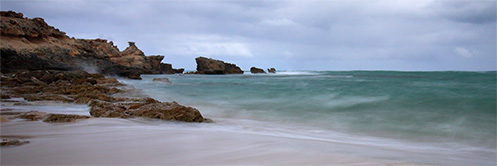
Below – Back on the rougher ocean side Post Office Rock at Beachport provides some nice wave action.
I lost a pair of runners and socks here to an unexpected wave.
The Water is Back – Meningie
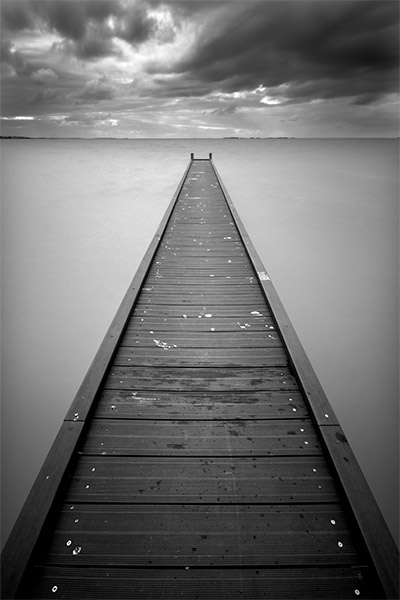
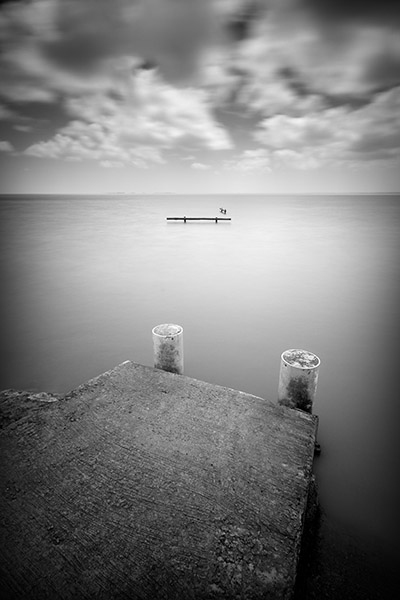
Following are a few images from Meningie, on the banks of Lake Albert in South Australia taken in December last year (2010).
I was told by the Bev at the Lake Albert Motel that the lake has only recently recovered from the drought. Apparently for some time there wasn’t water anywhere near the jetty pictured below.
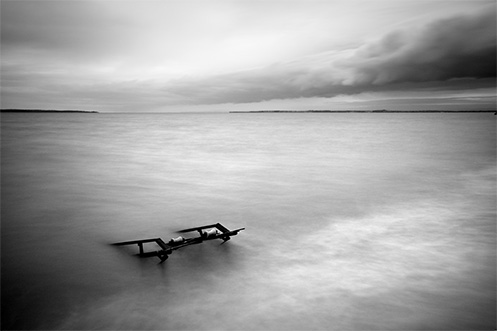
Below – Traces – Meningie, South Australia, Lake Albert.
Below – Rise and Fall – Meningie, South Australia, Lake Albert.
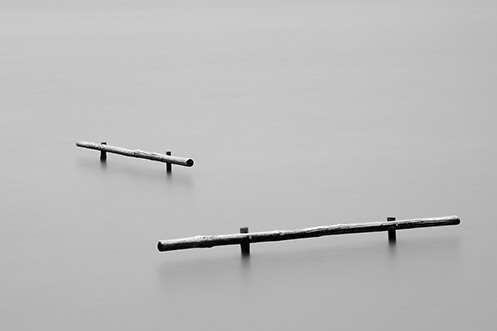
I have no idea what those posts are doing out there in the water.
(Update – 31-01-11 Bev at the Lake Albert Motel has informed me that the posts in the water are there to provide a roost for the local pelicans. That makes sense.)
Below – Aspects of Abundance Meningie, South Australia, Lake Albert.
Pelican roosting posts.
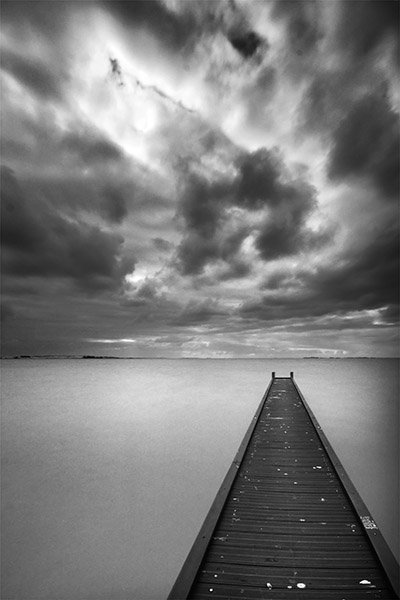
Below – Meningie Some wonderful action going on in the clouds here.
Below – Unbreakable – The second most sturdy piece of outdoor furniture I’ve ever had the pleasure of sitting on.

Thunder and halos at Blairgowrie ocean beach.
The return to Blairgowrie beach was everything I could hope for. I timed the visit to coincide with the low tide late in the afternoon, and as a bonus a thunderstorm happened to roll in off the ocean with a vengeance.
As I stood exposed on the beach to take this photo I was reminded of what a precarious situation this was. There were occasional bursts of lightning coming from the low dark clouds striking the water. Unfortunately I wasn’t able to capture a lightning strike with the camera but the view of the clouds was magnificent.

As the main part of the storm passed over head the rain poured down heavily and I managed to shelter my camera gear and most of my body by huddling against a large rock. As the rain began to ease gaps appeared in the clouds allowing scattered sunlight through creating wonderful light shows including halos and misty streaks.


As always, these photos are available to purchase as prints at –
http://www.redbubble.com/people/pixelmuser/
You can contact me by email at jim.worrall@gmail.com

 Photography by Jim Worrall