
Crocodile Rock – Bay of Islands
High tide at the Bay of Islands, Sorrento, Mornington Peninsula. The featured rock formation in the image is known to the locals as “Crocodile Rock”.
Tech stuff – 0.8 seconds, f/8, ISO200

St Pauls beach sunset – Sorrento
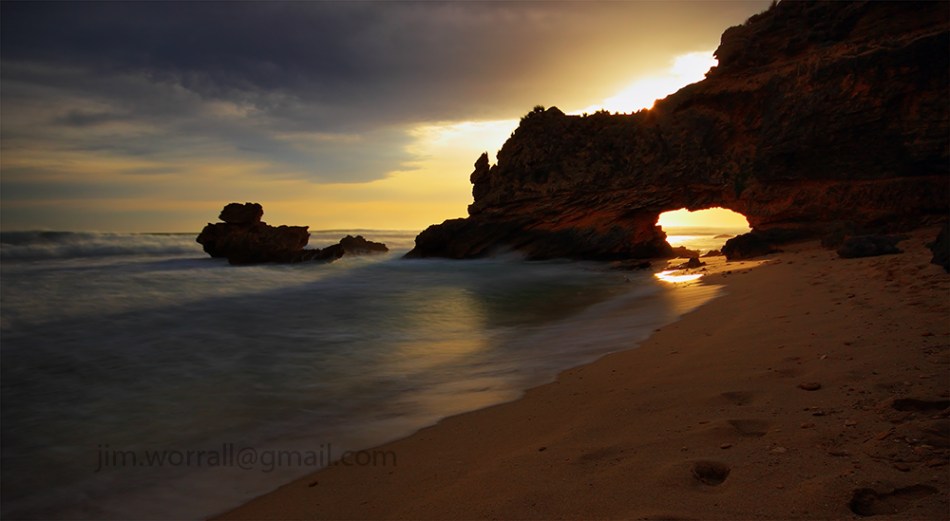
The setting sun lights up the foreshore through the arch at St Pauls beach, Sorrento, Mornington Peninsula.


Bay of Islands – Crocodile Rock
A long exposure image from the Bay of Islands, Sorrento, on the beautiful Mornington Peninsula.

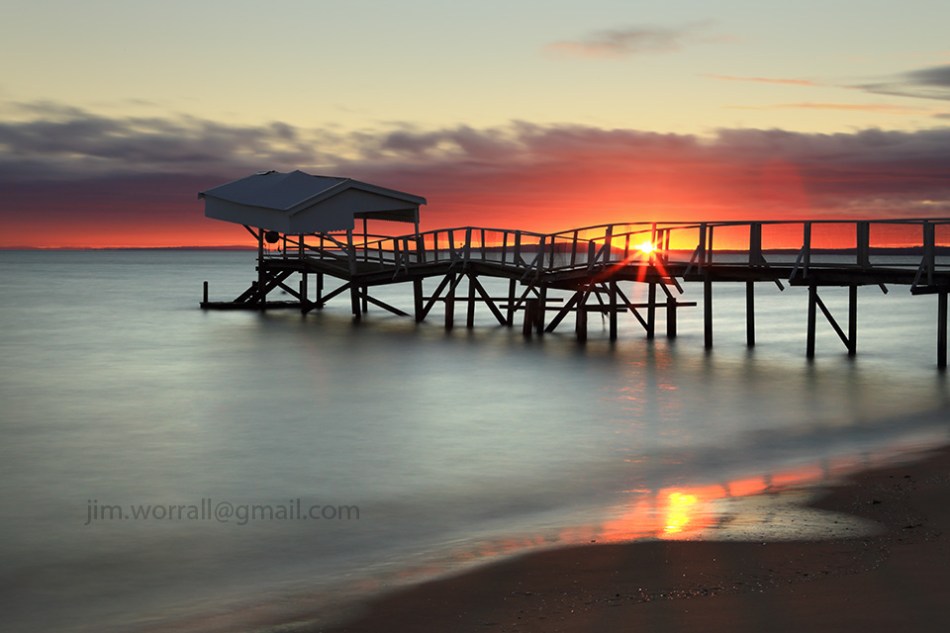
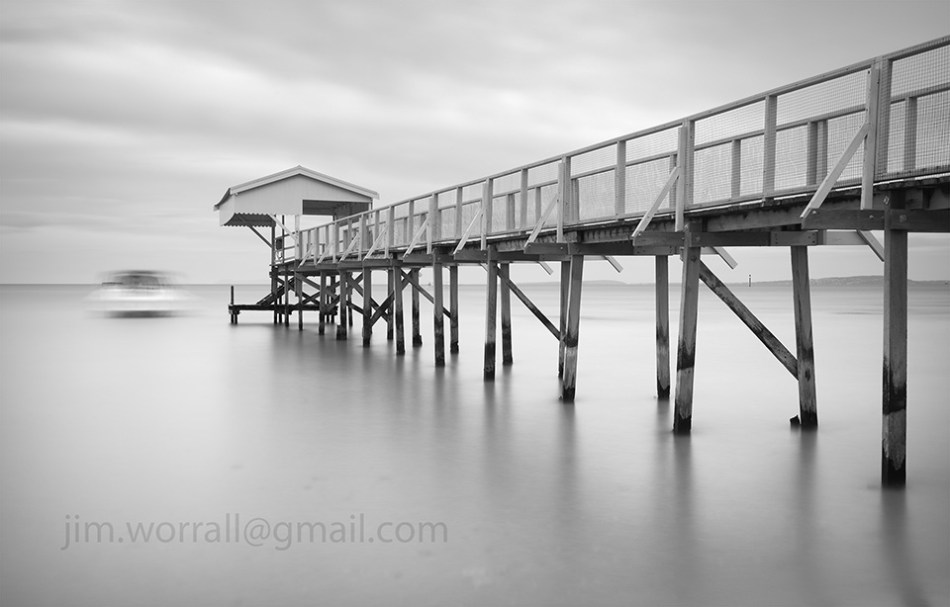
Sullivan Bay jetty – Sorrento
Following the destruction and subsequent rebuilding of this iconic jetty at Sullivan Bay, it took a few visits here for me to catch it in favourable light.
This is a long exposure of 204 seconds on a cloudy day giving nice diffused light.
Sunrise at Sullivan Bay – Sorrento
A long exposure sunrise image from Sullivan Bay, Sorrento, on the Mornington Peninsula. The iconic jetty has recently started to fall to bits. I suspect she wont be around much longer. 
Tech stuff – 25 seconds f/18 ND400 filter.
Shelley beach and Point King – ND group excursion
Last weekend we had our ND group excursion for beginners. It was a great turnout with lots of enthusiastic people attending. We started shooting at Bridgewater Bay in Sorrento in very difficult conditions with the wind blowing a continuous mist of fine rain onto our lenses. I was both surprised and delighted that so many people stayed and had the patience to put up with these conditions, …..such a dedicated bunch. 🙂 Many thanks to Jason Cincotta and Michael Stringer for assisting with so many ND newcomers.
Later we moved onto the front beaches at Point King, Sorrento, followed by Shelley beach, Portsea , both providing us with much more friendly shooting conditions.
Pictured below – Point King jetty. Tech stuff – 132 secs f/18.

Pictured below – Shelley beach, Portsea. Tech stuff – 60 secs f/18.

Pictured below – Shelley beach, Portsea. Tech stuff – 136 sec f/18. 10 stop ND + 4 stop soft grad.

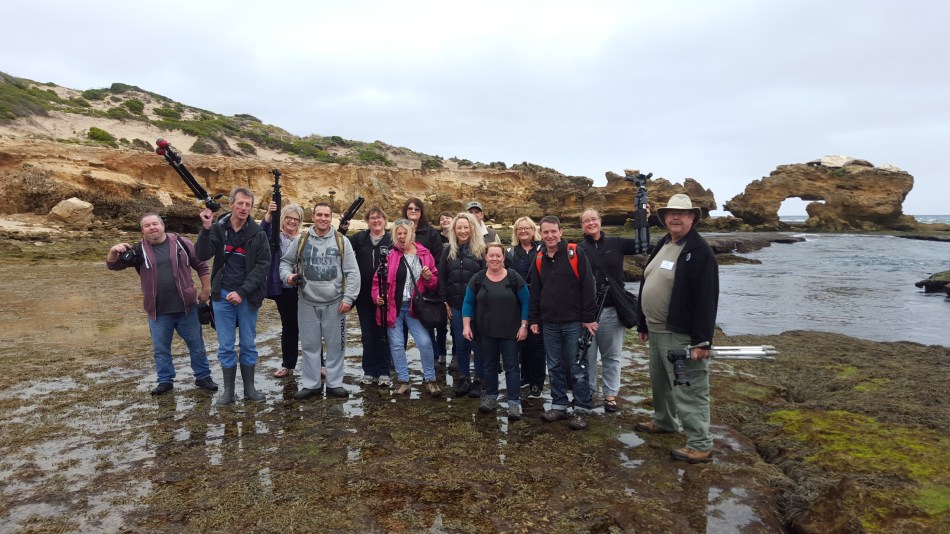
Pictured below – Most of the crew from the group excursion, Bridgewater Bay.
Jubilee Point – Sorrento
A long exposure shot from the base of Jubilee Point at Sorrento on the Mornington Peninsula.
Tech stuff – 4 secs at f/16 using an ND400 filter.

Sullivan Bay – Sorrento
A daytime long exposure photo from Sullivan Bay, Sorrento, on the Mornington Peninsula.
Tech stuff – 66 secs f/13 using ND400 + ND8 filters.
Jetty at Sullivan Bay, Sorrento.

Bay of Islands – Sorrento
Below is a series of long exposure images taken during a photography group excursion to the Bay of Islands at Sorrento. Conditions were ideal for those of us wanting to take long exposures.
It was great to see a few of the participants willing to get their feet wet to catch some good shots. 🙂
Below – 30 secs f/9

Below – 8secs f/9

Below – 15 secs f/9
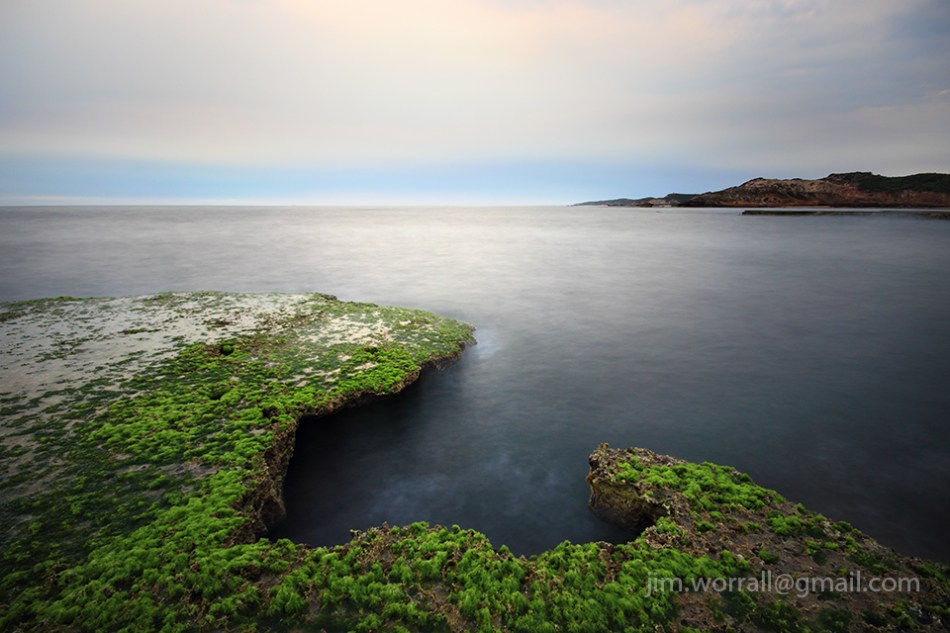
Below – 13 secs f/7.1

Pictured below, some of the excursion group members setting up in anticipation of a colourful sunrise that never really eventuated.

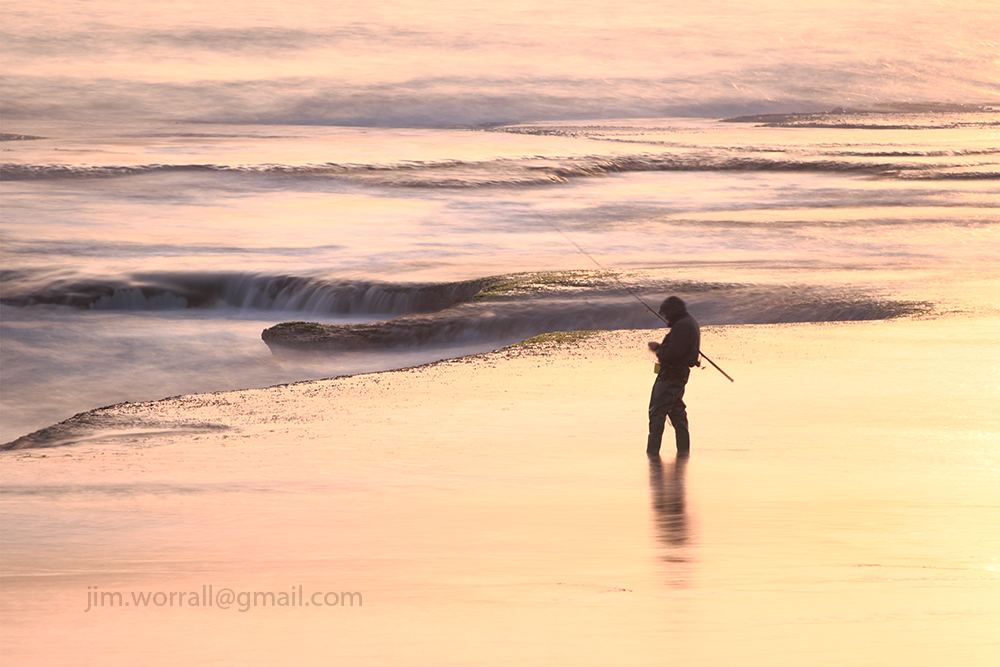

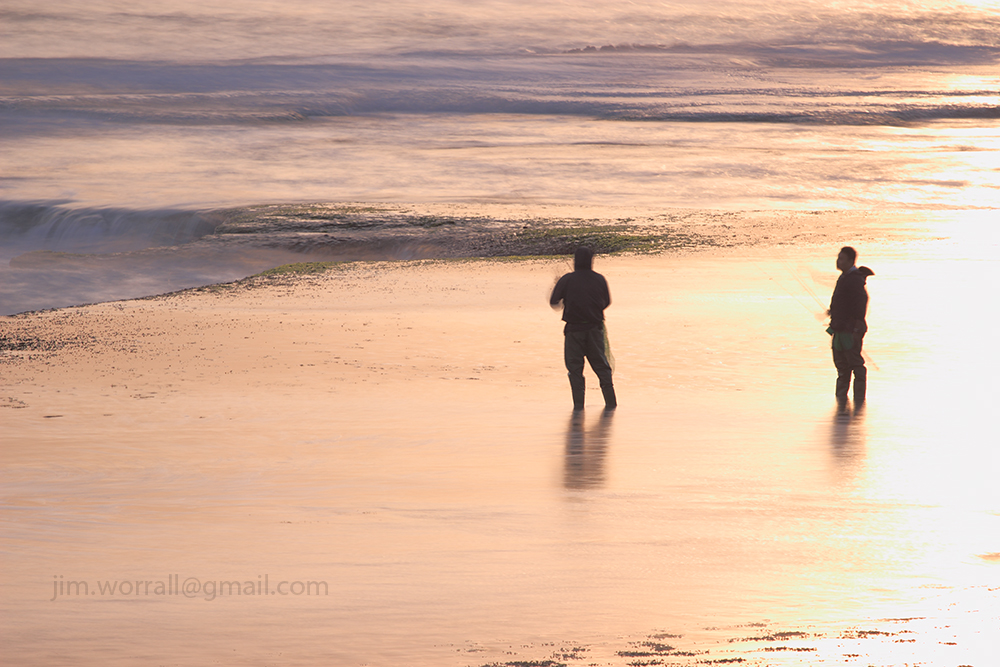


Sunset at St Pauls beach – Sorrento
Following are some images from the beach at the end of St Pauls Rd, Sorrento on the Mornington Peninsula.


Haven – Sorrento back beach

Above – A long exposure image of the iconic rock at Sorrento back beach.
Being well elevated and surrounded by rough water, the rock is a haven for large sea birds. You can visit the rock and it’s popular surrounding bay by driving to the end of Ocean Beach Road in Sorrento.

Bay of Islands – Sorrento
Pictured below, a long exposure image from the Bay of Islands on the back beaches of Sorrento. Access to the Bay of Islands is via Diamond Bay Road, Sorrento. There’s a small car park at the of the road. On arrival at the car park take the walking track to Diamond Bay and branch left at the Bay of Islands sign. It’s an easy short walk to the viewing platform.
Access to the beach is discouraged by Parks Victoria due to erosion on the beach, hence a short climb down is required from the viewing platform if you want a view from sea level.
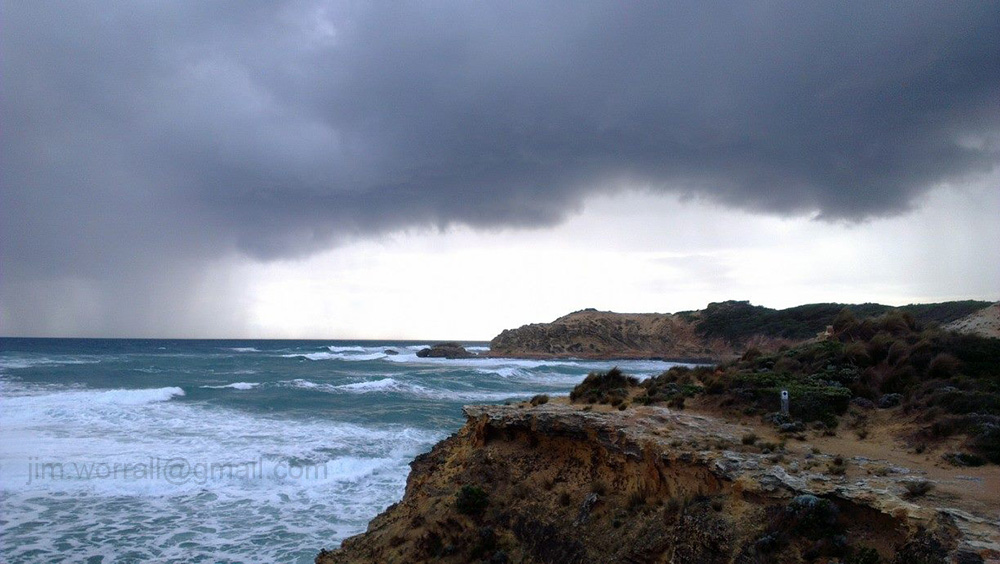
Pictured below – A phone camera shot of a storm brewing over Diamond Bay as viewed from near the viewing platform.

Pictured below – A phone camera shot of the rain rapidly approaching my vantage point. The rain caught up with me before I could make it back to the car. 😦
At the Edge of the Ocean
November is a great time of year on the Mornington Peninsula back beaches. The warming water signals an explosion of bright green seaweed on the rocky plateaus all along the coast.

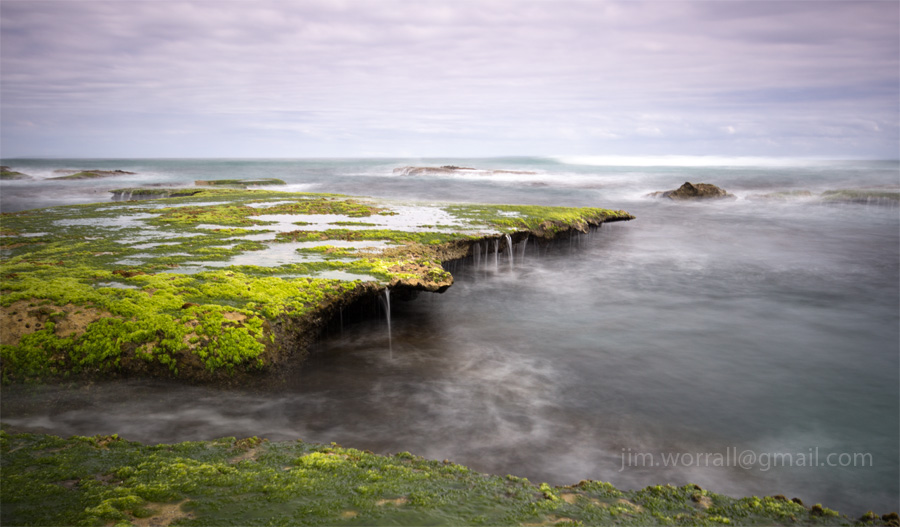


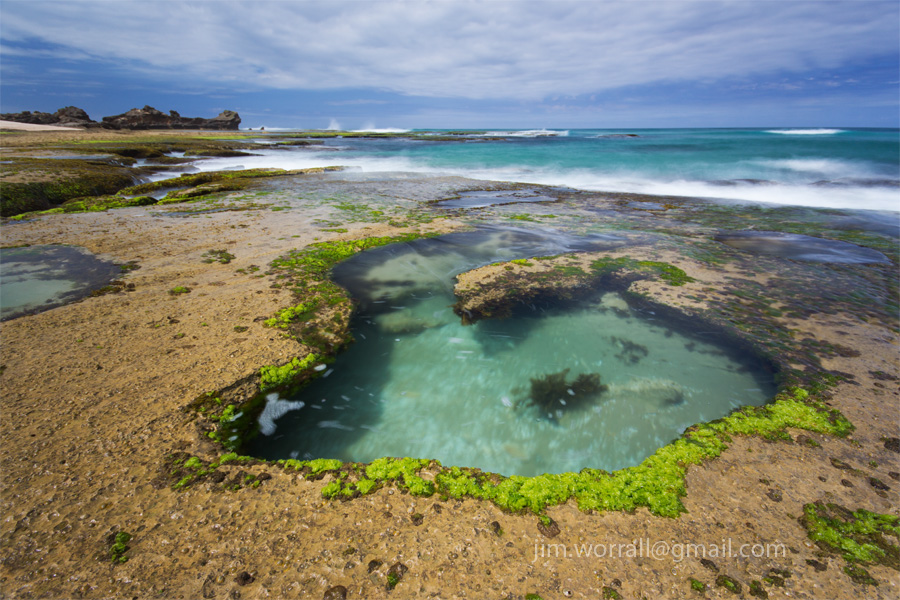
Rock pools at the back beach – Sorrento
Following are a couple of shots of the beautiful rock pools available to explore at Sorrento back beach during low tide. In these images I’ve used an ND400 filter to smooth the background waves and a polarizing filter to remove the sky’s reflection from the surface of the pools.
A Morning at Sorrento back beach
Firstly just a quick note to let you know that I’ve updated the blog to give it a whole new look and most importantly it will now allow me to display larger images on the page. Screen sizes and resolutions have changed dramatically since I first started the blog several years ago. I’m sure you’ll agree that larger images is a step in the right direction.
The following images are from a morning trip down to Sorrento on the Mornington Peninsula.
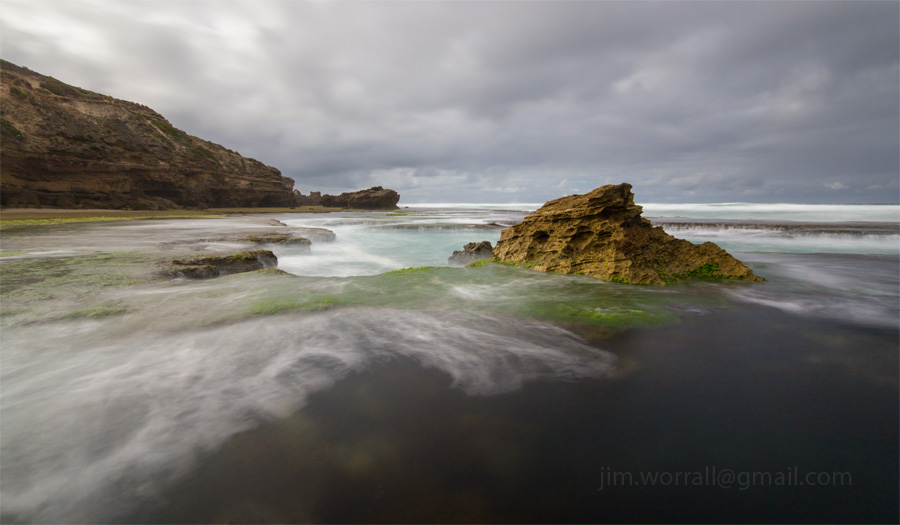

Now for some fun shots. The two images below were taken by my friend Stephen. He managed to catch a couple of golden moments in time where the waves got the better of me.

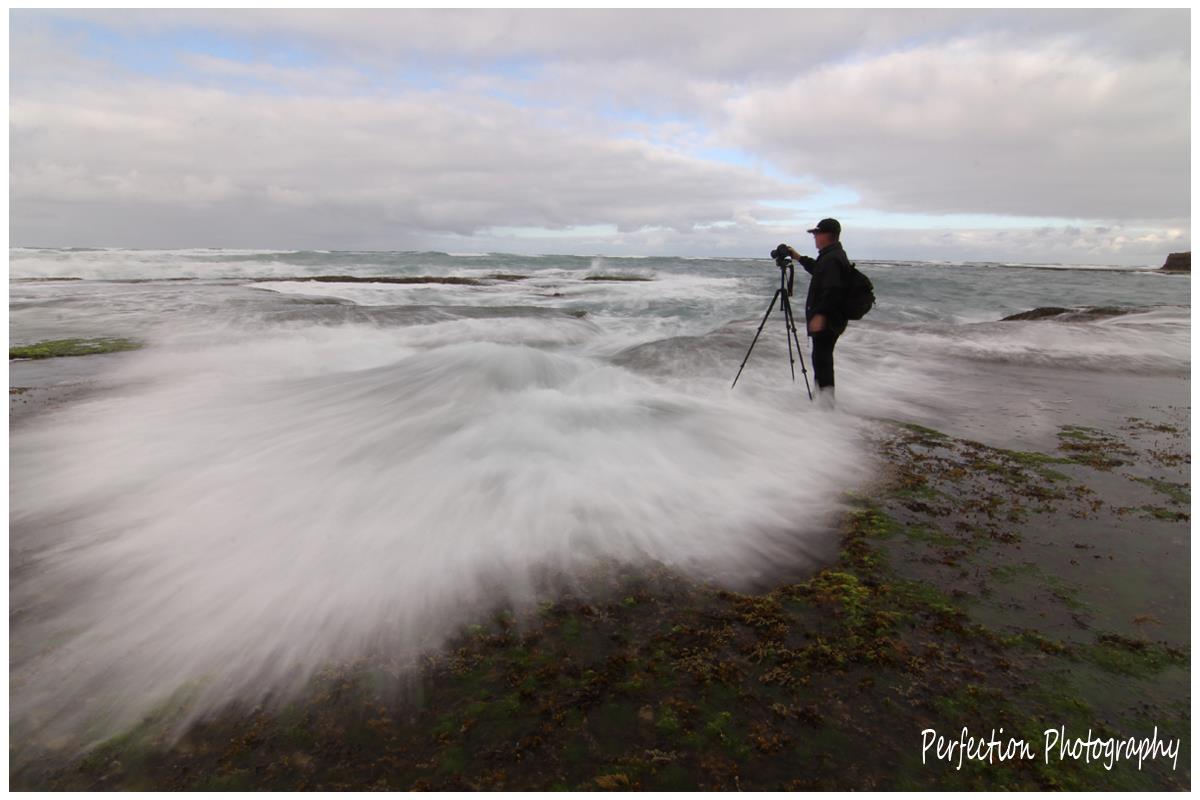
Sorrento – A Mornington Peninsula Jewel
Some afternoon long exposure images from Sorrento back beach on the Mornington Peninsula, Australia. The foreground rocks are submerged at high tide and are gradually revealed as the tide goes out. A long exposure time is used to smooth out the ocean waves into a mist.
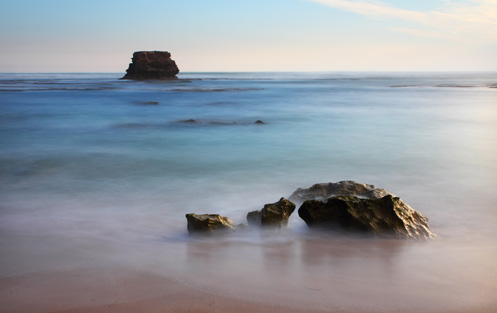
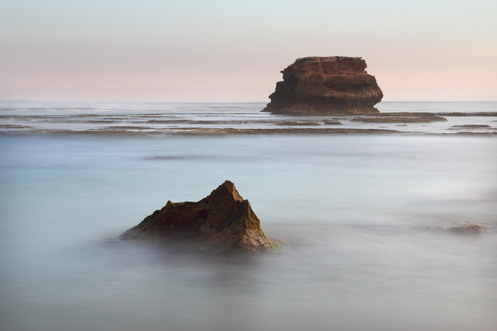

Sorrento Back Beach
Shortly before xmas I took the opportunity to snap some images just before the summer “silly season” struck Sorrento.
I’m certain that one day the Sorrento/Portsea area of the Mornington Peninsula will become so heavy with tourists that it’ll snap off and fall into the sea.
Until that day I’ll continue to enjoy it as much as I can.
Pictured below – A couple of long exposure images from south-east of the main beach.
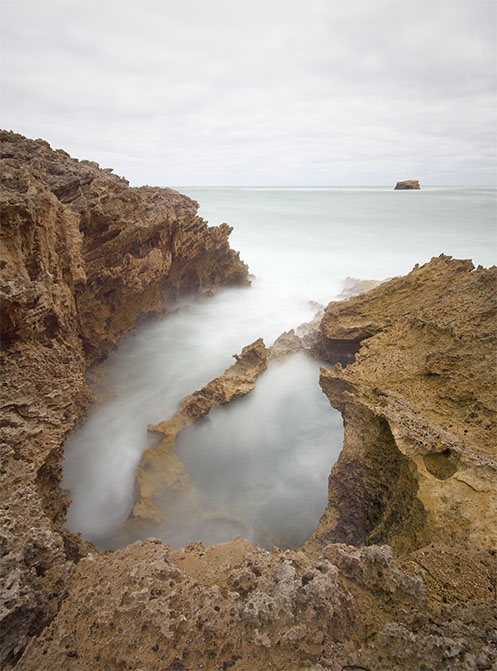
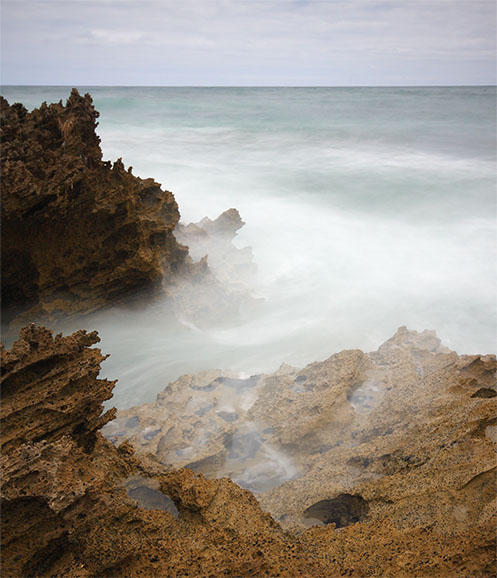
Pictured below – Bay of Islands – Sorrento
Located a short walk from the car park at the end of Diamond Bay Road.
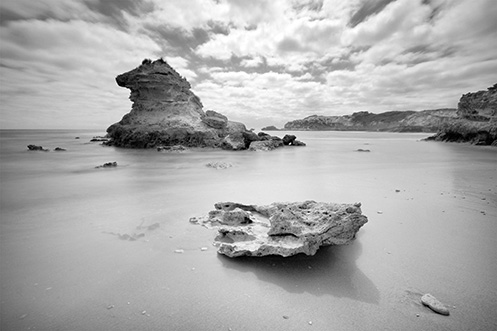
The bollard, the boat, the buoy and the beginning of a rainbow.
Saturday’s excursion was down towards the pointy end of the Mornington Peninsula.
After a hearty lunch of fish ‘n chips on Dromana beach, it was off to Sorrento for a cappuccino and also check out the surf conditions on the ocean side.
On arrival at the back-beach the surf was violent and unruly, fueled by a ferocious onshore wind.
I’ve tried to capture long exposure images under these conditions a couple of times before and come away from the experience with disappointing results. A howling wind always manages to soften my long exposure images regardless of tripod technique.
With this in mind I resigned myself to exploring the calmer more docile side of Sorrento, the bay side. The view from the beach here was quite nice with small boats bobbing and wobbling around in the water. I took a few shots of the little boats but couldn’t find anything particularly satisfying so I moved my attention to the huge bollards near the pier.
Pictured below – Bollard.
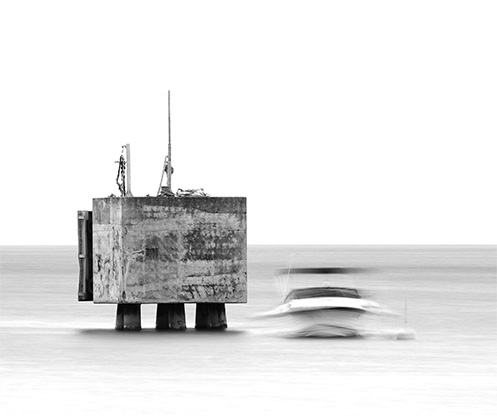
Above – In this image the huge concrete bollard remains motionless whilst surrounded by the blurred movement of waves on the water. It’s nearby neighbors, the boat and the buoy wobble and rock in compliance with the waves. I used a high key effect to eliminate some distracting elements from the background. Both ND400 and ND8 neutral density filters were attached to the lens to achieve the desired long exposure under fairly bright conditions.
Pictured below – The Sorrento Bollards.
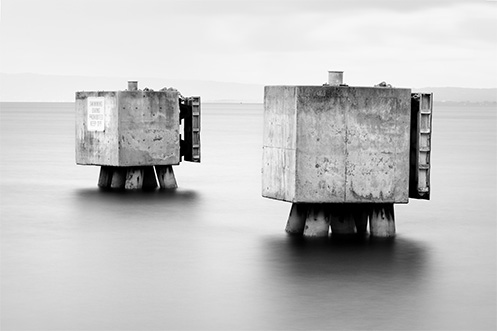
Above – The massive bollards are used to assist with holding the Queenscliff-Sorrento ferry in place at the pier during the exchange of passengers and cars.
After shooting the bollards, mother nature tried to grow me a rainbow. The left and right ends of the rainbow were developing nicely and gradually growing skywards then suddenly fizzled into nothingness.
Pictured below – the left end of the incomplete rainbow.

Pictured below – the right end of the incomplete rainbow.

Plateau – Sorrento back beach
Below – Plateau – A long exposure image from the Sorrento back beach.
An intriguing place to visit at low tide.

The Sleeping Sphinx – Sorrento
An image from the Sphinx rock formation after an enjoyable day of playing in the surf.

The Vagabond Tide – ND400 long exposure
Following is a series of images taken at the Sorrento back beach, Victoria, Australia, using an ND400 filter during bright afternoon light conditions.
Pictured below – Dorsal.
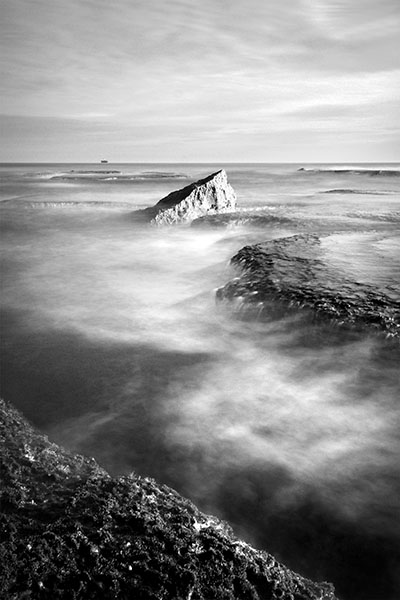
Below – The Vagabond Tide.

Below – The Rinse Cycle.


An Afternoon at Sorrento
A selection of images from the photographically rich area along Sorrento back beach.
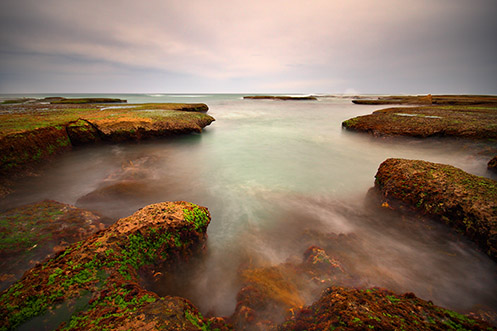
Below – “Her Outstretched Arms”
The sun has dropped close to the horizon giving a warm hue to the sky and rocky plateaus. The vigorous surf is tamed by the camera’s long exposure time.
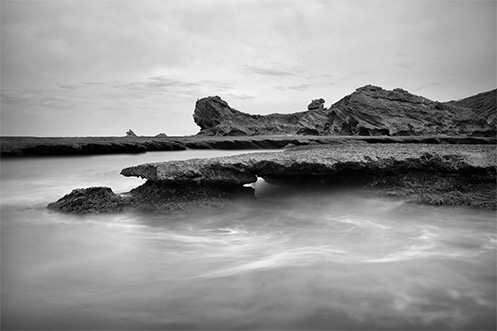
Below – “Sphinx”
In the foreground the violent surf swirls under and around a rocky platform whilst in the background the iconic Sorrento Sphinx rock formation stares out to sea.
Below – “The Call of White Water”
Low tide at St Paul’s beach Sorrento as the surf crashes over the rocky plateaus filling one of the many natural pools.
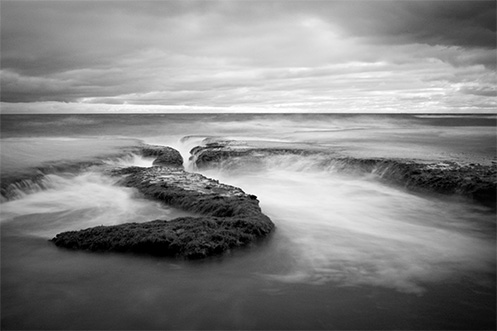
Below – Water continually cascades off the edge of the platforms as waves push across them.

Below – A memorial on the cliff tops at Jubilee Point, Sorrento.
A sobering reminder of how dangerous this area can be.

The Jetties of Portsea and Sorrento
Portsea and Sorrento are coastal villages located at the tip of the Mornington Peninsula, south east of Melbourne. They both share a wild and woolly ocean beach to the south and the much calmer waters of Port Phillip Bay to the north. As a photography enthusiast I enjoy the contrast between the ocean and bay sides of the peninsula.
In winter and early spring you can stand on the ocean beach and not see another soul, a prospect I find very attractive. The only problem is that the wild and woolly conditions that keep the crowds away also make photography difficult. A photographer here has to contend with the difficulties of high winds and sea spray, not impossible I know but very annoying when combined with the low temperatures of winter.
For this reason I’ve found myself gravitating towards the calmer bayside beaches on my last couple of trips down that way.
Below – “34 Steps” which is available to purchase as a print here.

I’ve recently been trying to consciously simplify my images by attempting to exclude as many distracting elements as possible. Whilst shooting on the bayside beaches this has been fairly easy to achieve by using long exposures to reduce the detail in the water and sky. Another benefit of the long exposures is that birds and boats can move through the frame without even appearing in the finished exposure. I used a combination of an ND400 and an ND8 filter giving me about 12 stops of darkness to make the exposures up to 30 seconds long for these images.
Below – “The Danger of Diving”, Portsea beach, which is available to purchase as a print here.

Portsea and Sorrento bayside beaches feature a wonderful collection of public and private jetties.
Below – “Outbound”, Sorrento beach, which is available to purchase as a print here.
Despite being technically over exposed I like the drama this high key image presents.
I like the way the sea and the sky are almost one. A personal favorite.

Below – “Nature versus Nurture”, Portsea beach, which is available to purchase as a print here.

Below – “Boomerang”, Portsea beach, which is available to purchase as a print here.

Below – “Civilization meets the Sea”, Portsea beach, is available to purchase as a print here.

Below – “The Trappings of Wealth”, Sorrento beach, is available to purchase as a print here.
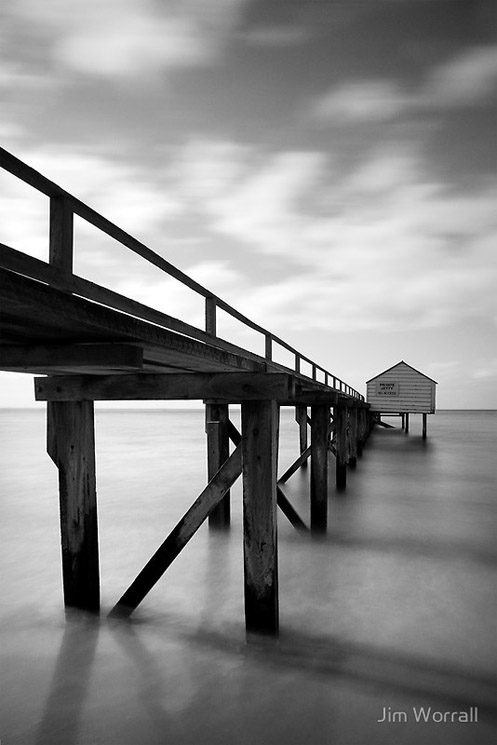
Incorporating HDR tonemapping techniques with long exposures
The following images were experiments using HDR tone mapping techniques combined with the effects of long exposure times.
Each image was constructed from at least 3 separate exposures using in-camera auto exposure bracketing. In my case, being a Canon shooter, I used 3 exposures of -2,0 and +2 simply for convenience. I believe Nikon shooters have a bit more flexibility in this area.
The images were all taken during daylight hours so it was necessary to use some heavy ND filtering in order to increase the exposure times and achieve a nice misty look to the water. In my case I used an ND400 and an ND8 filter stacked together to achieve this.
With the camera set to aperture priority mode I adjusted the aperture and filter combination (sometimes removing the ND8) to achieve an exposure of 8 seconds. When the shutter button is depressed the camera would then give me 3 exposures at 8 seconds, 2 seconds and 30 seconds (which is close enough to 0,-2 and +2). My particular camera doesn’t let me expose for longer than 30 seconds unless I go to bulb mode and use a remote timer, so out of laziness I tend to limit many of my exposures to 30 seconds. 🙂
The exposures were then combined and tonemapped using HDR software and tweaked in Photoshop to achieve the end result.
Despite all of this sounding a bit technical it’s really quite simple and I encourage you to try it. The results are often very rewarding.
BELOW – Jurassic Afternoon – Sunlight and waves break through a slit in the prehistoric Pinnacles rock formation on Phillip Island.

BELOW – The Mist of St.Pauls – A long exposure at St. Pauls beach, Sorrento, Victoria, Australia.

BELOW – Prehistoria – An image from The Pinnacles, at Phillip Island, Victoria, Australia.

BELOW – Swimming with Dinosaurs – Down amongst the prehistoric Pinnacles rock formations at Phillip Island, Victoria, Australia.

Daytime experiments with the ND400 filter.
The following long exposures were taken during daylight hours using an ND400 and ND8 filter stacked together on the front of my Sigma 10-20mm lens. The combination of these two filters attenuates so much light that peering into the viewfinder reveals an inky blackness even during bright daylight conditions.
It’s therefore necessary to compose the image BEFORE screwing the filters onto the lens. It’s also necessary to adjust the focus manually since the auto-focus system has no chance of working under such conditions.
*** (Update October 2012) The introduction of “live view” to many DSLR cameras means that is’s no longer necessary to compose and pre-focus with the dark filters off the lens. I shoot all the time now using live view to peer through the combined darkness of an ND400 and ND8. The filters now stay on the lens which means there is a lot less fiddling around. If you’re looking for a guide to show you how to use an ND400 have a look at my recent blog post here.***
I found that if I set the ISO as low as possible, and set the aperture very small (i.e. a high number), then it was possible to obtain a shutter duration of about 3 minutes. Such long exposures during daytime create some interesting images. I’m looking forward to experimenting more with the ND400.


Out on the rock shelves
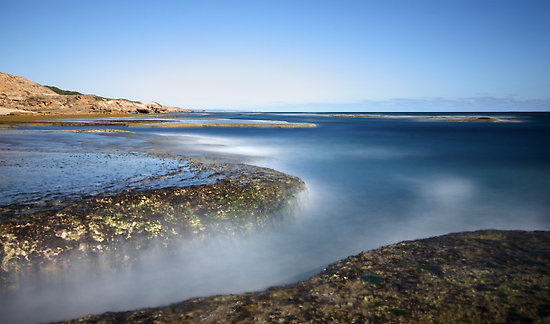
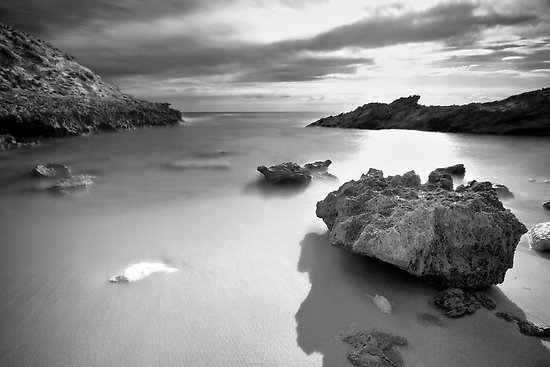
The following three images were taken on an excursion to the rock shelves of Montforts beach, in Blairgowrie.
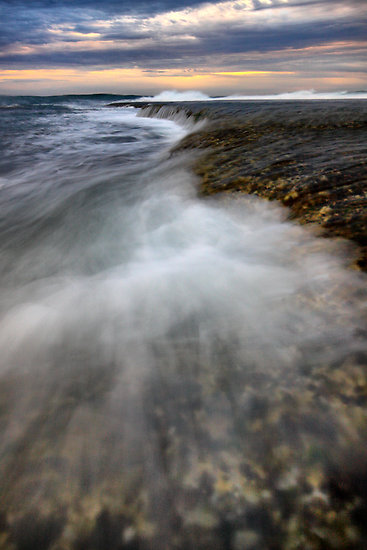
It’s an interesting place to be during the transition from high to low tide, as the water on the expansive rocky plateaus cascades over the sides on it’s return to the ocean.
Whilst here it’s important to be aware of which way the tide is going and also keep an eye out for occasional large rogue waves that sweep across the shelves. Prepare to get wetter than you expected here.
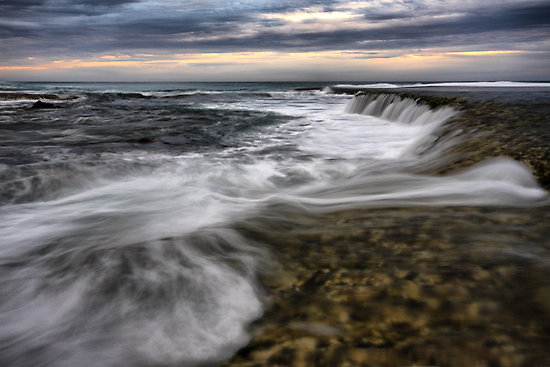

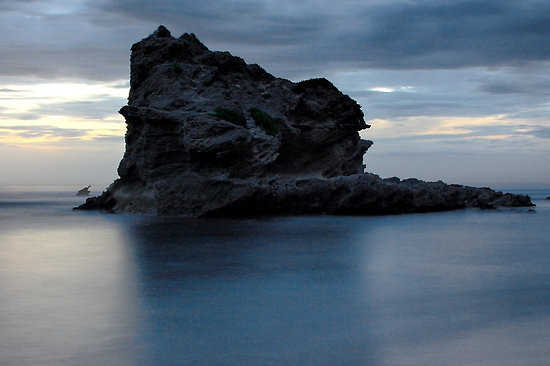
The image below was taken at the neighboring Sorrento beach.
It’s a long exposure taken after sunset giving the oceans surface a deceptively calm and smooth appearance.
Light and Time at my Ocean Beach
A selection of images taken from two excursions to Sorrento beach.
Return to Primal is a long exposure taken after sunset. The true motion of the waves disguised by the slow shutter speed.

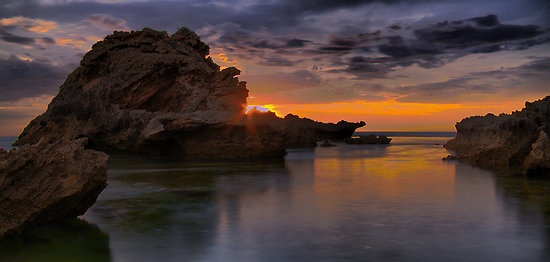
High Tide Sphinx is a slow(ish) exposure taken at high tide as the sun was setting behind the Sphinx rock formation at Sorrento beach, Australia.
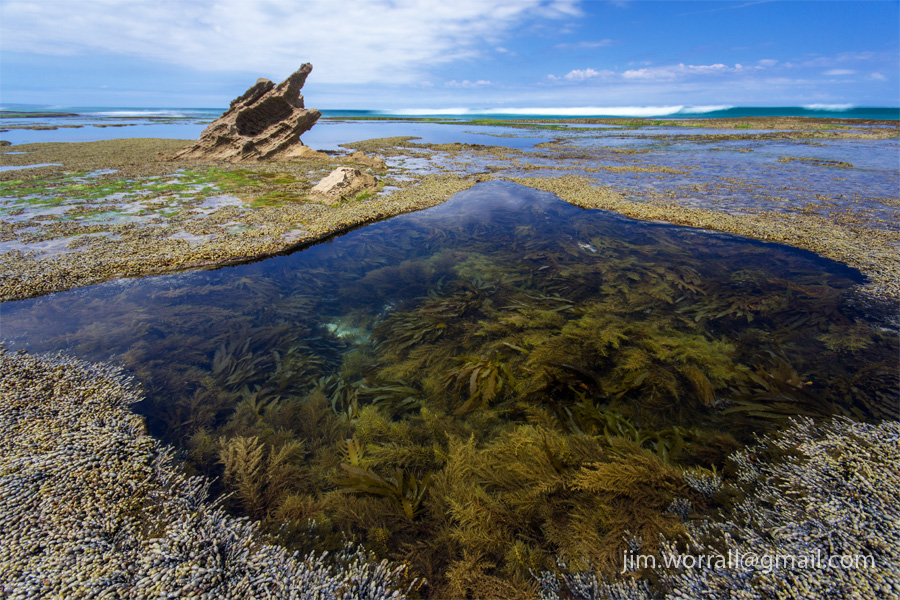
Life in the Good Pond is a slow(ish) exposure taken at sunset. A polarizing filter was used to take the reflection off the surface of the rock pool allowing the scene below the surface to become visible. The blurring on the water was caused by the wind rippling the surface.

I Peek Around the Corner is another image from Sorrento where a polarizing filter was used to remove the unwanted reflection of the sky from the surface of the water enabling us to see the wonder below. In the distance on the horizon the Sphinx rock formation is visible.

Around the Sorrento Sphinx
These images were taken while visiting the Sphinx rock formation at Sorrento beach.
It was quite a windy day causing a lot of ripples on the surface of the rock pools so I used a long exposure (several seconds) to smooth them out and make the ripples disappear.


 Photography by Jim Worrall