
Balnarring Beach Groyne – revisited
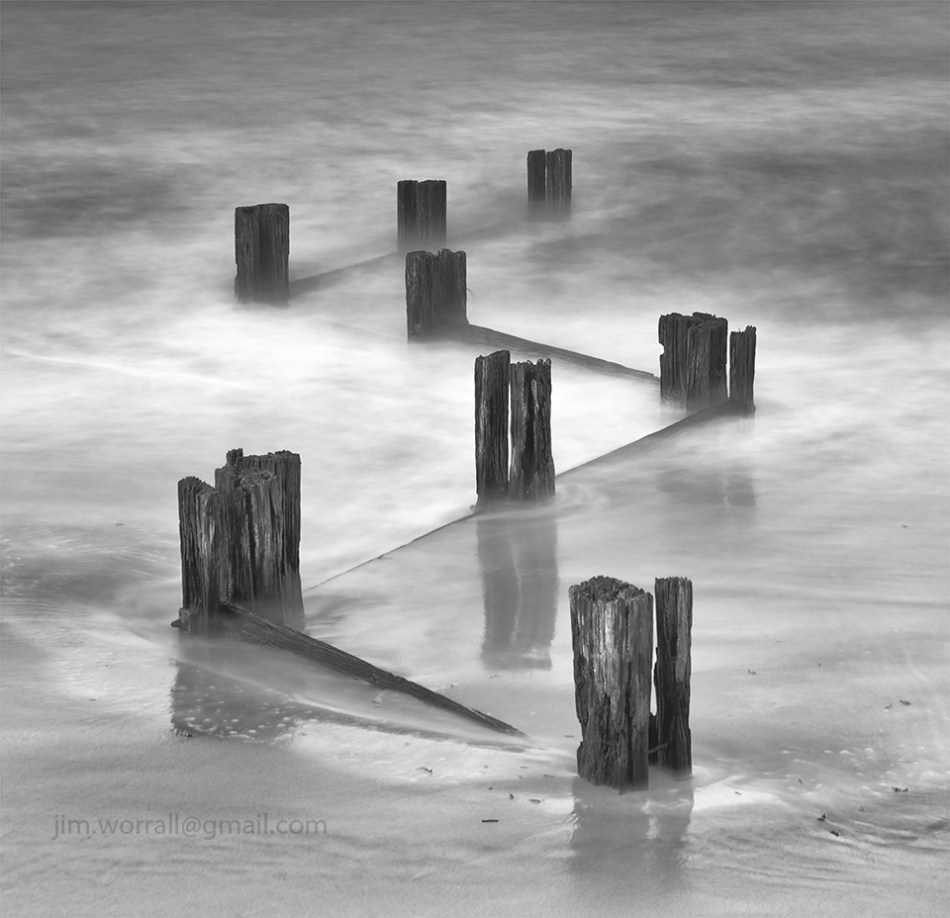
For those unfamiliar with groynes, a groyne is a low wall or timber barrier built out into the sea from a beach to prevent erosion.
On a previous visit to photograph this groyne the tide was unexpectedly low and yielded images that weren’t quite what we were looking for. This time I made sure to arrive at peak high tide and waited for the tide to recede and reveal just enough of the groyne to catch these images.
A local resident told me that the zig-zagging planks aren’t always visible and that they’re sometimes completely covered by sand with only the posts exposed.
For those who might be interested in photographing the groyne, it’s easily accessible. Park at the end of Seawind Rd, Balnarring Beach. It’s a short walk down to the beach then turn right.
Tech stuff – 25 secs @ f/9 using a 10 stop solid + 4 stop soft ND grad + polarizer.
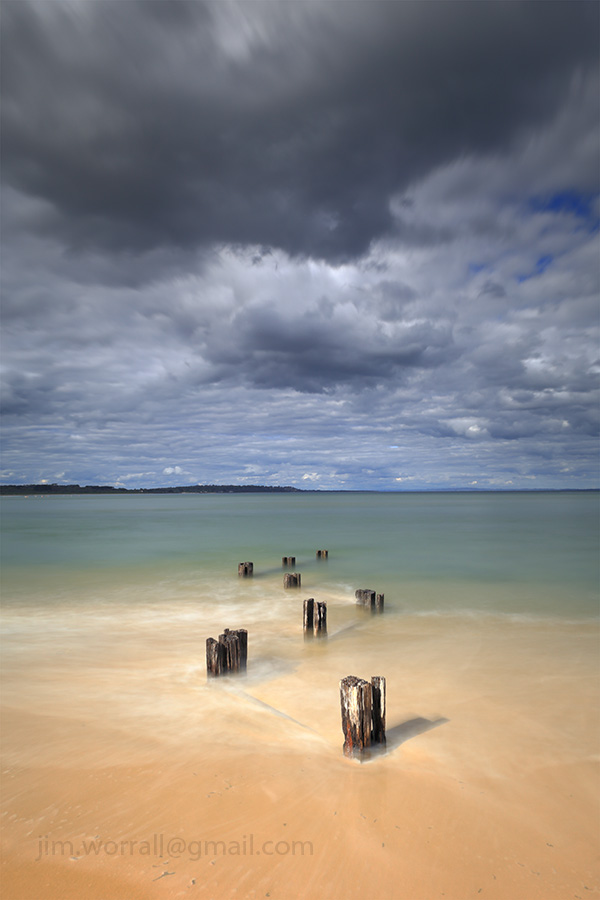
Tech stuff for the image below – 13 secs f/9, NiSi 10 stop solid + 4 stop soft grad + polarizer.
Jubilee Point – Sorrento
A long exposure shot from the base of Jubilee Point at Sorrento on the Mornington Peninsula.
Tech stuff – 4 secs at f/16 using an ND400 filter.

Tenby Point – Western Port Bay
A couple of long exposure photos from the beautifully serene beach at Tenby Point on Western Port Bay
Pictured above – The iconic tree “Ol’ Woody” and his mate, …… blowing in the wind at Tenby Point. Tech stuff – 30 secs f/20 ND400.

Pictured above – Erosion prevention (I’m guessing), at Tenby Point.
Tech stuff – 30 secs f/10 ND400.
.
Sullivan Bay – Sorrento
A daytime long exposure photo from Sullivan Bay, Sorrento, on the Mornington Peninsula.
Tech stuff – 66 secs f/13 using ND400 + ND8 filters.
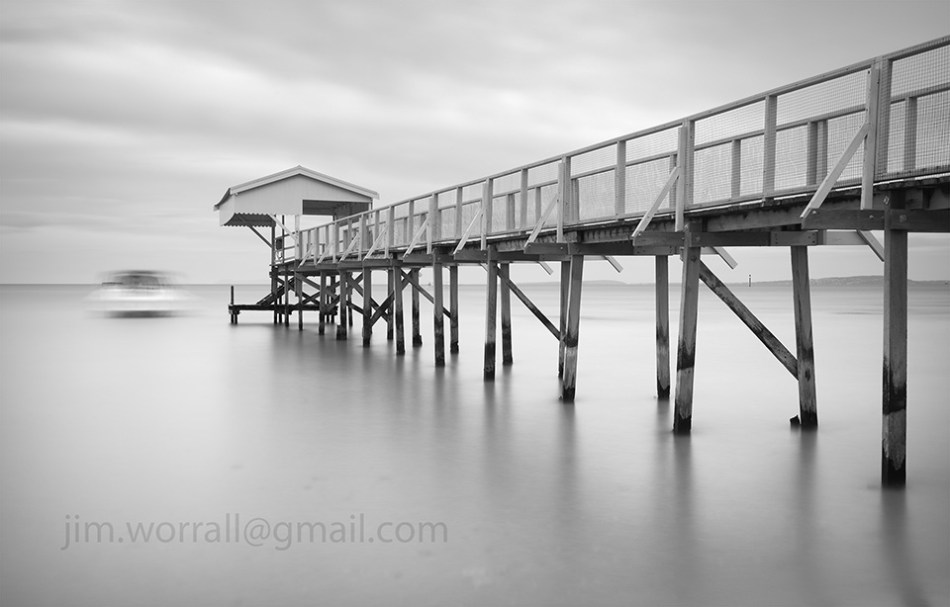
Jetty at Sullivan Bay, Sorrento.
Balnarring beach groyne
Ahh, ….the serenity. Some daytime long exposure shots from one of the groynes at Balnarring beach on Western Port Bay.
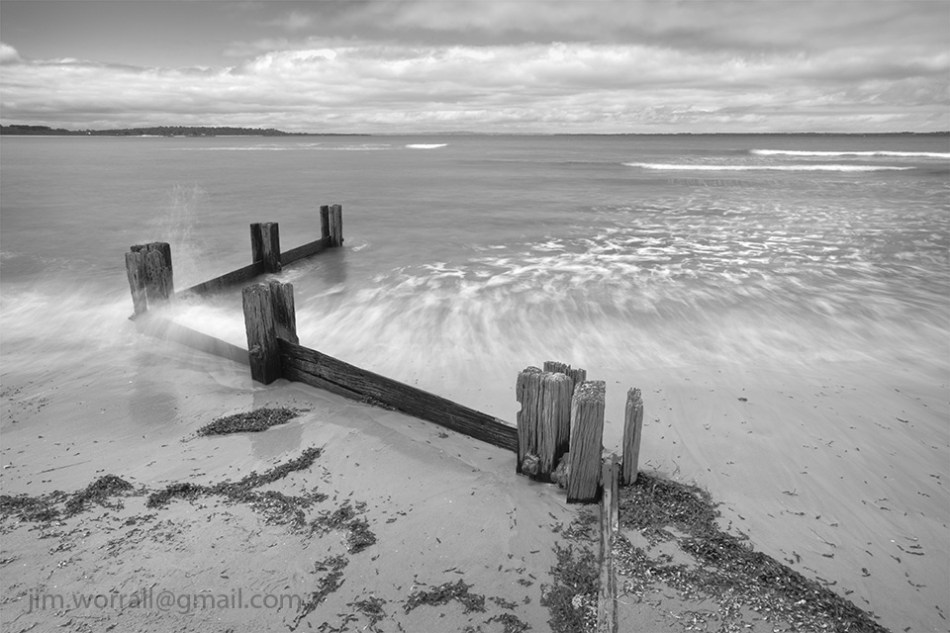
Above image – 0.8 secs f/16.
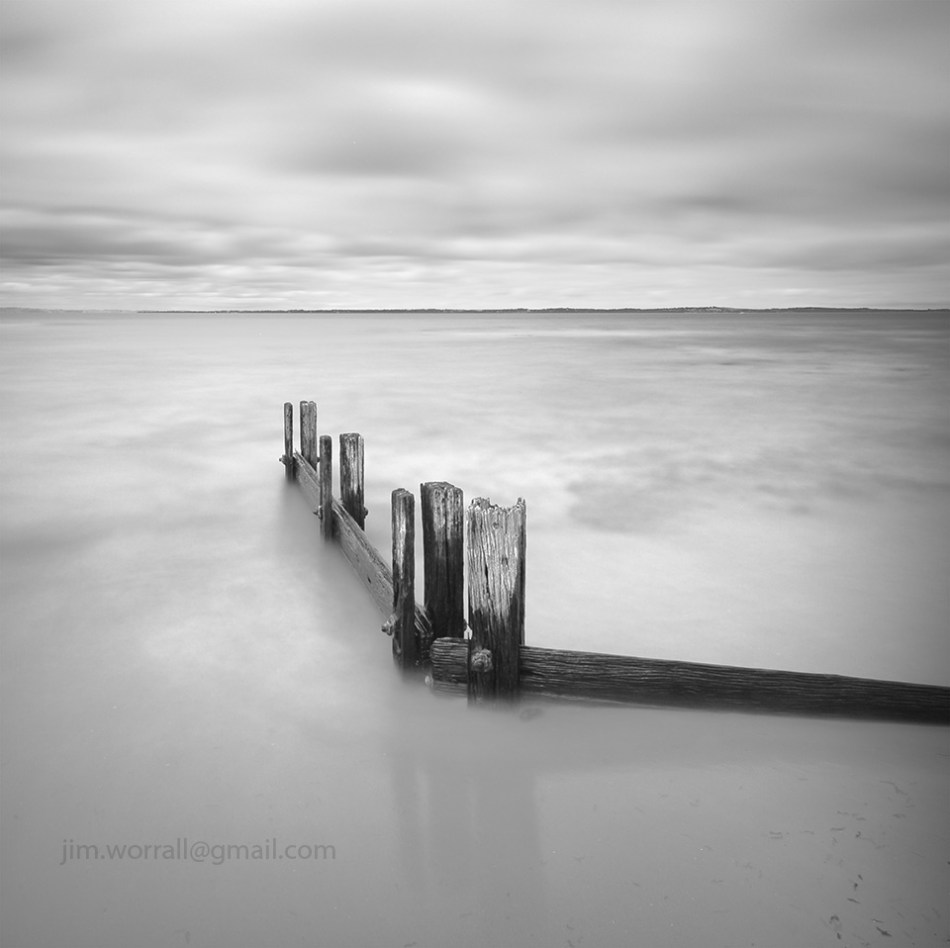
Above image – 65 secs f/16 ND400+ND8.

Above image – 55 secs f/16.
The Blue Hour – Bridgewater Bay, Blairgowrie
Pictured below, a pre-dawn long exposure shot from Bridgewater Bay in Blairgowrie on the Mornington Peninsula.
Bridgewater Bay is accessible via a short walk from the carpark at the southern end of St Johns Wood Rd. Beach access is via a set of stairs. The best time to visit is at or near low tide when the rock platforms are exposed. Navigating the beach at high tide is problematic.
Tech stuff – 30 secs @ f/11
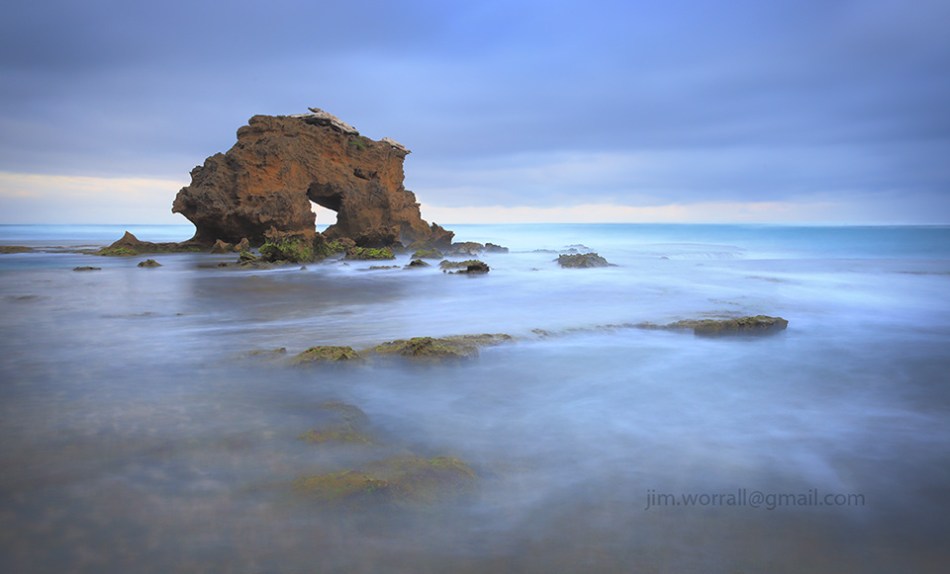
Pictured below, me shooting the bridge rock formation. Photo courtesy of friend Jason.

Home Sweet Hell
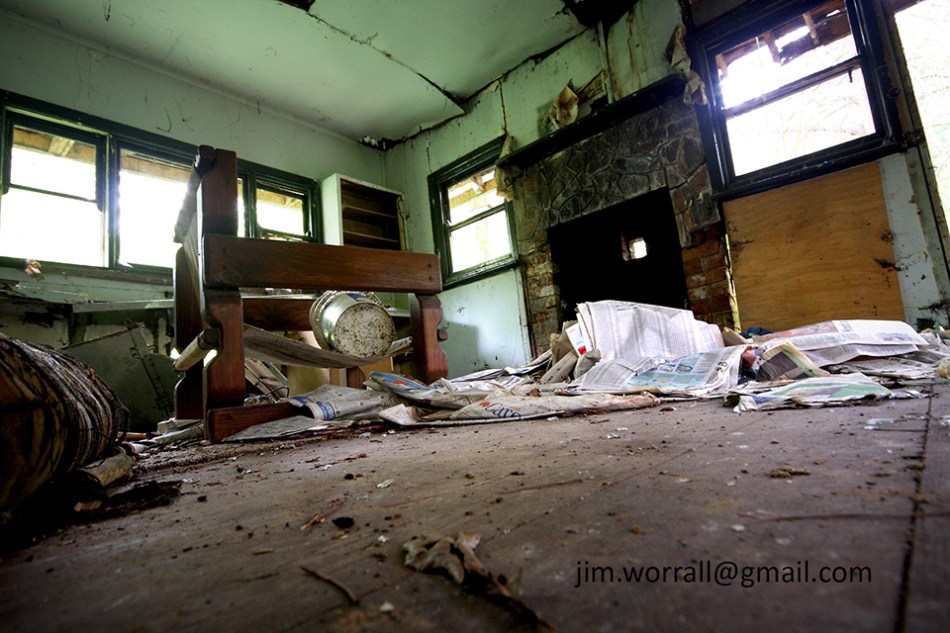
Images from an abandoned house taken during an excursion to the Dandenong Ranges, Victoria, Australia.

The image above is available to purchase as a print here.


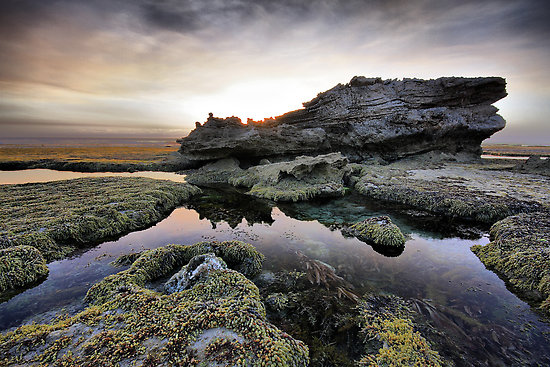
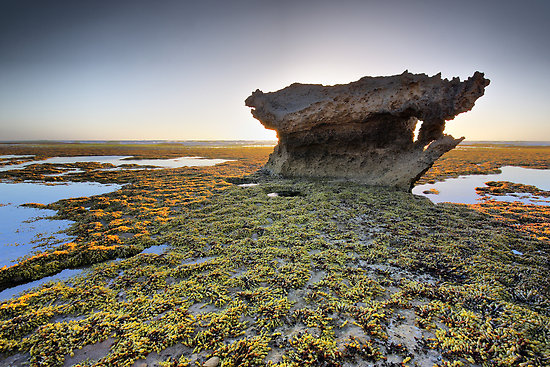
The optical jewels at Sorrento.
My recent visit to the ocean beach at Portsea sparked a craving for more of the same photographic material.
This time I visited the ocean beach further along the coastline at Sorrento. The first visit to the beach was a spur of the moment decision. When I arrived there the sun was hovering just above the horizon, I had no time to explore the beach and it was a high tide. I took a few shots of the sun fading into the horizon and a few long exposure shots of waves swirling around the rocks.
Here’s a couple of the high tide shots –
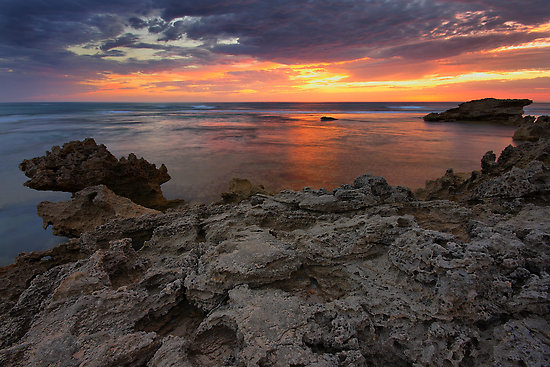
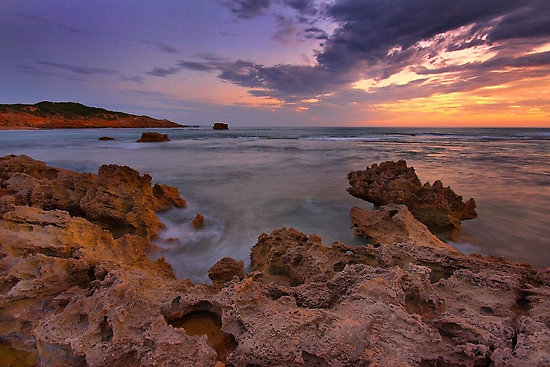
The next visit to Sorrento beach was a bit better planned and I actually remembered to check the tide charts before leaving. On arrival the rock pools were at their low tide best, the sun was high enough in the sky to give me time to explore some of the rocky features yet low enough to give the area a nice warm glow.
Here’s some of the shots from the low tide visit –
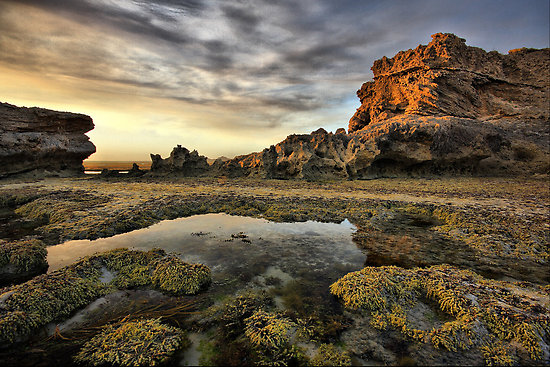
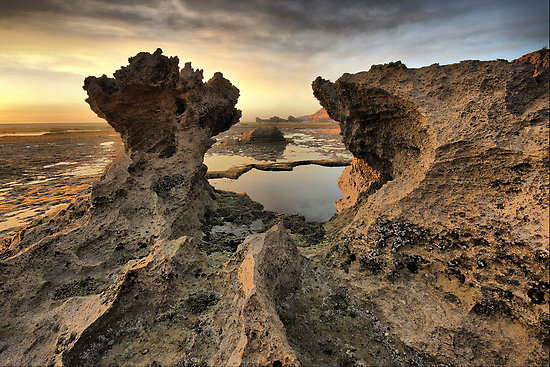



Shhhhhh, ….you can hear the forest breathing – Sherbrooke Forest
Sherbrooke forest is a protected area of bushland located in mountains on the outskirts of Melbourne. It’s an area of fairly thick bush with a series of meandering walking tracks for visitors to enjoy.

The best way to explore the forest tracks is ideally alone, …. and as quietly as possible. Many of the forest’s resident animals are nocturnal but there’s still lots to see and hear during the day if you just stay still and quiet for long enough. You can forget about seeing anything much at all if you travel the tracks in a chatty group because the animals will freeze and wait for the noise to pass.
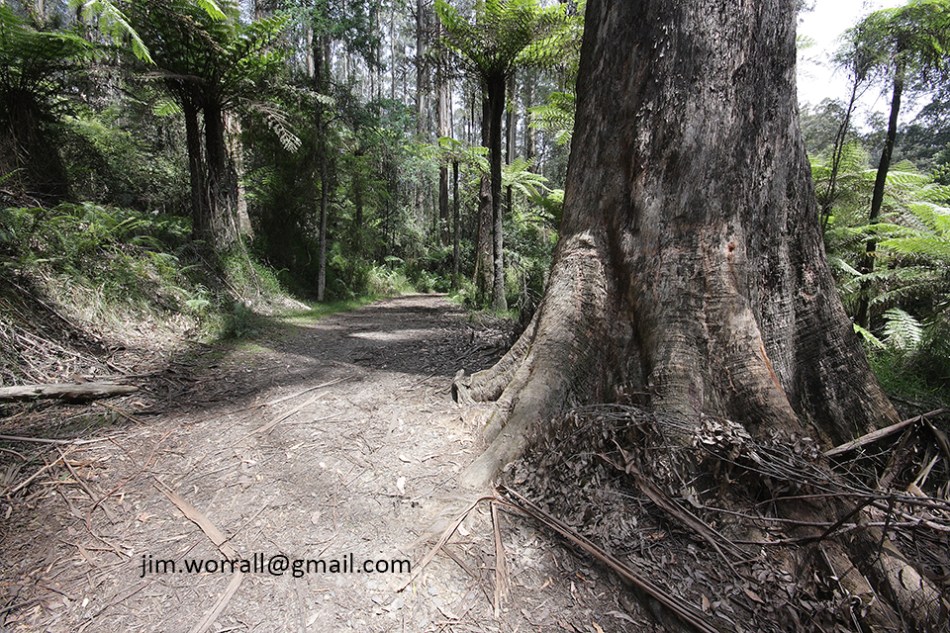
When I visited Sherbrooke forest it was a stinking hot day. . The pedestrian traffic along the track was fairly light, probably due to the heat, and this allowed me to stop several times along the track, undisturbed.
In this forest the animals are not tame but are somewhat conditioned to the presence of human visitors. If you stay still and silent for a couple of minutes, the animals seem to relax and carry on with their usual business. You start to hear the rustle of dried leaves as the animals move around on the forest floor and if you continue to stay quiet you can sometimes catch a glimpse of one of the wild residents.

On the day I visited Sherbrooke forest I was able to catch glimpses of wild kangaroos or wallabies and also a wandering echidna. I must admit though, that when I stepped off the track to photograph something of interest, I was very aware that this is also “snake country” and so I was careful to check where my feet were landing.


