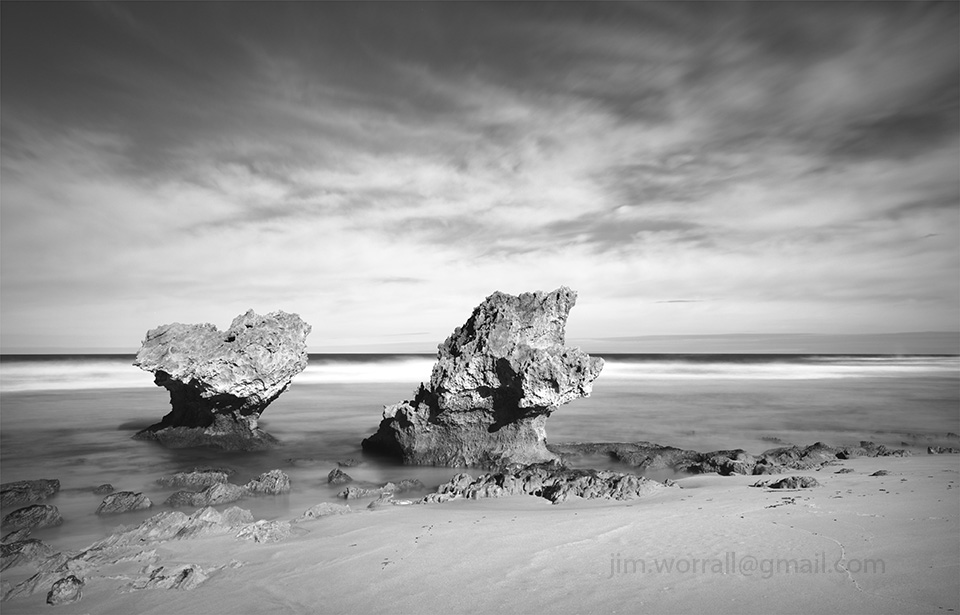
A long exposure image from Pearses Beach in Blairgowrie on the Mornington Peninsula. You can get to Pearses Beach by parking in the carpark at the southern end of Pearse Road in Blairgowrie, and walk a short distance along the sandy walking path to the beach.
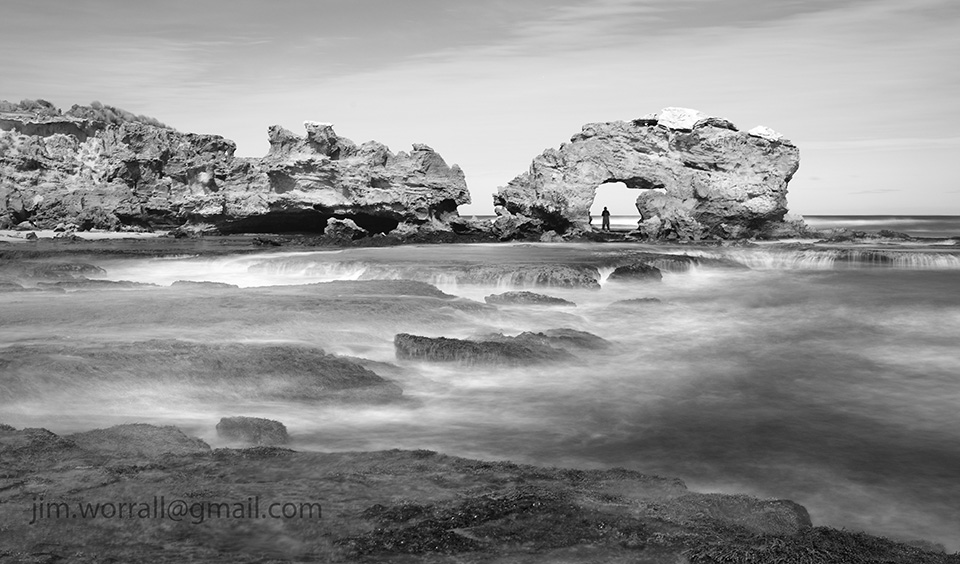
A long exposure image from Bridgewater Bay, Blairgowrie, on the Mornington Peninsula.
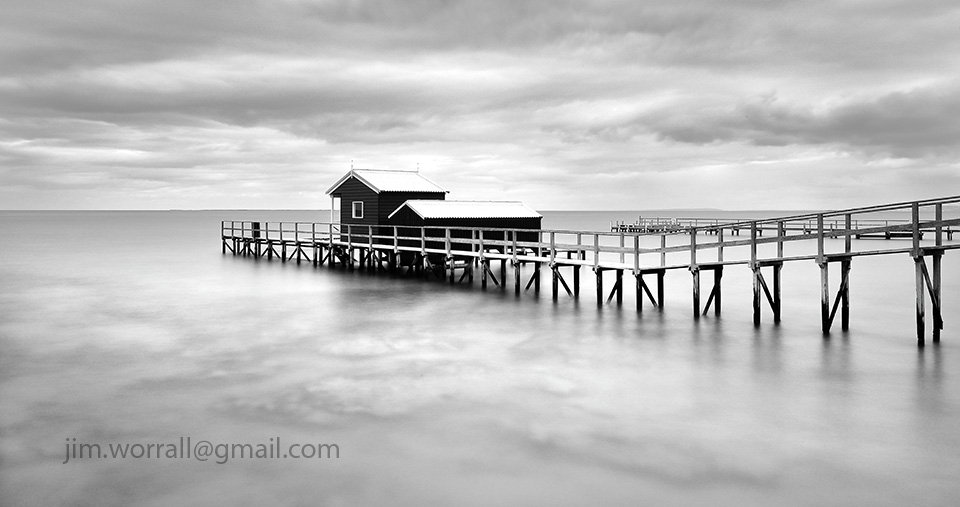
This photo was taken in harsh daylight conditions, so I opted for a black and white conversion of this one as the prevailing daytime colours added nothing substantial to the image.
Tech stuff – 5 sec, f/13, ISO50, ND500 filter.
As an interesting aside to the image above, if you look carefully you can see two blurry figures on the cliff near top left of frame. The local kids like to jump from this cliff into a rock pool below. Great fun for the brave ones! 🙂
Here’s a zoomed-in view below.
To get to Bridgewater Bay, go to the carpark at the end of St Johns Wood Road, Blairgowrie and follow the sandy walking track south. The best time to visit is at low tide. At high tide all of the rock platforms are submerged and pretty much inaccessible.
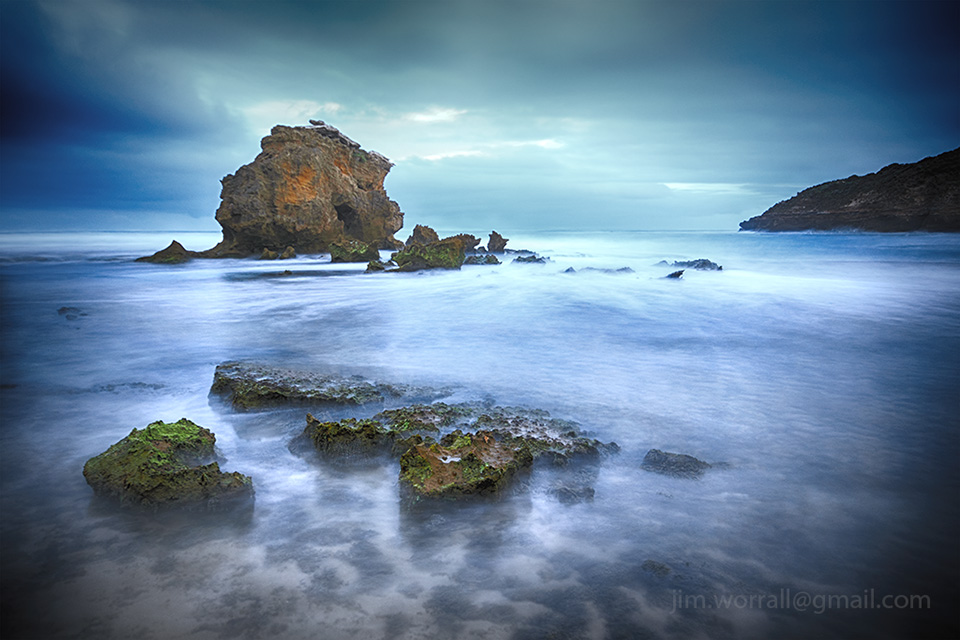
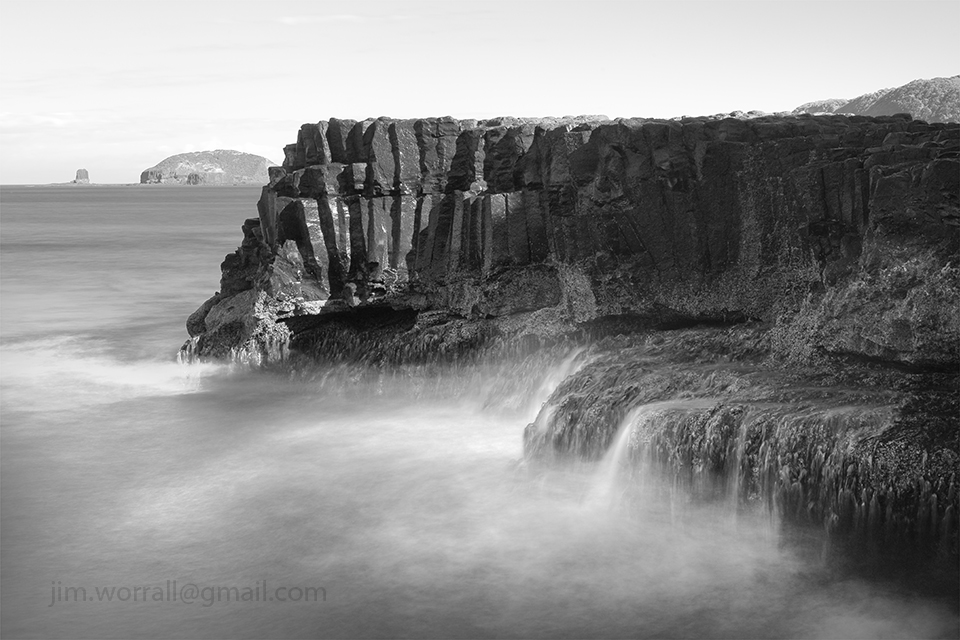
Following are a couple of long exposure images from Montforts Beach taken at first light on a cloudy grey dawn. You can access Montforts Beach by parking at the Spray Point Road carpark and following the sandy walking track south. Montforts Beach is signposted along the track. It’s also well worthwhile visiting Spray Point while you’re here.
Tech stuff for the image below- 5 sec, f/11, ISO50.
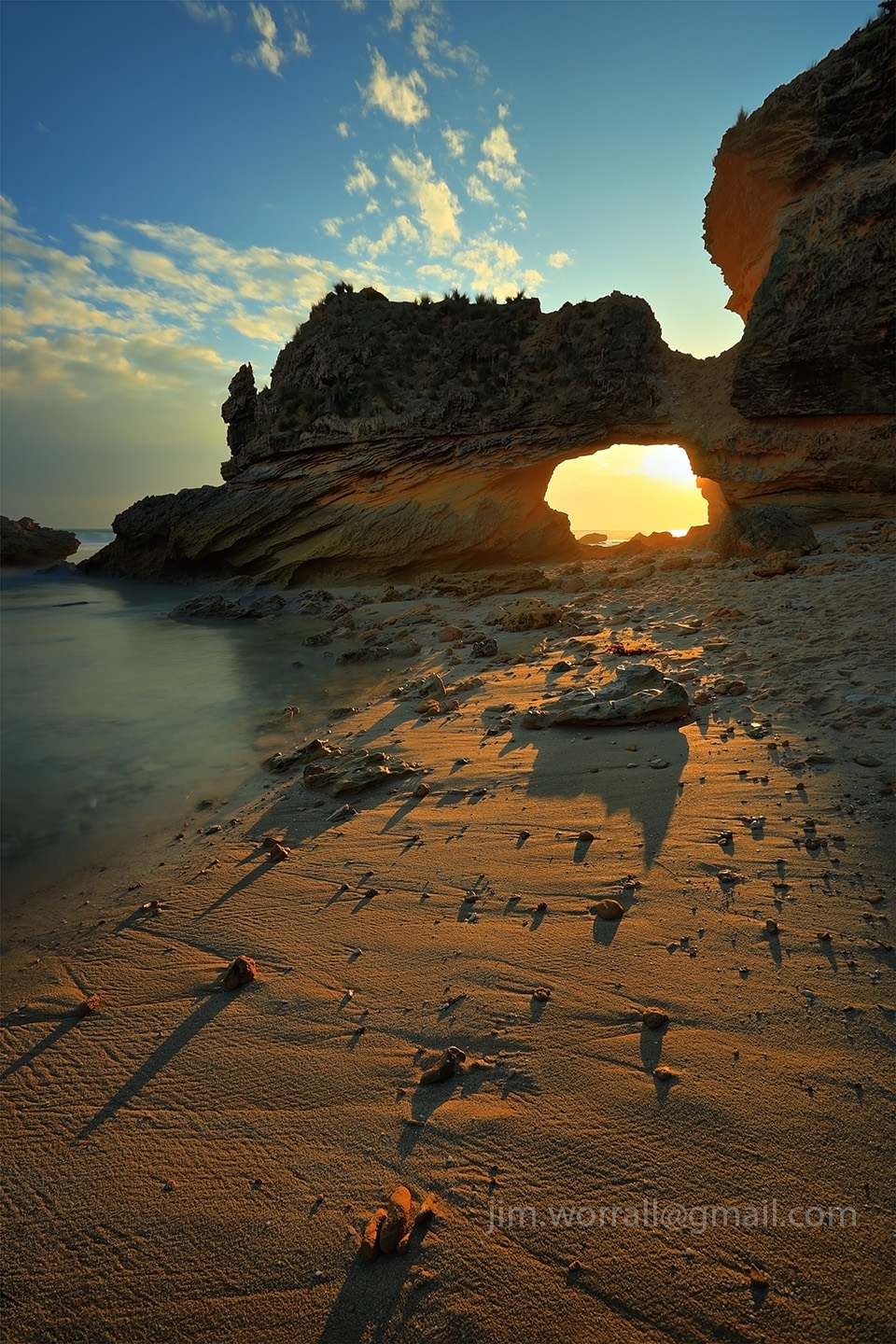
Technical stuff for the image below – 2.5 secs, f/18, ISO50.
A long exposure image of Sierra Nevada Rock, Portsea. The rock formation is on Portsea back beach, just a short walk north-west of the London Bridge rock formation. IMPORTANT – It’s only accessible at low tide.
Tech stuff -15 sec, f/14, ISO 100, using an ND400 filter.
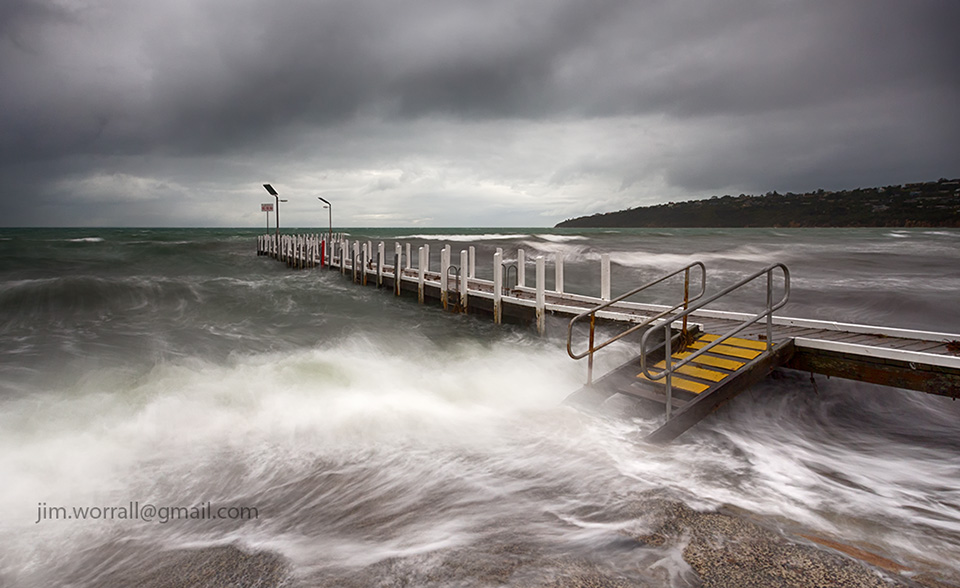
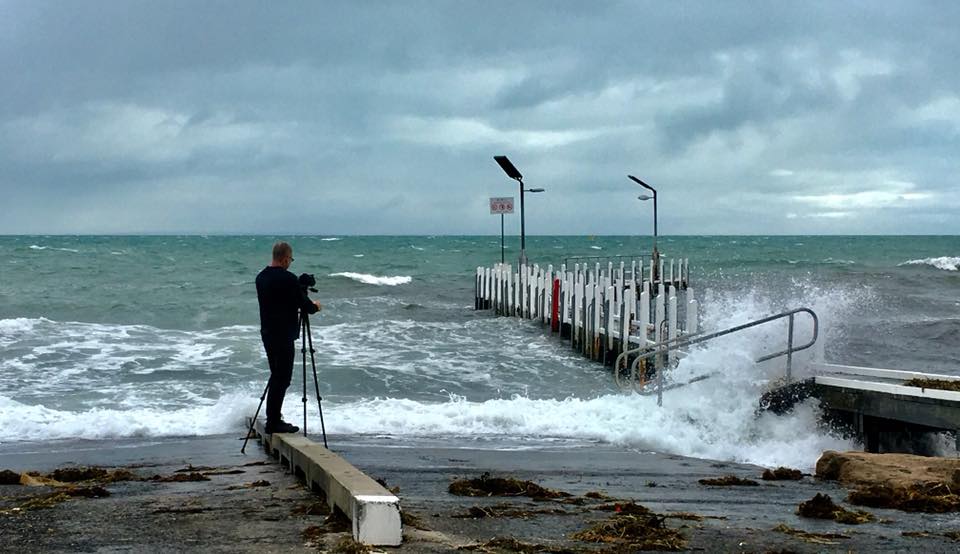
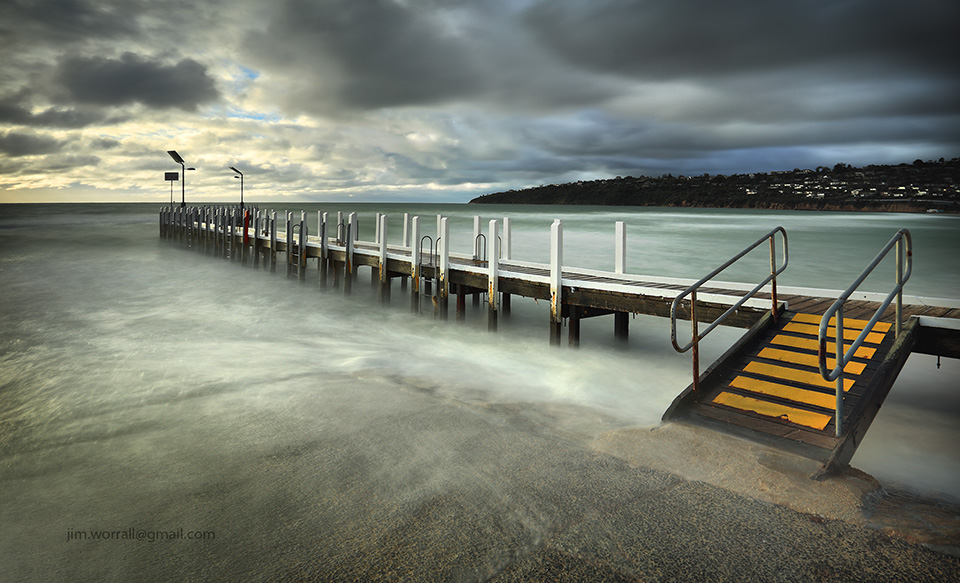
Pictured below, a storm rolls across Port Phillip Bay whipping up waves and sending them onto Mornington Peninsula bayside beaches. This image is from the Safety Beach jetty. Tech stuff – 0.8 sec, f/10, ISO400, ND400 filter.
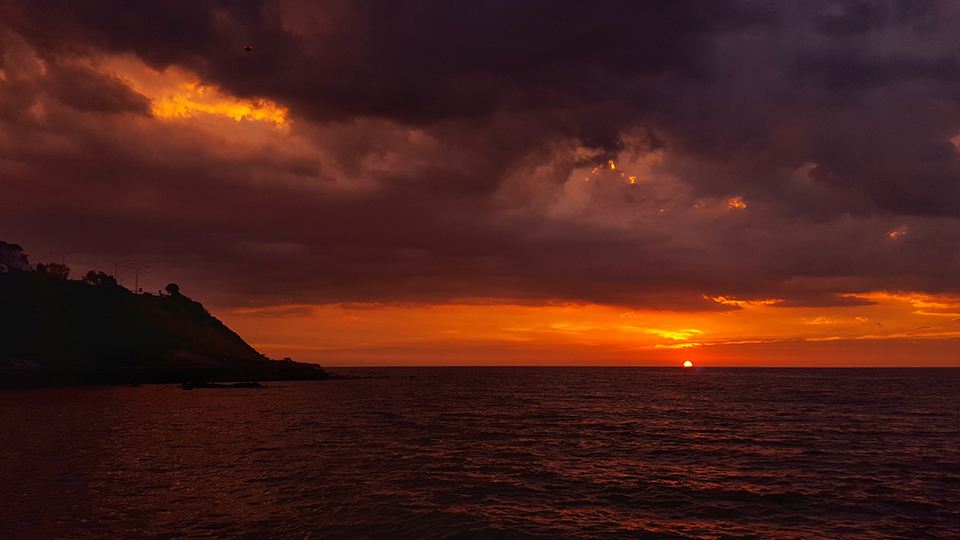
Last weekend we visited the new jetty at Olivers Hill in Frankston on the Mornington Peninsula. As the sun dropped down towards the horizon the sky exploded in a way that we really didn’t expect. It seems that predicting a colourful sunset in Melbourne is a bit like predicting the outcome of a coin toss. 🙂 These are short exposure shots using my phone camera as I left the “big boy”at home.
In the image above, the glowing red “eyes” and silhouette of a small drone can be seen hovering near the top edge towards the left of frame. The constant buzzing noise from these little buggers can ruin an otherwise tranquil atmosphere, …but hopefully the owner captured some great scenes from up there. 🙂
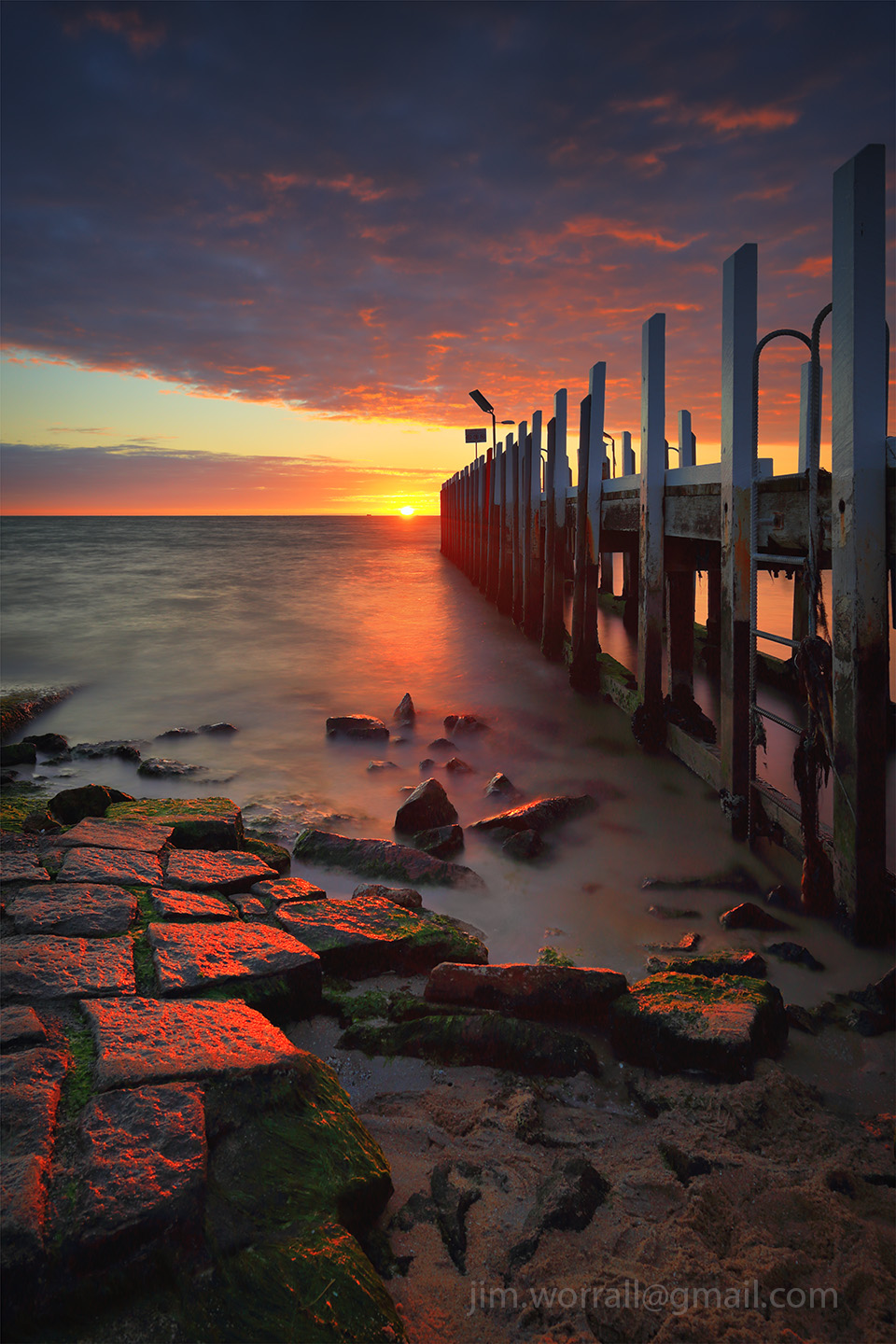
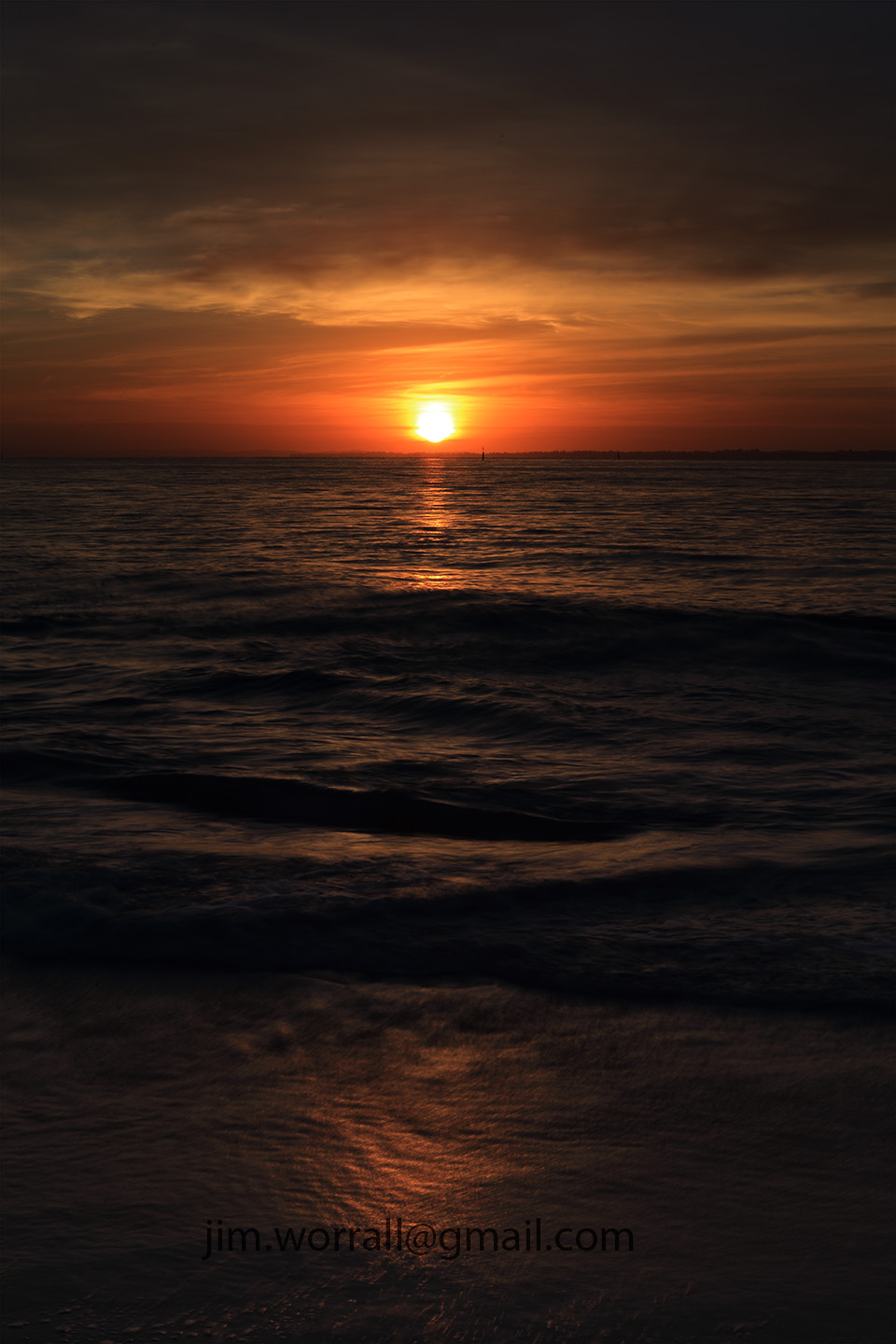
Another sunrise expedition to the groynes at Balnarring Beach on Western Port Bay. This time we visited the straight groynes on the beach near the general store.
The image above was shot just before the sun broke through the clouds on the horizon. It’s a 2 second exposure, slightly smoothing the surface details in the water.
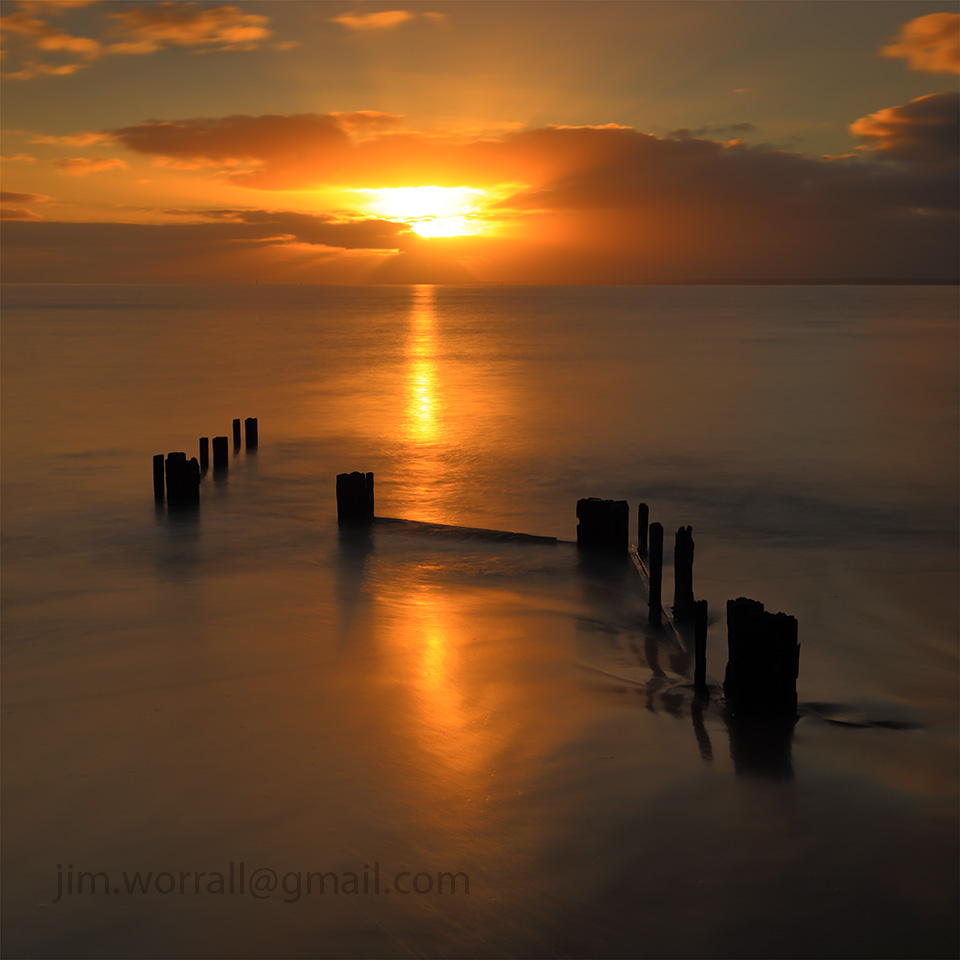
Pictured above – A short exposure as the sun breaks through the clouds. I liked the way the reflected sun rays were glinting off the waves and the foreground sand.
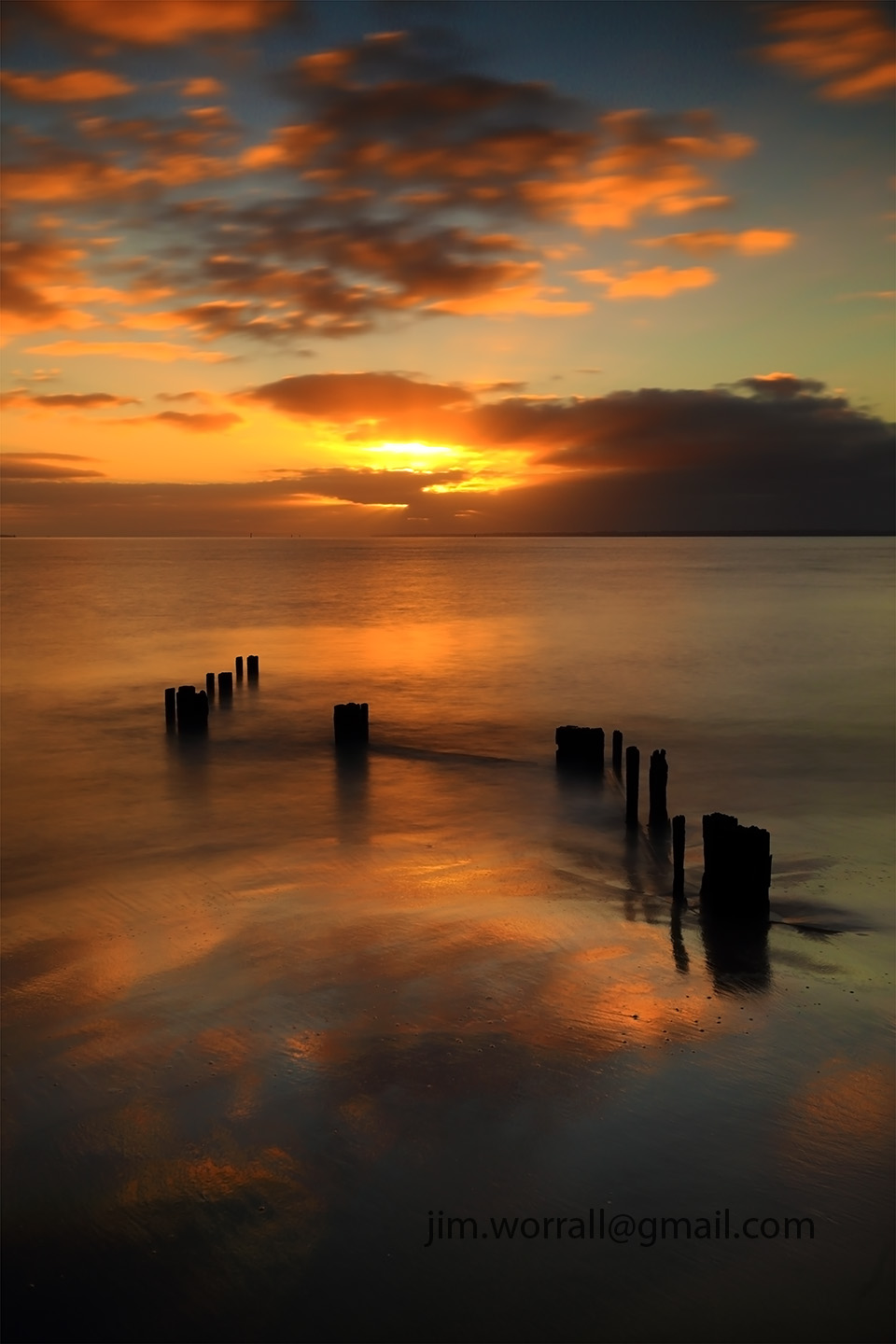
Pictured above – As the sun rises higher in the sky, one of the groynes becomes beautifully side lit by the warming rays. This is a short exposure (1/20 sec f/18 iso100) shot with the camera way down low almost resting on the sand.
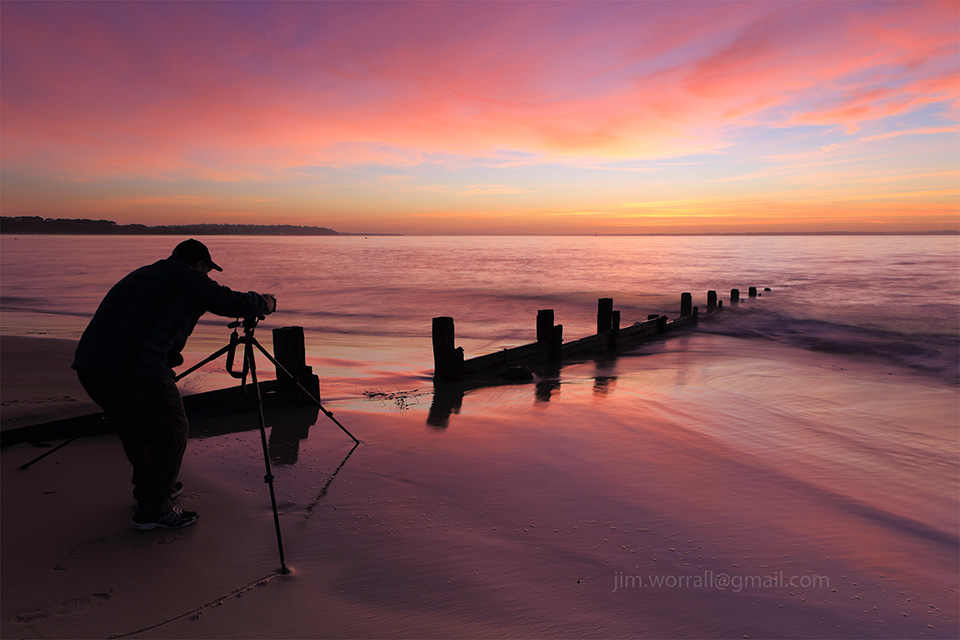
Pictured above – Friend Jason preparing for his next shot as the sky lights up.
A couple of dawn shots from the zig-zag groyne at Balnarring Beach on Western Port Bay.
Tech stuff – 10 secs, f/8, iso 100, using a 10 stop and 4 stop soft grad ND filter.
For those who might be interested in photographing the groyne, it’s easily accessible. Park at the end of Seawind Rd, Balnarring Beach. It’s a short walk down to the beach then turn right. There are also a few straight groynes off to the left.
Tech stuff – 13 secs, f/8, 10 stopper and 4 stop soft grad.
Picture above – A long exposure image from Montforts beach, Blairgowrie, on the Mornington Peninsula. Montforts beach can be accessed from the carpark at the end of Spray Point Road, Blairgowrie. Take the path to the left.
Tech stuff – 10 secs f/13 using a 10 stop solid ND filter and a 4 stop soft grad.
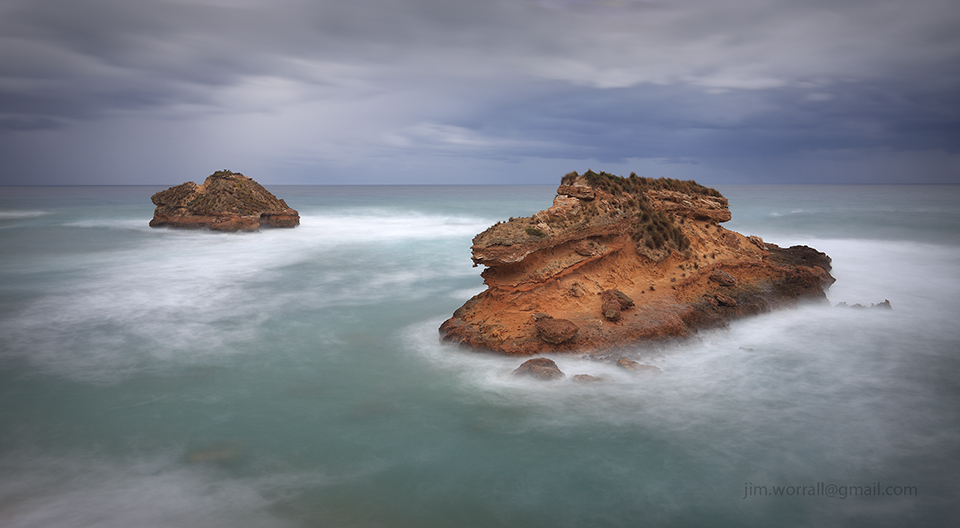
Picture above – A long exposure shot of the Bunny Rock’s close companions at Montforts beach.
Tech stuff -30 secs f/11 using a 10 stop solid ND + 4 stop soft grad filter.
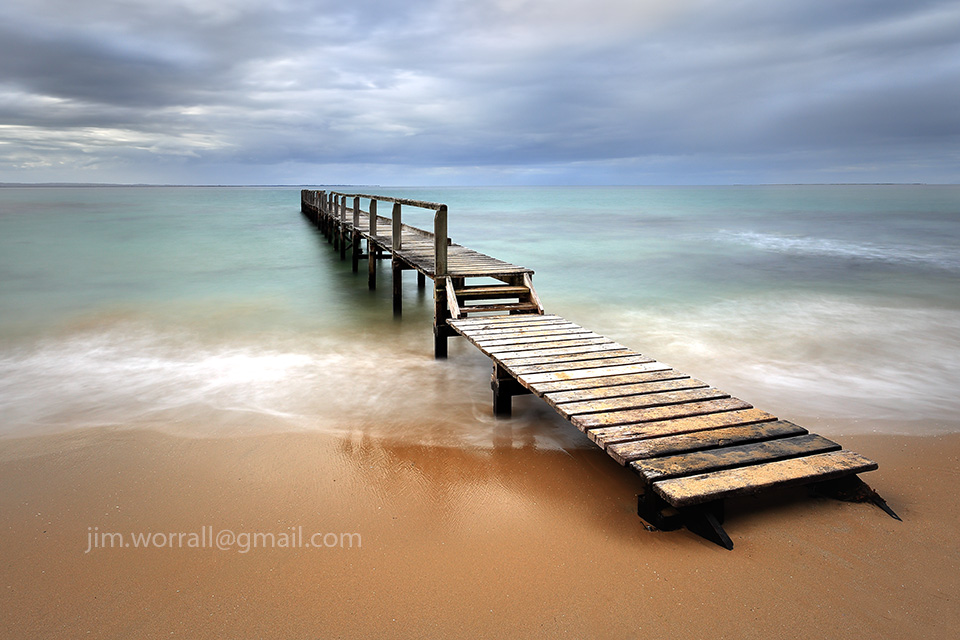
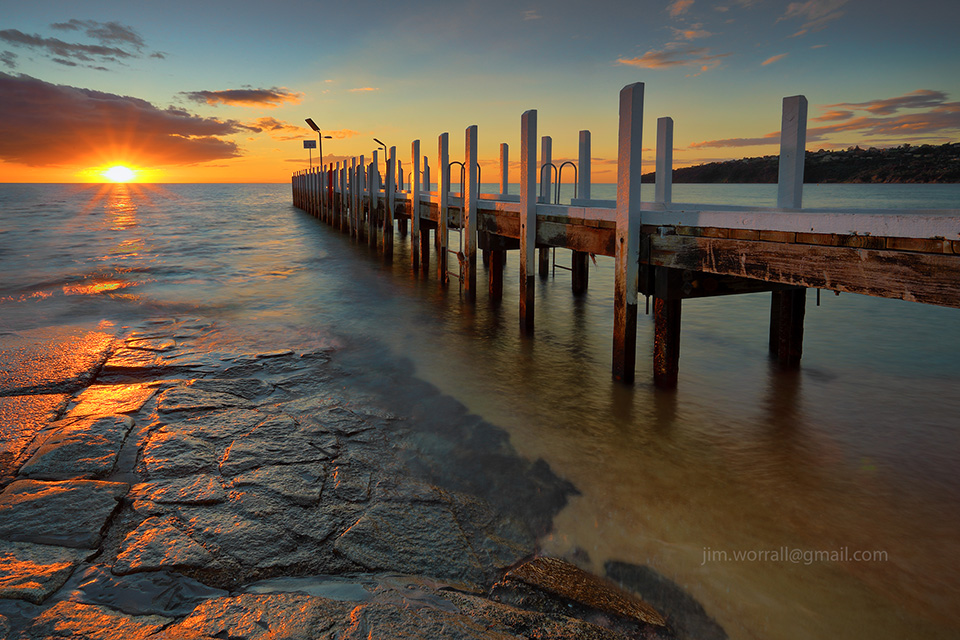
A long exposure sunrise image from Sullivan Bay, Sorrento, on the Mornington Peninsula. The iconic jetty has recently started to fall to bits. I suspect she wont be around much longer.
Last weekend we had our ND group excursion for beginners. It was a great turnout with lots of enthusiastic people attending. We started shooting at Bridgewater Bay in Sorrento in very difficult conditions with the wind blowing a continuous mist of fine rain onto our lenses. I was both surprised and delighted that so many people stayed and had the patience to put up with these conditions, …..such a dedicated bunch. 🙂 Many thanks to Jason Cincotta and Michael Stringer for assisting with so many ND newcomers.
Later we moved onto the front beaches at Point King, Sorrento, followed by Shelley beach, Portsea , both providing us with much more friendly shooting conditions.
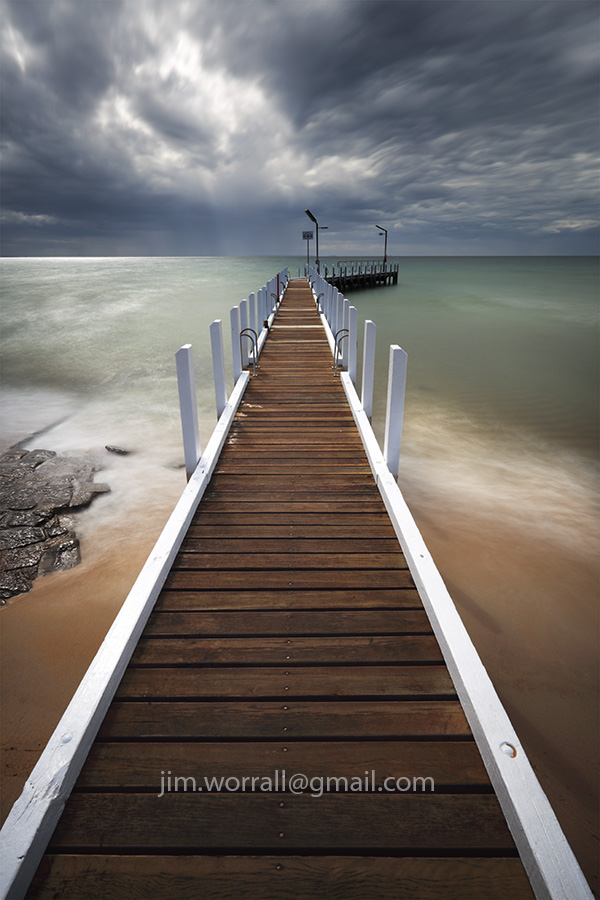
Pictured below – Point King jetty. Tech stuff – 132 secs f/18.
For those unfamiliar with groynes, a groyne is a low wall or timber barrier built out into the sea from a beach to prevent erosion.
On a previous visit to photograph this groyne the tide was unexpectedly low and yielded images that weren’t quite what we were looking for. This time I made sure to arrive at peak high tide and waited for the tide to recede and reveal just enough of the groyne to catch these images.
A local resident told me that the zig-zagging planks aren’t always visible and that they’re sometimes completely covered by sand with only the posts exposed.
For those who might be interested in photographing the groyne, it’s easily accessible. Park at the end of Seawind Rd, Balnarring Beach. It’s a short walk down to the beach then turn right.
Tech stuff – 25 secs @ f/9 using a 10 stop solid + 4 stop soft ND grad + polarizer.
Tech stuff for the image below – 13 secs f/9, NiSi 10 stop solid + 4 stop soft grad + polarizer.























 Photography by Jim Worrall