
Playing in the Wind – Flinders, the Blowhole Track
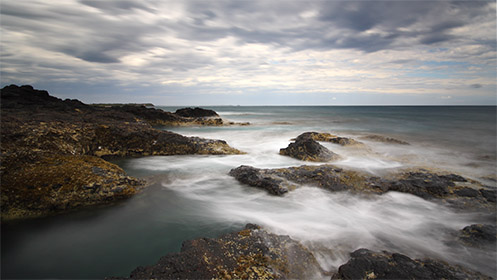
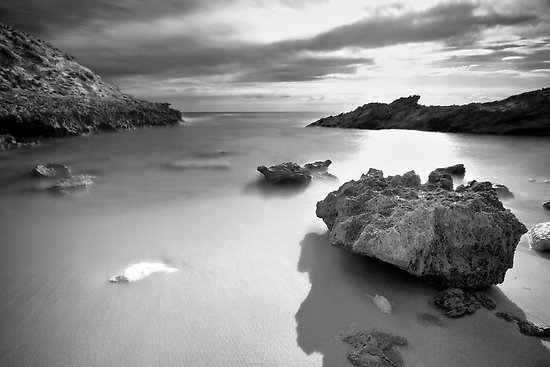
A selection of images from the beach at the end of the Blowhole Track at Flinders on the lovely Mornington Peninsula.
On the day I was there the wind was so horrendously strong I had to push down hard on the tripod to stop it from vibrating and blurring all of the long exposure shots.
Pictured below – Flinders Beach, the Blowhole Track.

A very picturesque coastline battered by the relentless surf.

Exploring the Pointy End of Phillip Island
I’d been to this part of Phillip Island on previous occasions but I loved it so much I thought I’d revisit.
That’s one of the joys of photography, you can visit the same location on several occasions and come away with completely different images each time.
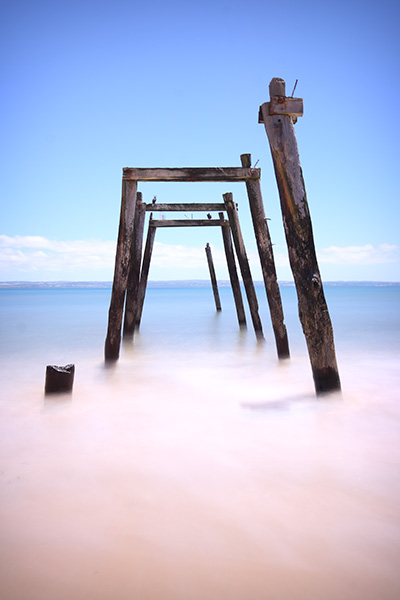
Pictured below – Old wooden remnants at Cat Bay, Phillip Island.


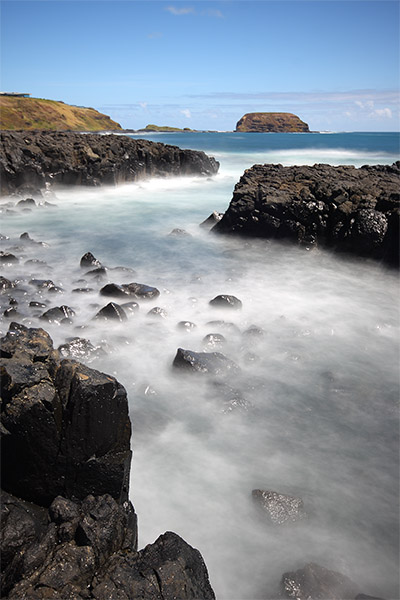
Pictured below – The beach at Right Point, Phillip Island, located between Cat Bay and the Nobbies. The violence of the ocean waves smoothed by the use of long exposure.

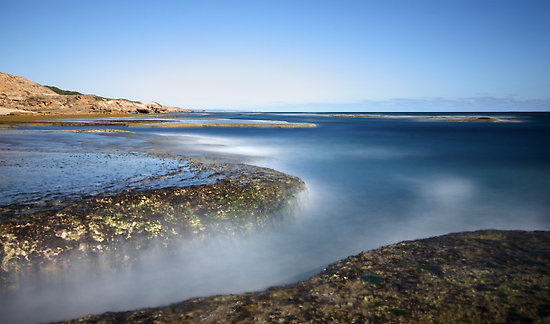
Daytime experiments with the ND400 filter.
The following long exposures were taken during daylight hours using an ND400 and ND8 filter stacked together on the front of my Sigma 10-20mm lens. The combination of these two filters attenuates so much light that peering into the viewfinder reveals an inky blackness even during bright daylight conditions.
It’s therefore necessary to compose the image BEFORE screwing the filters onto the lens. It’s also necessary to adjust the focus manually since the auto-focus system has no chance of working under such conditions.
*** (Update October 2012) The introduction of “live view” to many DSLR cameras means that is’s no longer necessary to compose and pre-focus with the dark filters off the lens. I shoot all the time now using live view to peer through the combined darkness of an ND400 and ND8. The filters now stay on the lens which means there is a lot less fiddling around. If you’re looking for a guide to show you how to use an ND400 have a look at my recent blog post here.***
I found that if I set the ISO as low as possible, and set the aperture very small (i.e. a high number), then it was possible to obtain a shutter duration of about 3 minutes. Such long exposures during daytime create some interesting images. I’m looking forward to experimenting more with the ND400.



 Photography by Jim Worrall